Posts in "history"

Himmelswege

Where we went

We spent a week in Sachsen-Anhalt exploring the Neolithic monuments of the Himmelswege in the Halle (Saale) area.

We chose a hotel in Merseburg, which was centrally located for our trip.

In theory, the trip should have taken 4.5 hours, but in practice, it took longer—especially since we brought our bicycles..

Why we went

A few months ago, I discovered the himmelswege.de website while researching the Nebra Sky Disk. The site also introduced me to the Kreisgrabenanlage Pömmelte, which we had heard of, as well as Schönebeck and Goseck, which were new to us.

Since many of the sites appeared cyclable, we booked the hotel and set off.

The itinerary

The map
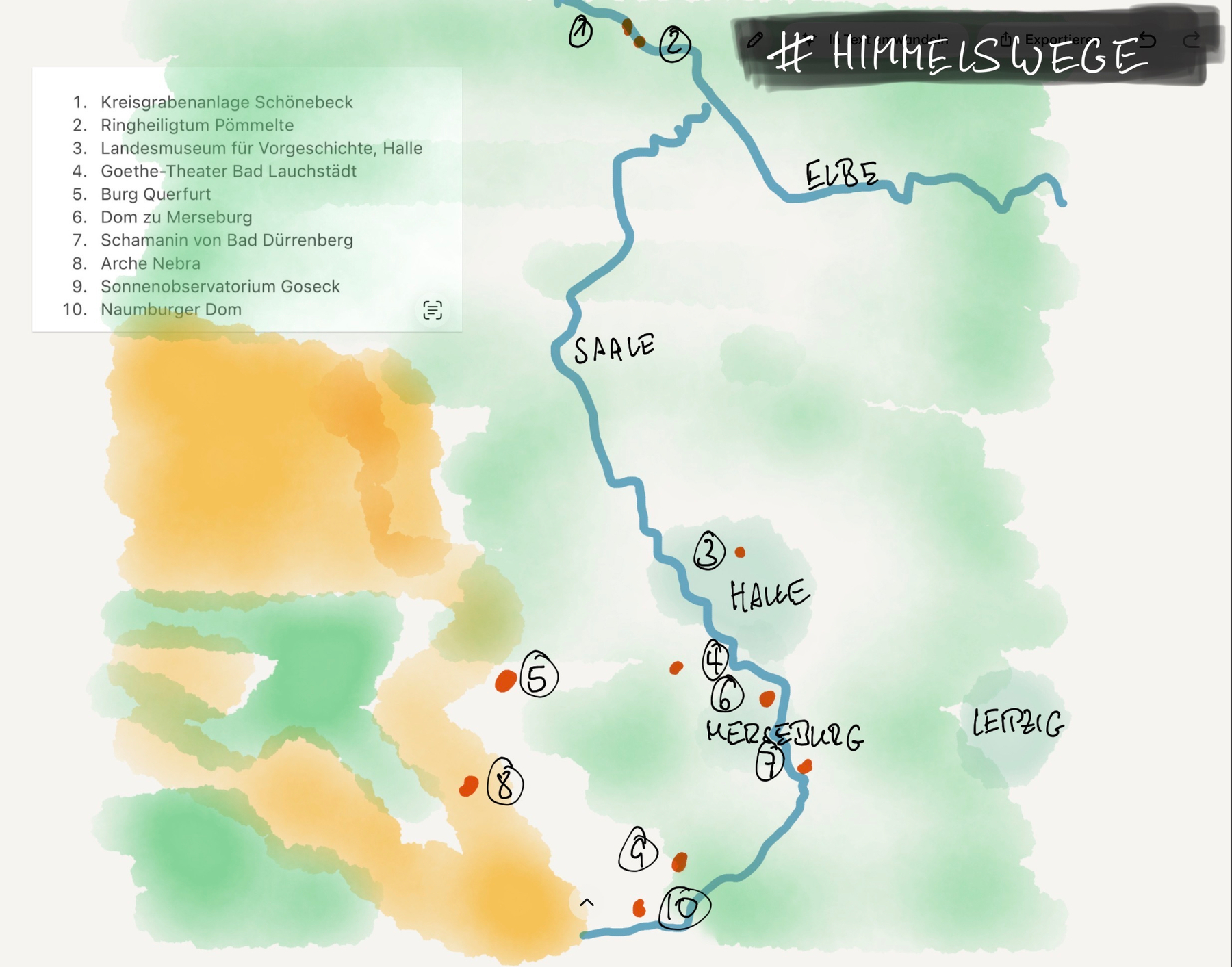
A map illustrates the Himmelswege route with numbered locations, rivers, and highlighted regions in green and orange shades accompanied by a legend.

The yellow parts of the map are mountains.

Day 1 - Merseburg

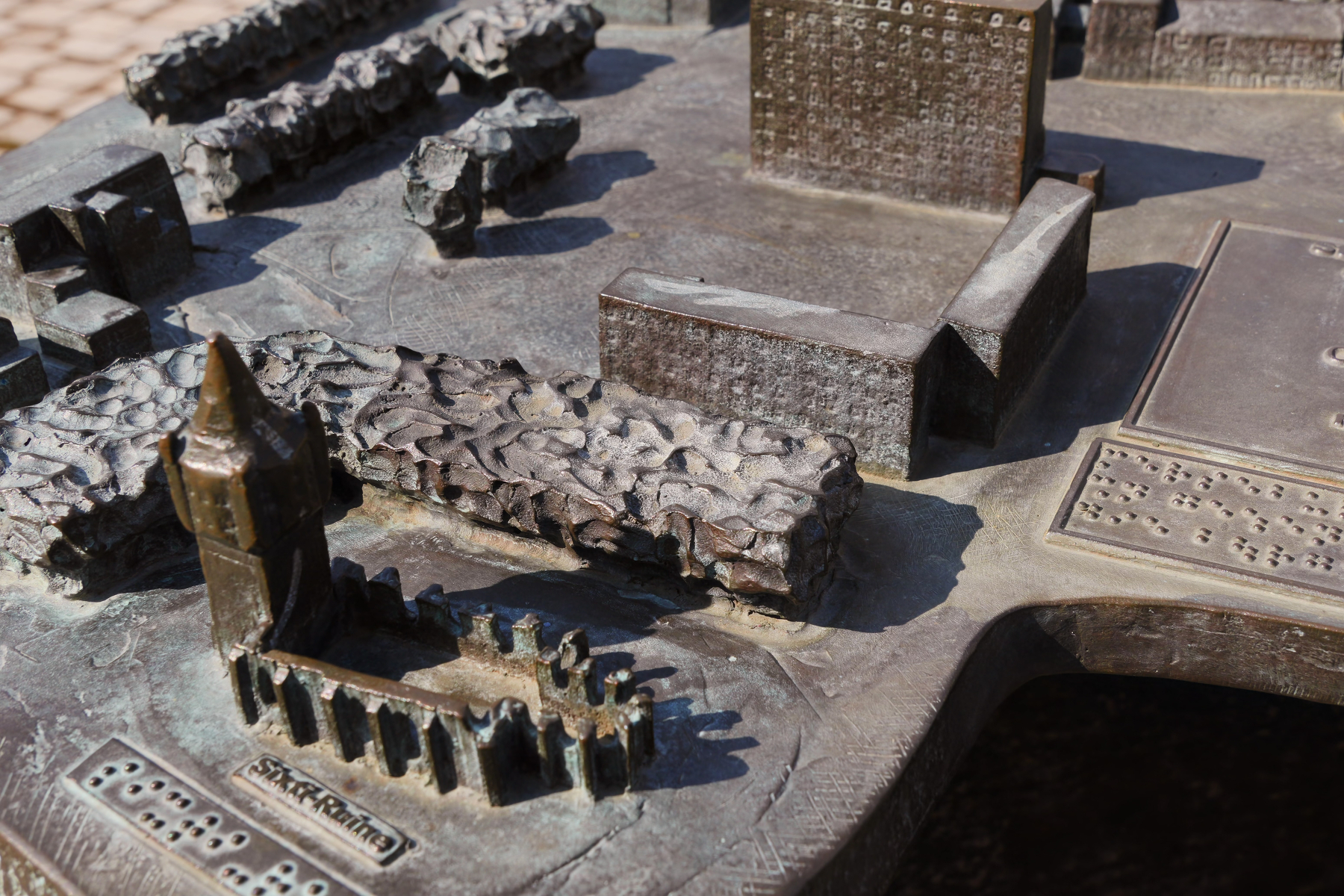
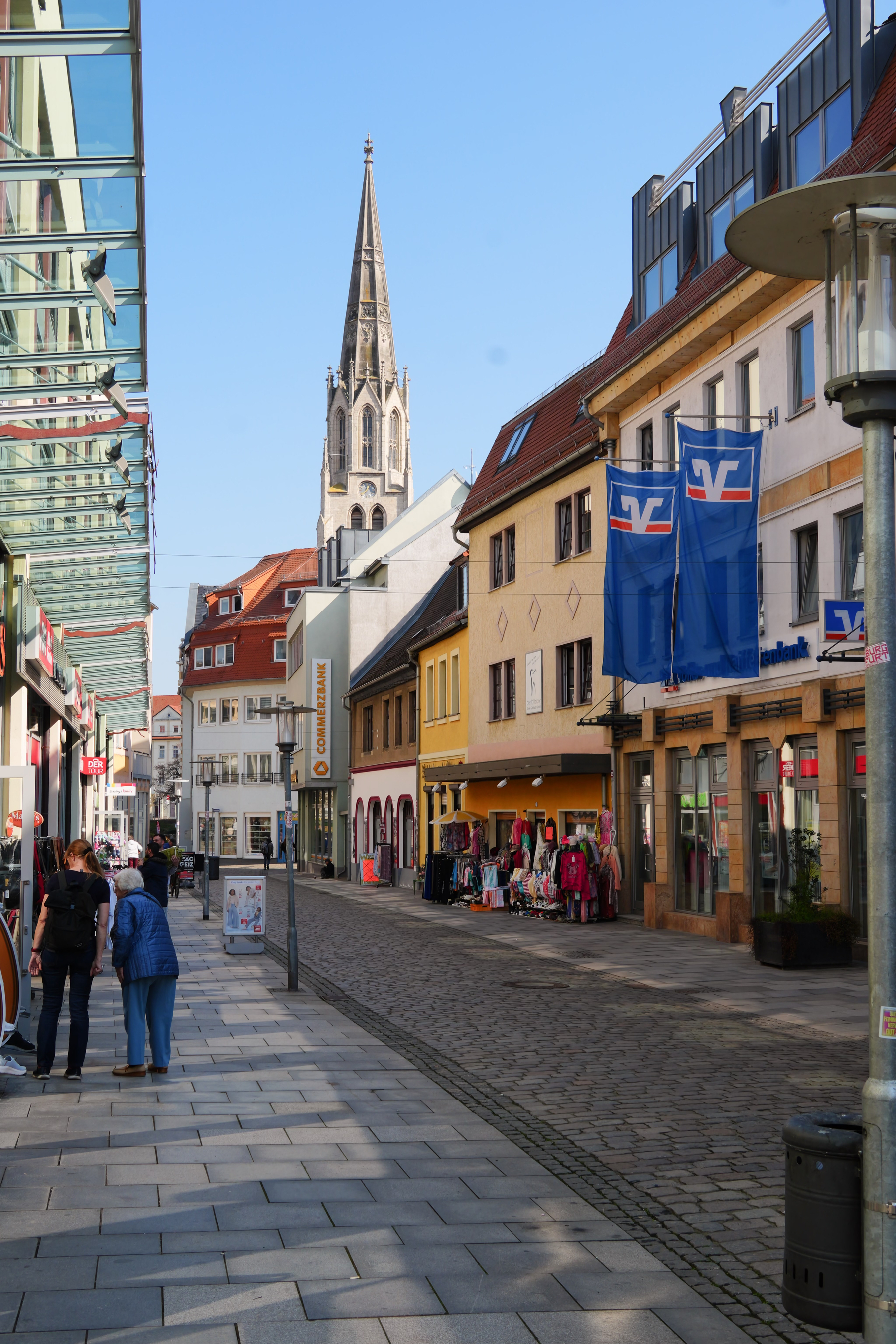
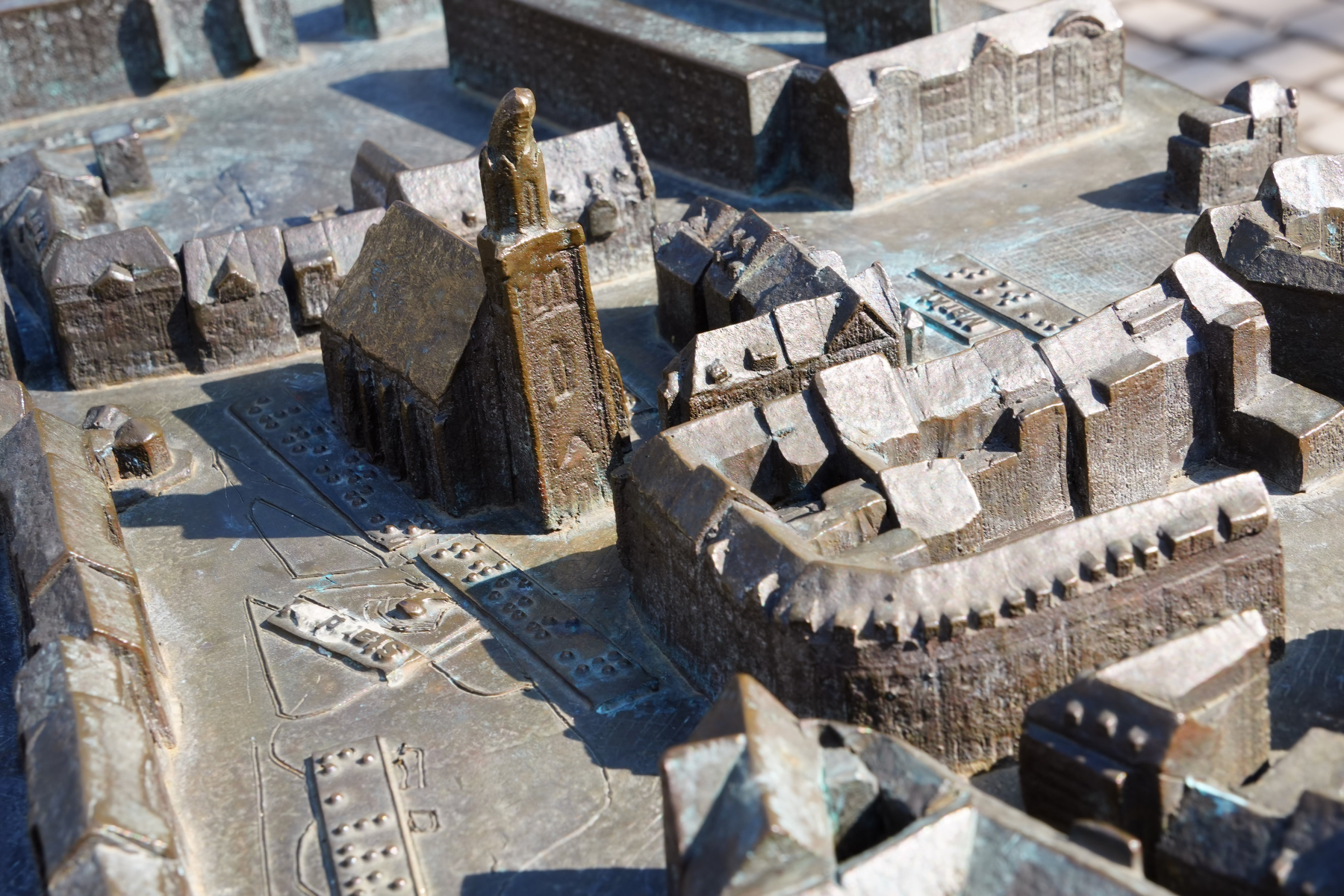
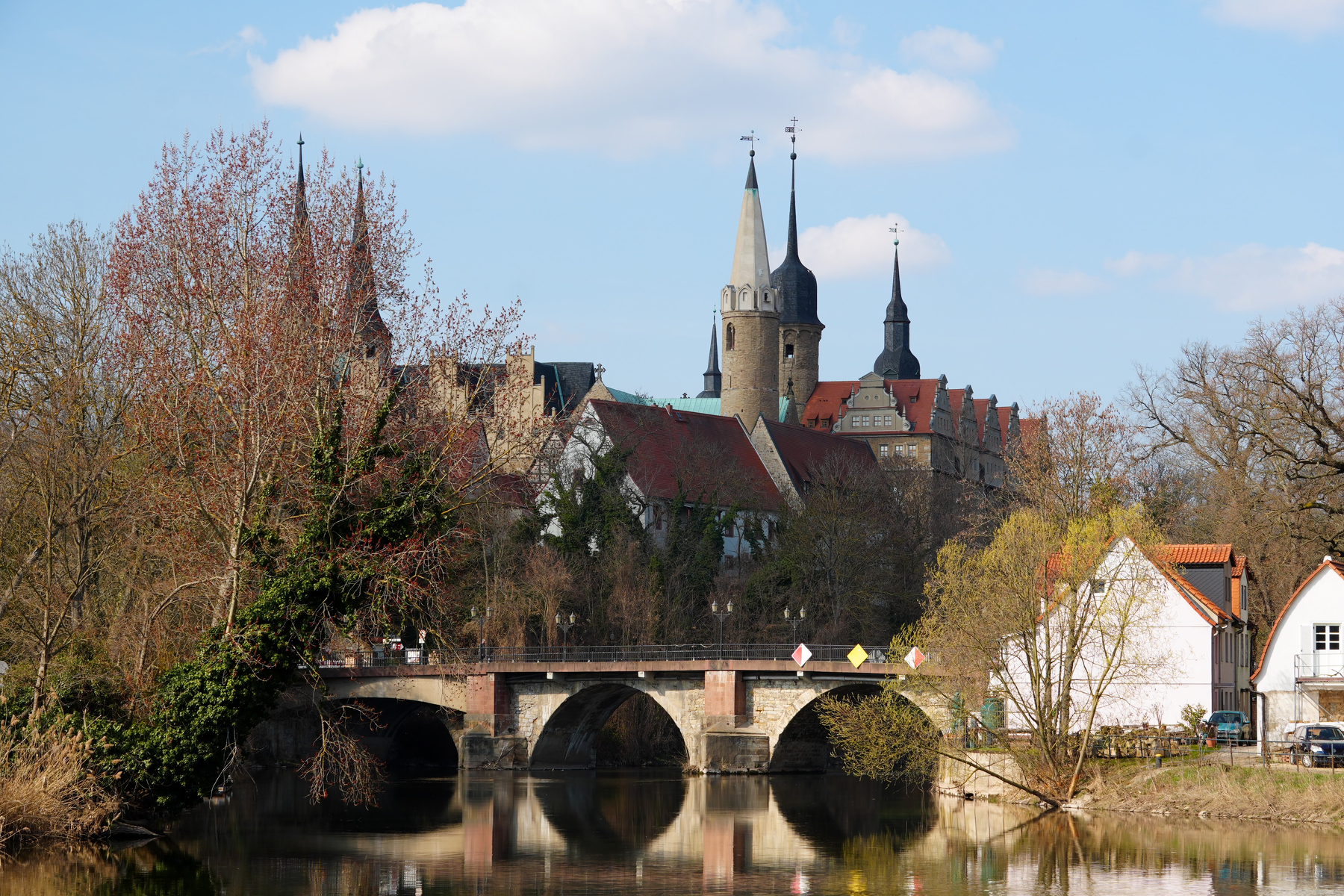
We found a tactile city map. So I’ll contrast a few buildings with map & reality (well, photo)
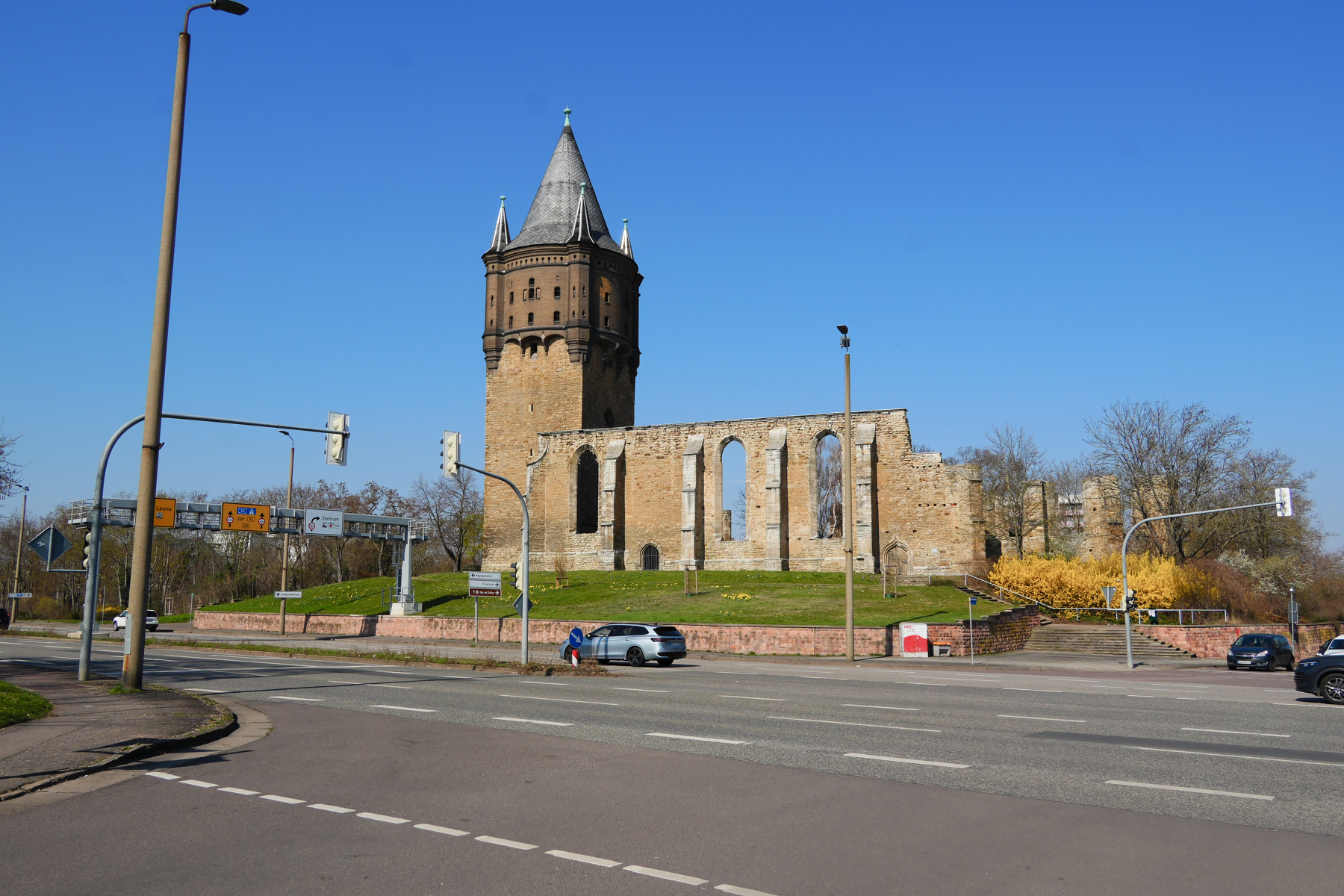
A historical tower and ruins stand prominently against a clear blue sky near a street with road signs and traffic lights.

St. Sixti

A detailed tactile map with raised elements depicts a city’s layout, including buildings and braille labels.

A cobblestone street lined with shops and a prominent church steeple in the background is bustling with people on a sunny day.

St Maximi

A detailed miniature model depicts a historic town with buildings, including a prominent church-like structure.

A picturesque scene features a historic bridge over a calm river, framed by trees and dominated by the spires of a quaint town in the background.

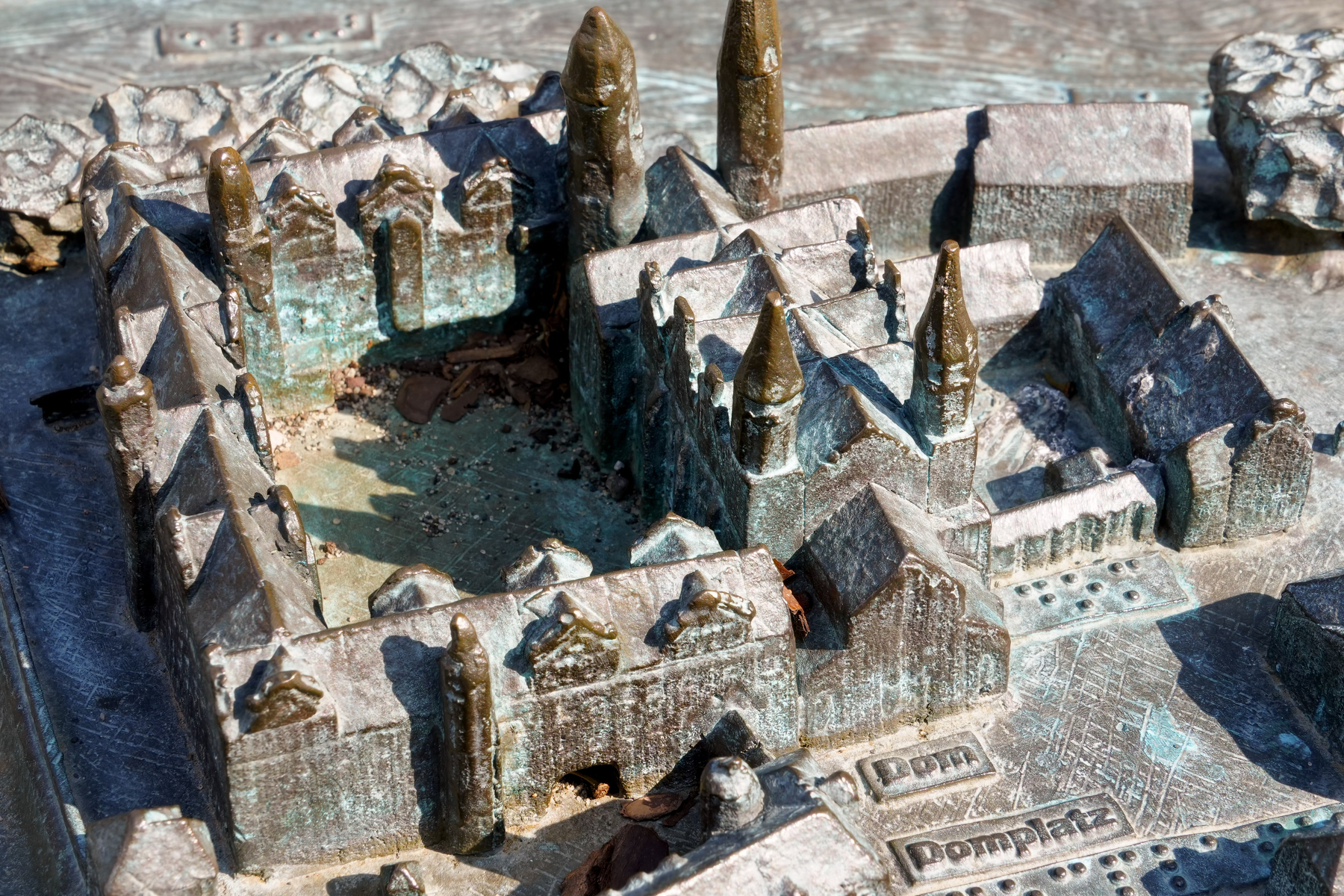
A bronze miniature model of a historical town features intricate buildings, towers, and a church layout with labeled sections like Dom and Domplatz.

Dom Merseburg

Day 2

Kreisgrabenanlage Pömmelte

A ca 5000 year old wood circle, close to the confluence of Saale and Elbe.
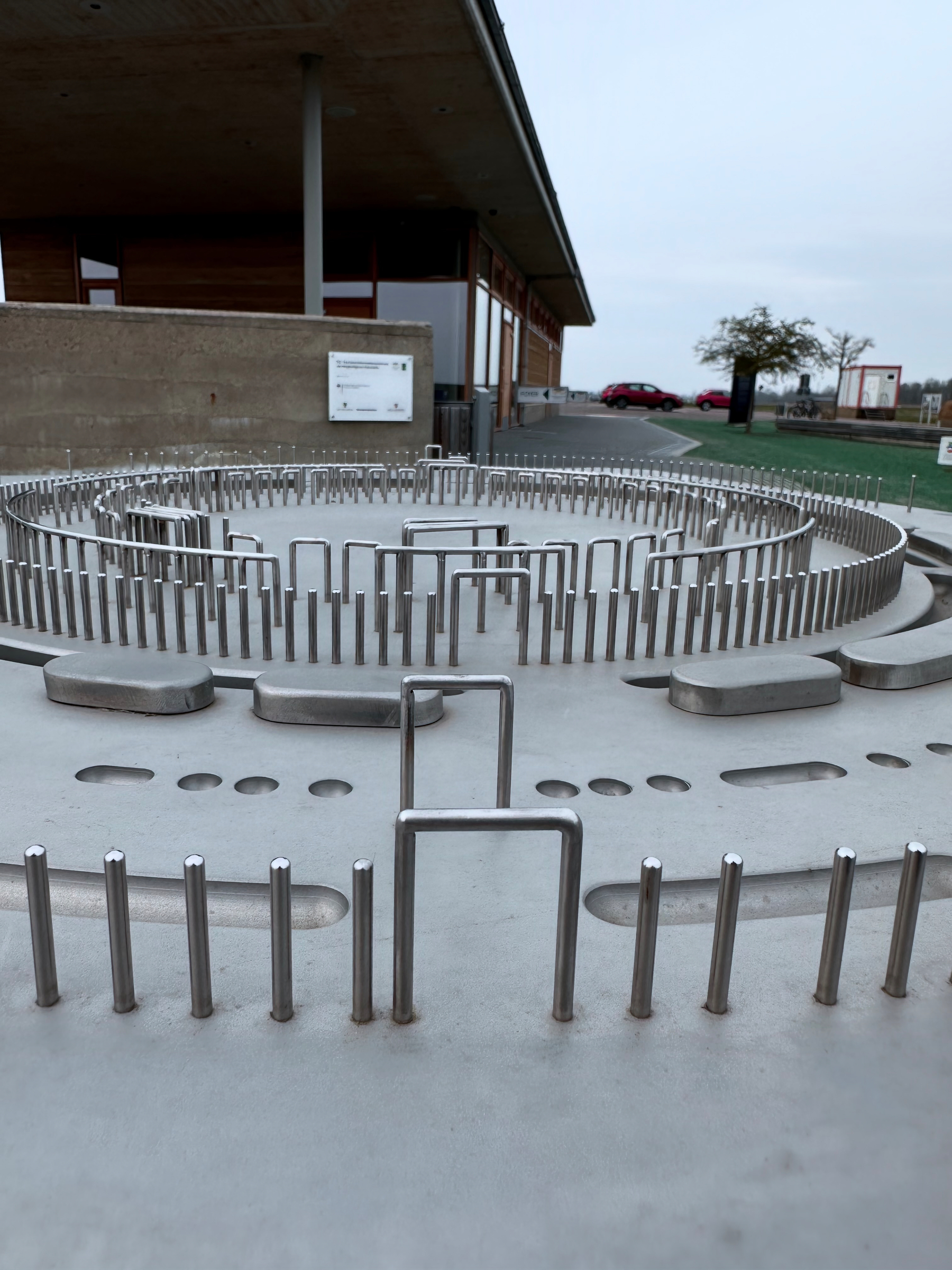
A tactile model of the Kreisgrabenanlage Pömmelte made from metal stands in front of a modern building.

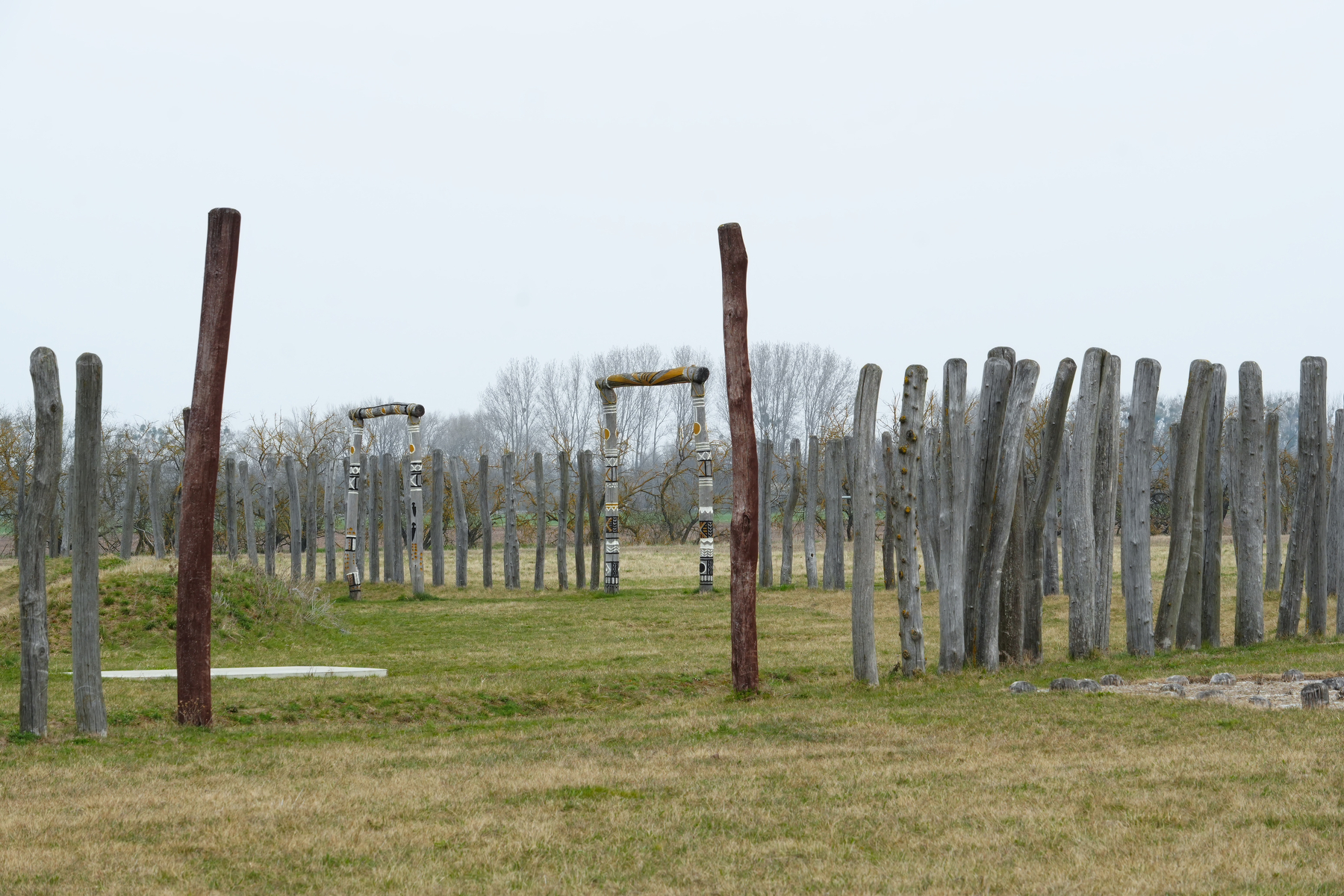
A field features tall, weathered wooden posts arranged in a seemingly random pattern under an overcast sky.

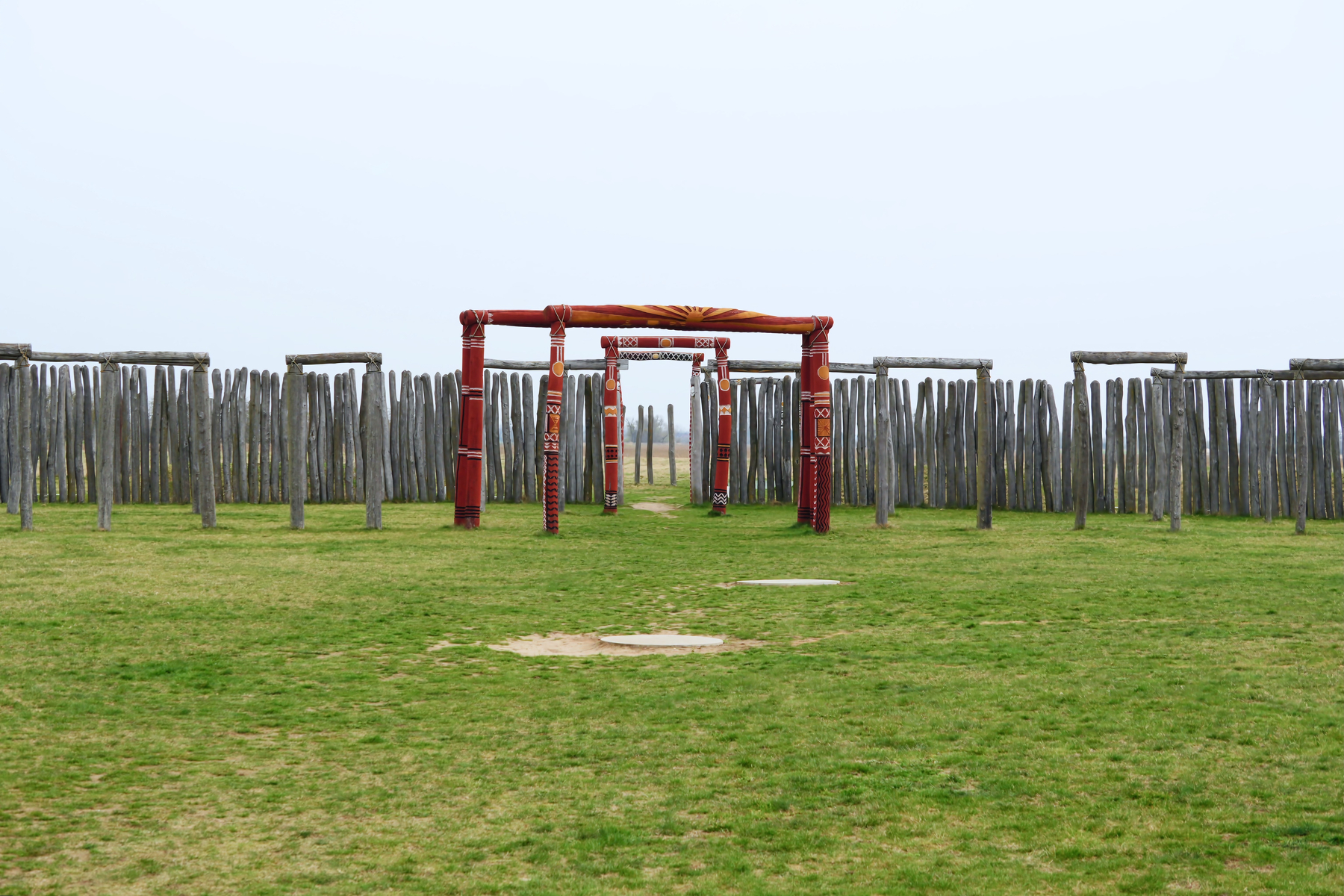
A grassy field contains a circular arrangement of tall wooden posts, with a central red gate adorned with patterns.

Kreisgrabenanlage Pömmelte

Bad Dürrenberg

The longest historic salt works in Europe
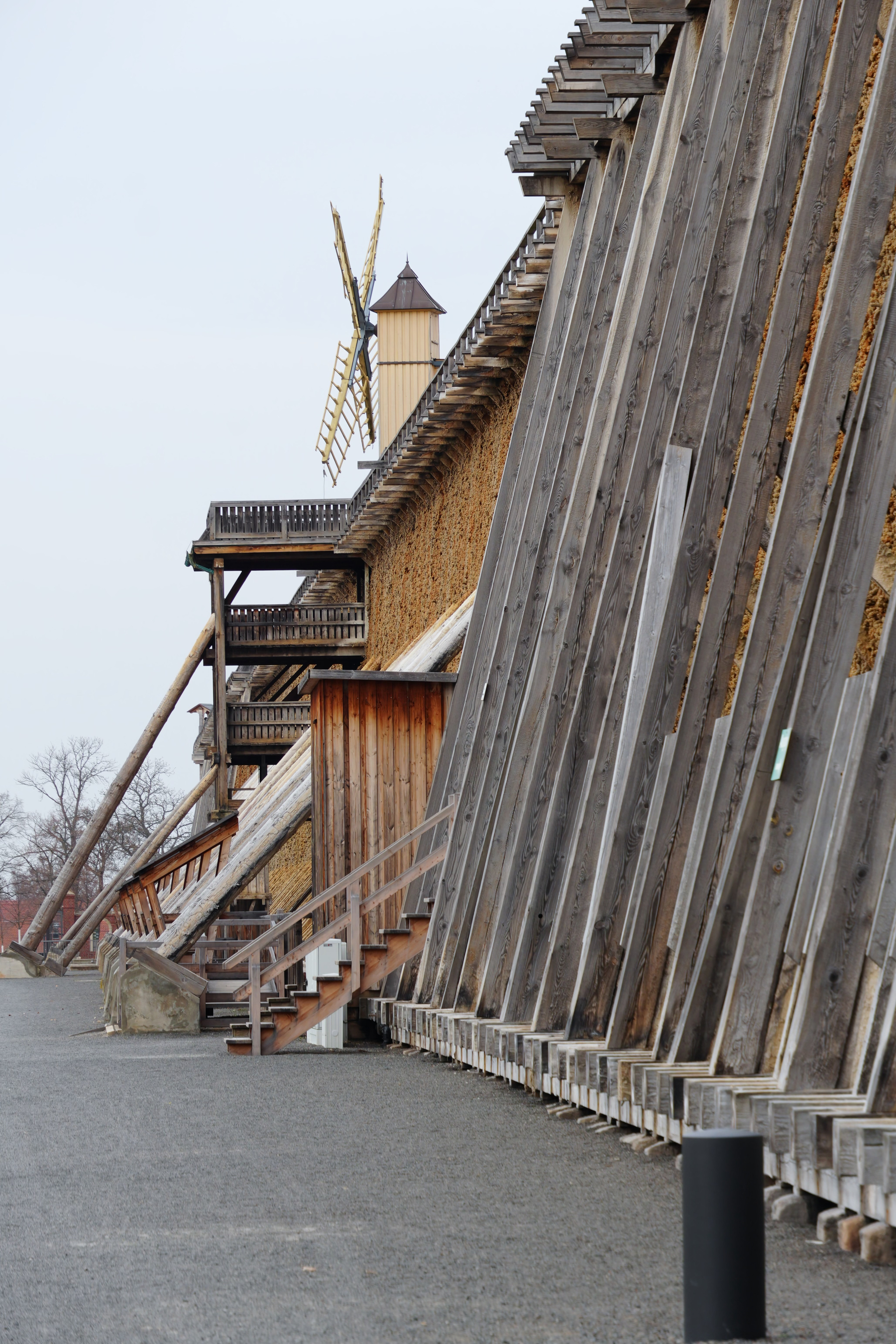
Rows of large wooden structures support walls of dried plants, resembling elements of traditional straw processing, with a windmill in the background.

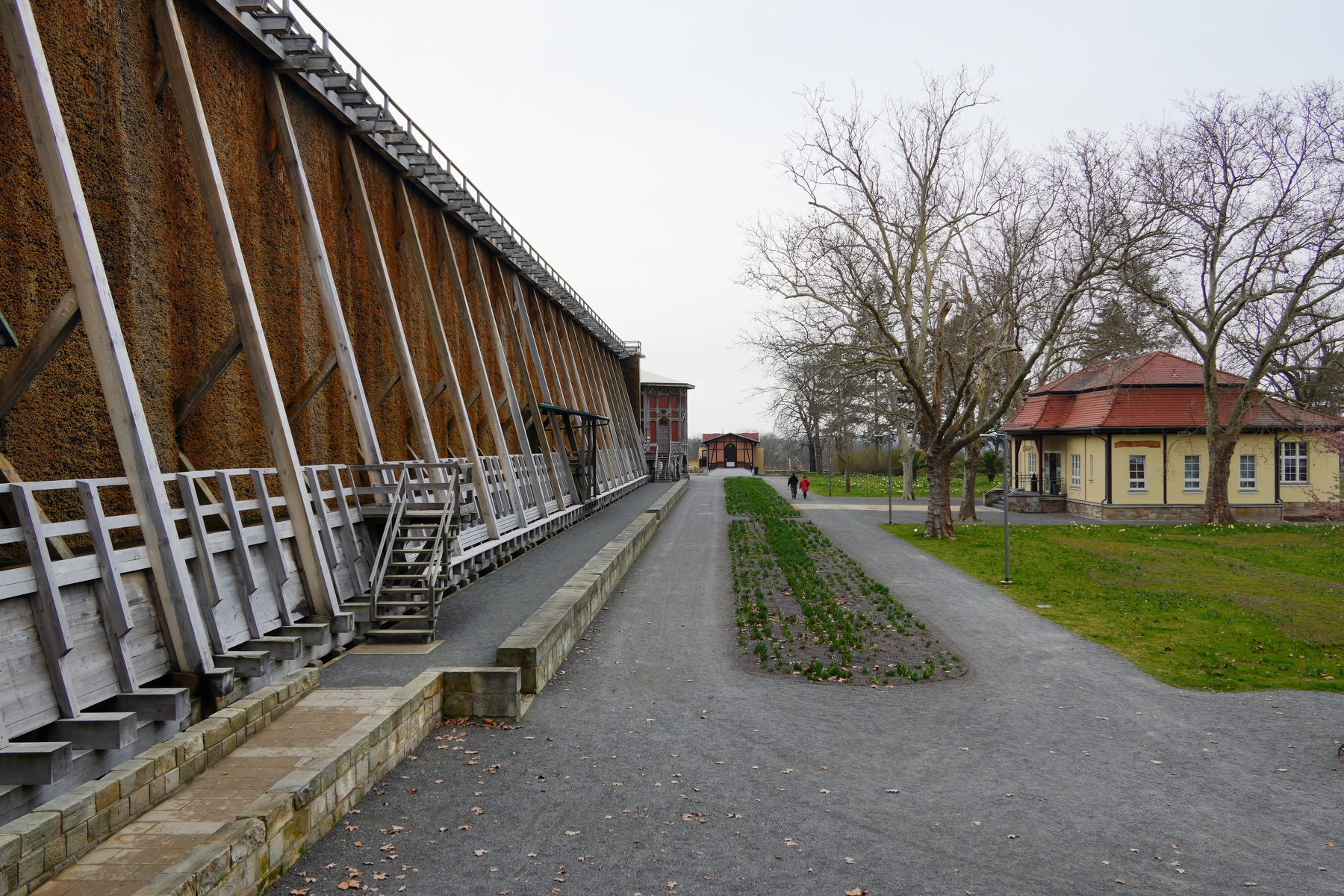
A large wooden structure with a sloped roof is situated next to a pathway and a grassy area with trees and smaller buildings.

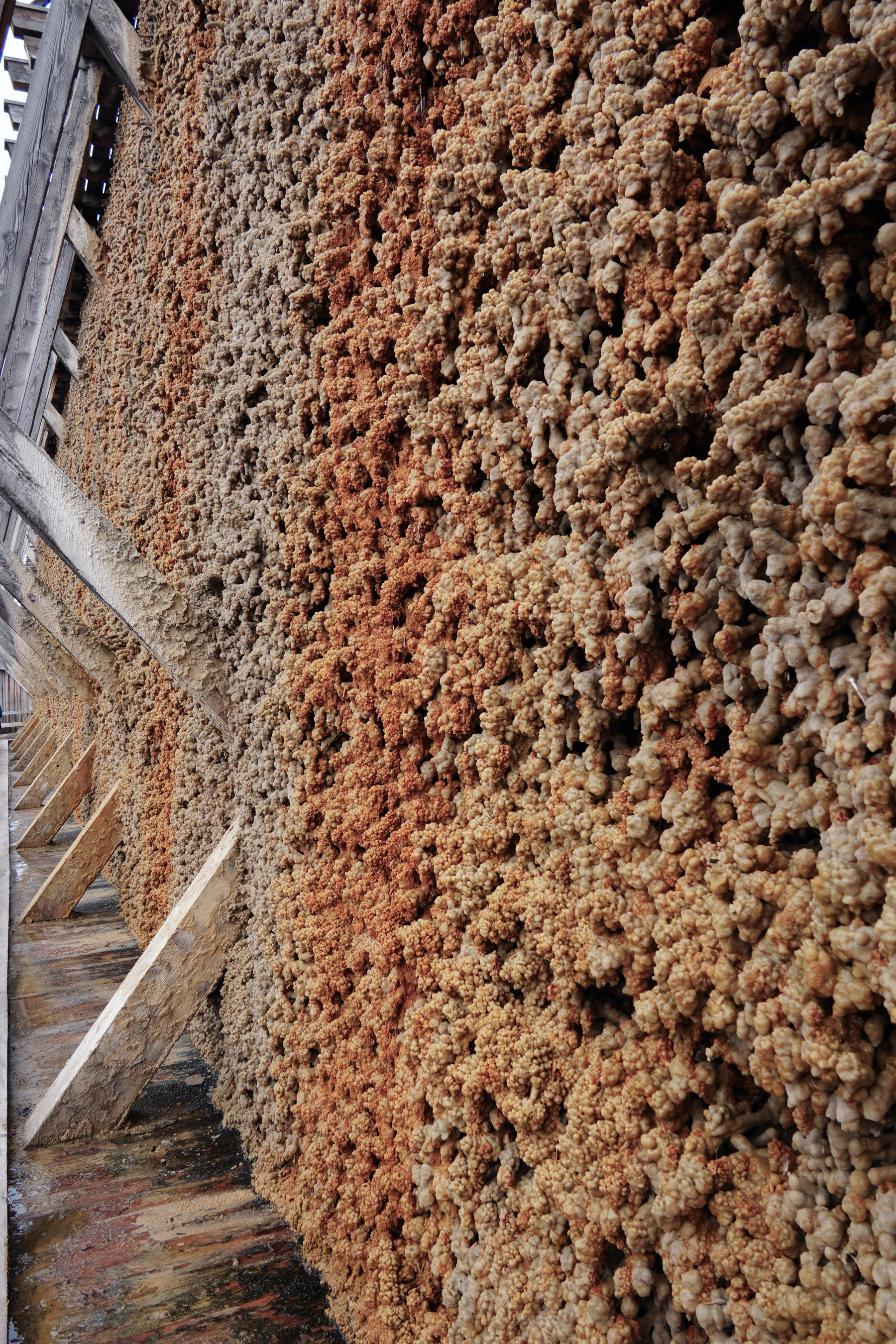
A wall of salt crystals is shown on a wooden structure, likely part of a salt production site or spa facility.

In the middle of the spas park in 1932 the grave of a neolithic shaman and her child was found. Now in the Museum in Halle.

Gradierwerk Bad Dürrenberg

Bestattung von Bad Dürrenberg

www.landesmuseum-vorgeschichte.de/dauerauss…

Day 3

Arche Nebra

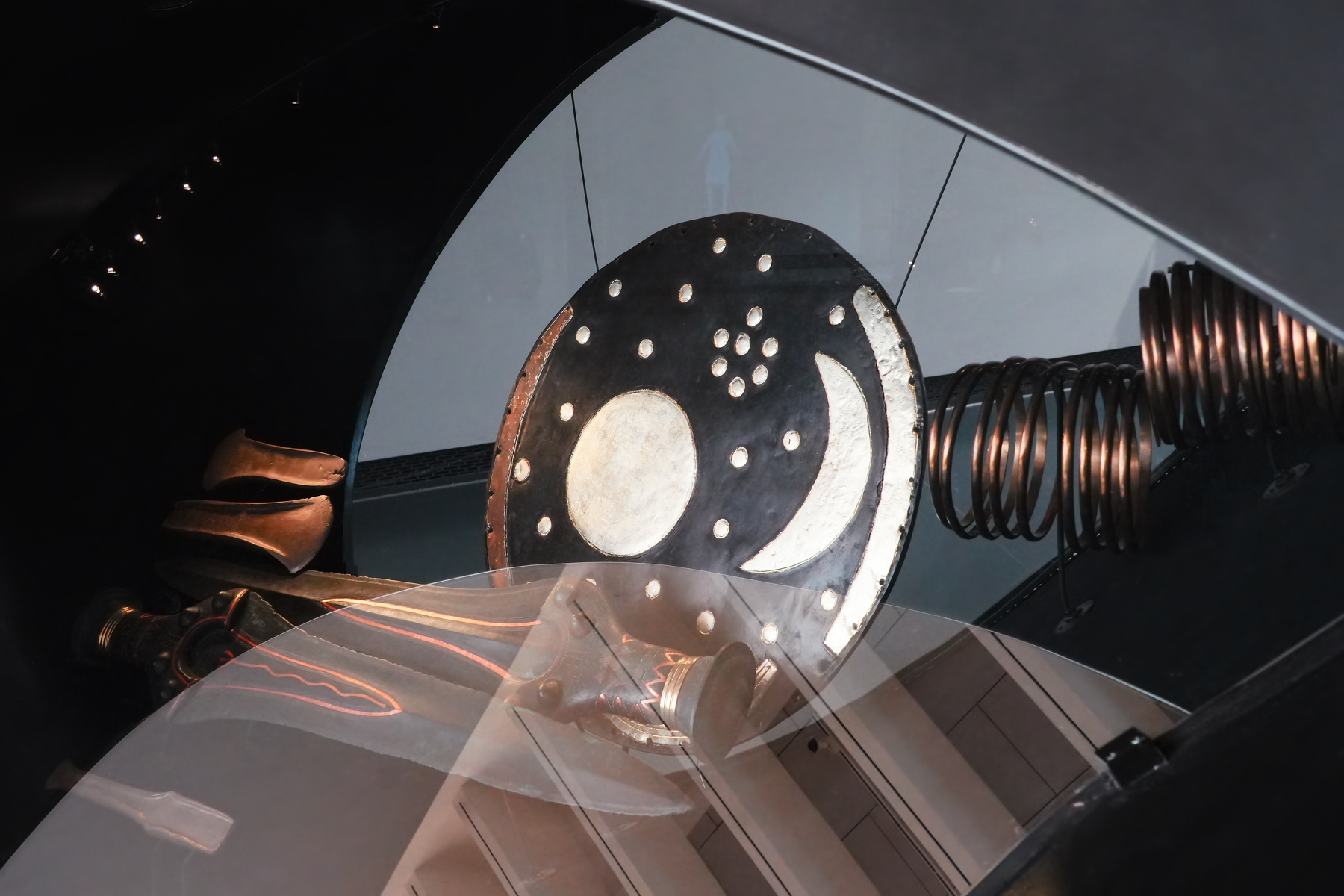
A museum, basically in the middle of nowhere, sits near the spot where the Nebra Sky Disk was found. In a film presentation, the symbolism on the disc is explained, including the importance for people in the Neolithicum. The disk shows how from observation you can figure out, using the position of the Pleiades and the moon, when spring starts and when autumn starts.
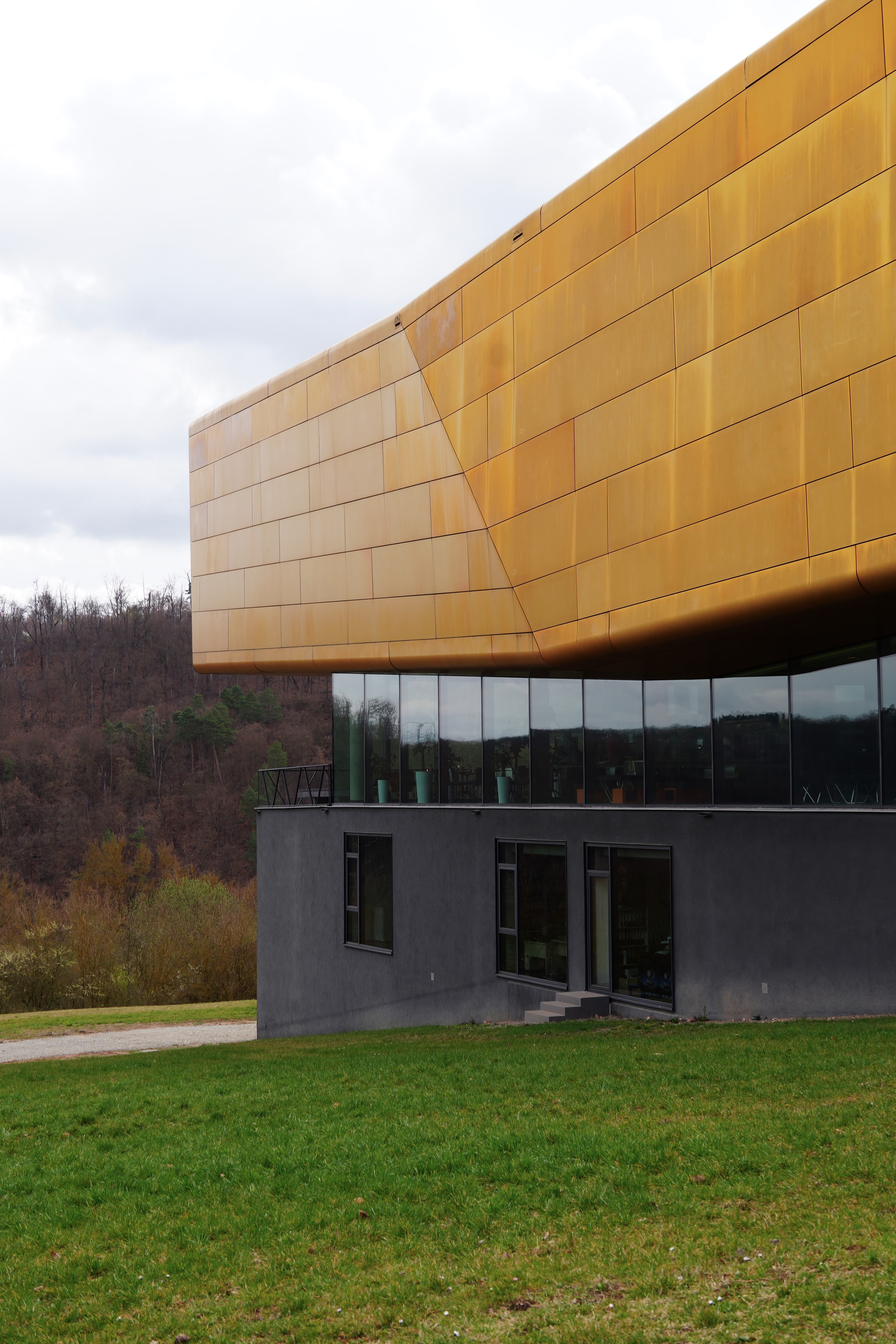
A modern building with a distinctive golden upper structure and large glass windows sits in a grassy area near a wooded landscape.

A display featuring the Nebra Sky Disc, an ancient artifact with celestial motifs, is surrounded by dark framing elements and reflective surfaces.

www.himmelswege.de/orte/arch…

Sonnenobservatorium Goseck

A 7,000-year-old sun observatory.

It looks much simpler than the Ringheiligtum Pömmelte we visited earlier this week. But, it is the oldest sun observatory yet found anywhere.

The observatory sits below the top of a hill. The view takes in a large valley, stretching from the earliest sunrise in the year to the latest sundown of the year. Today, this is all mostly fields. Back then, you would have looked just above the treetops.
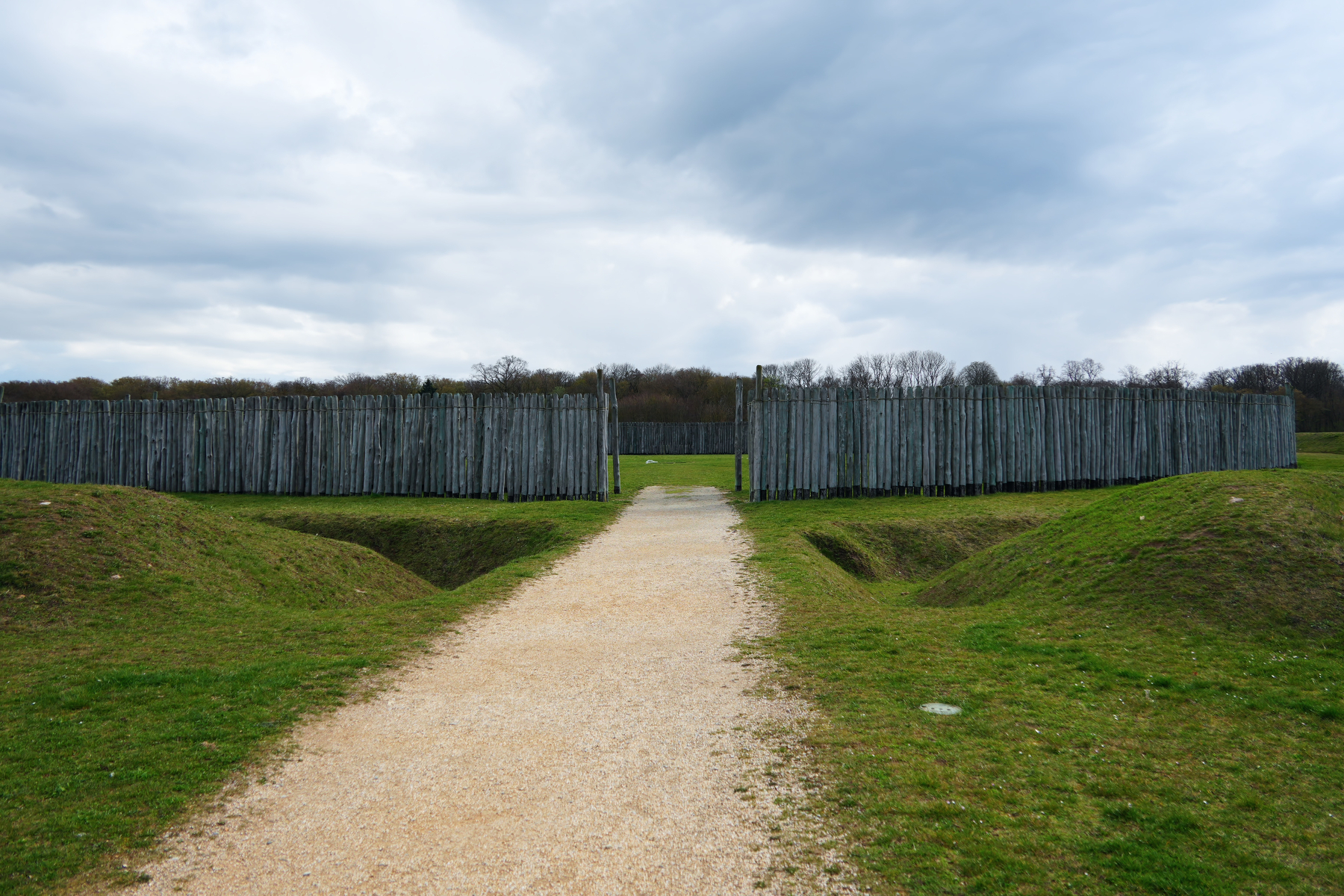
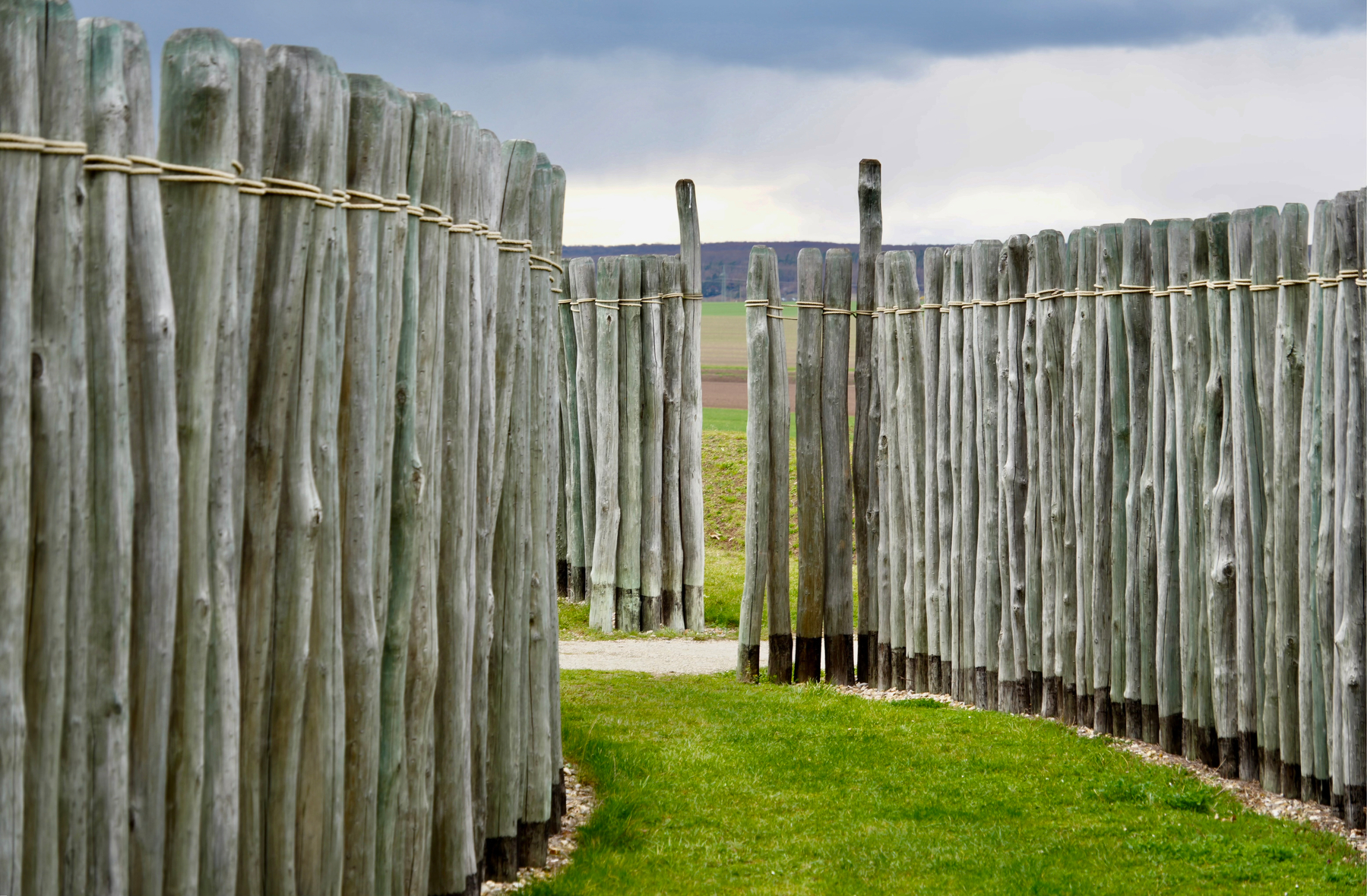
A gravel path leads to a wooden palisade surrounded by greenery under a cloudy sky.

Tall wooden posts are arranged in parallel rows, forming a pathway on grassy terrain under a cloudy sky.

sonnenobservatorium-goseck.info

Day 4 - Landesmuseum für Vorgeschichte (Halle/Saale)

A very nice (smallish) museum, but very well made.

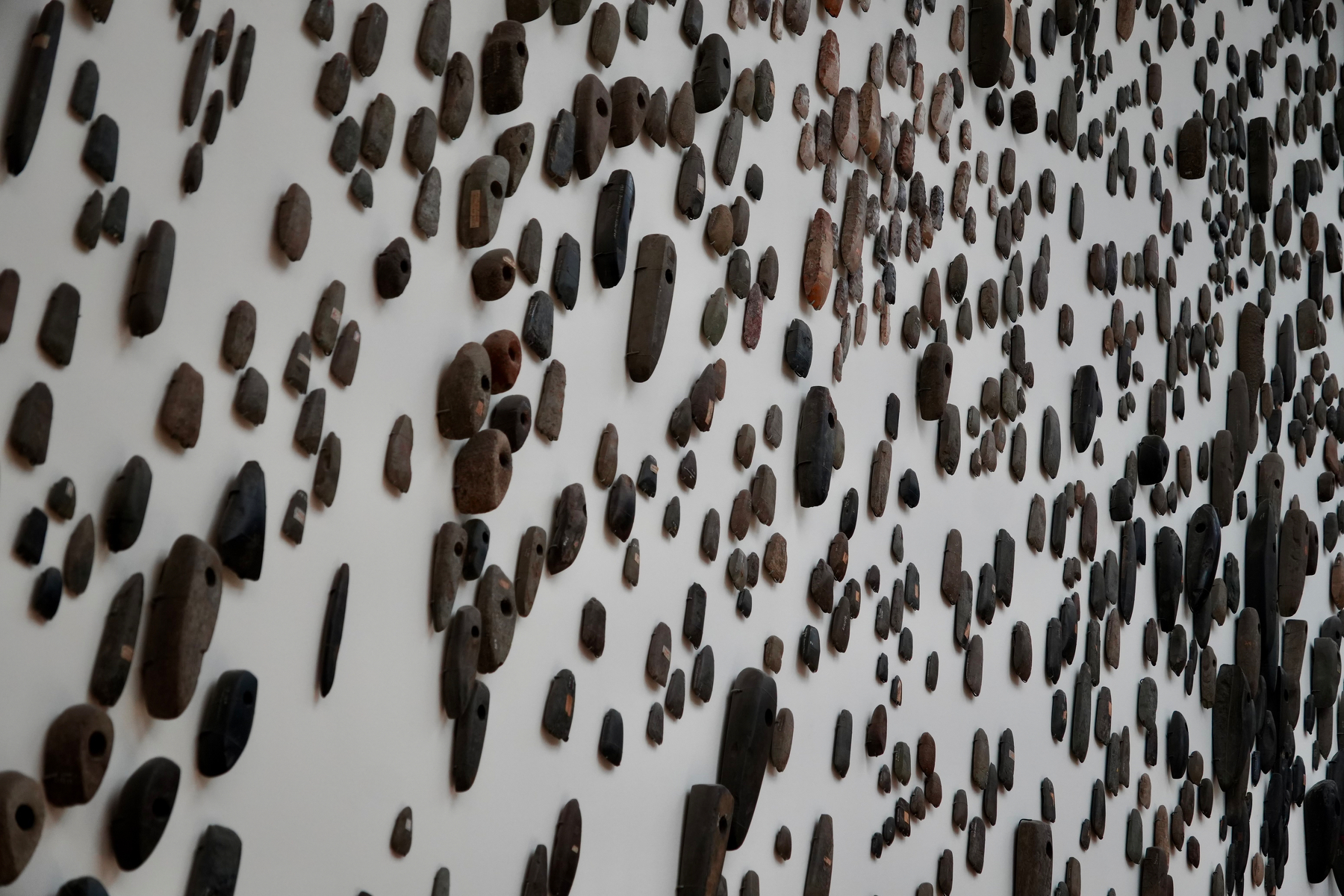
You start on the top floor with finds from about 400.000 years old from various cousins, including Erectus and Neanderthal and ending with Sapiens and the bronze age. Loads of finds. Rough stone tools, knapped stone tools, polished stone tools. The odd animal skeleton. The presentation is very good and the visitor leaves with a good and present impression of what life was like.
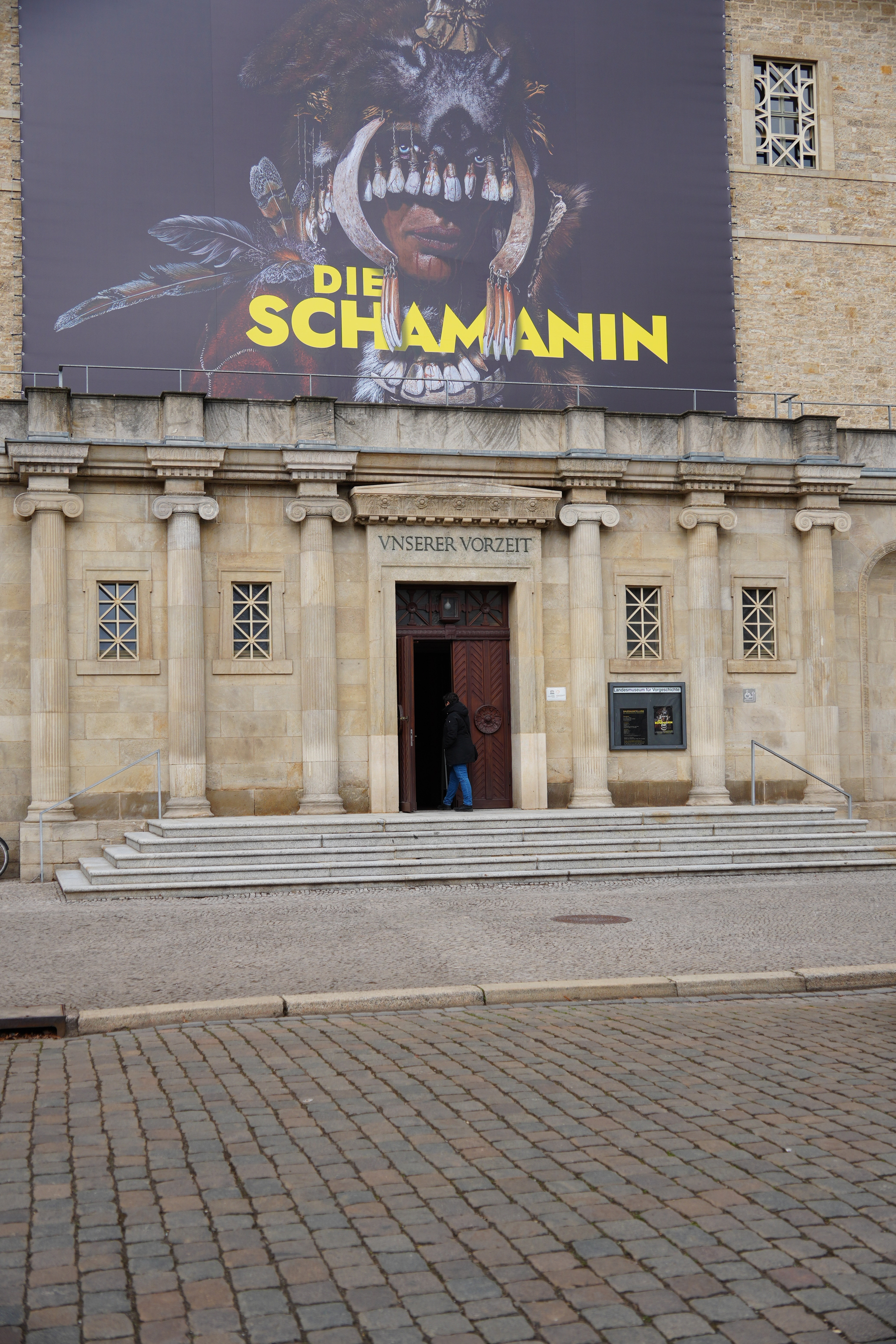
A large banner featuring the text DIE SCHAMANIN hangs above the entrance of a stone building with columns.

Numerous small, dark stone tools are arranged and mounted on a white wall in an artistic pattern.

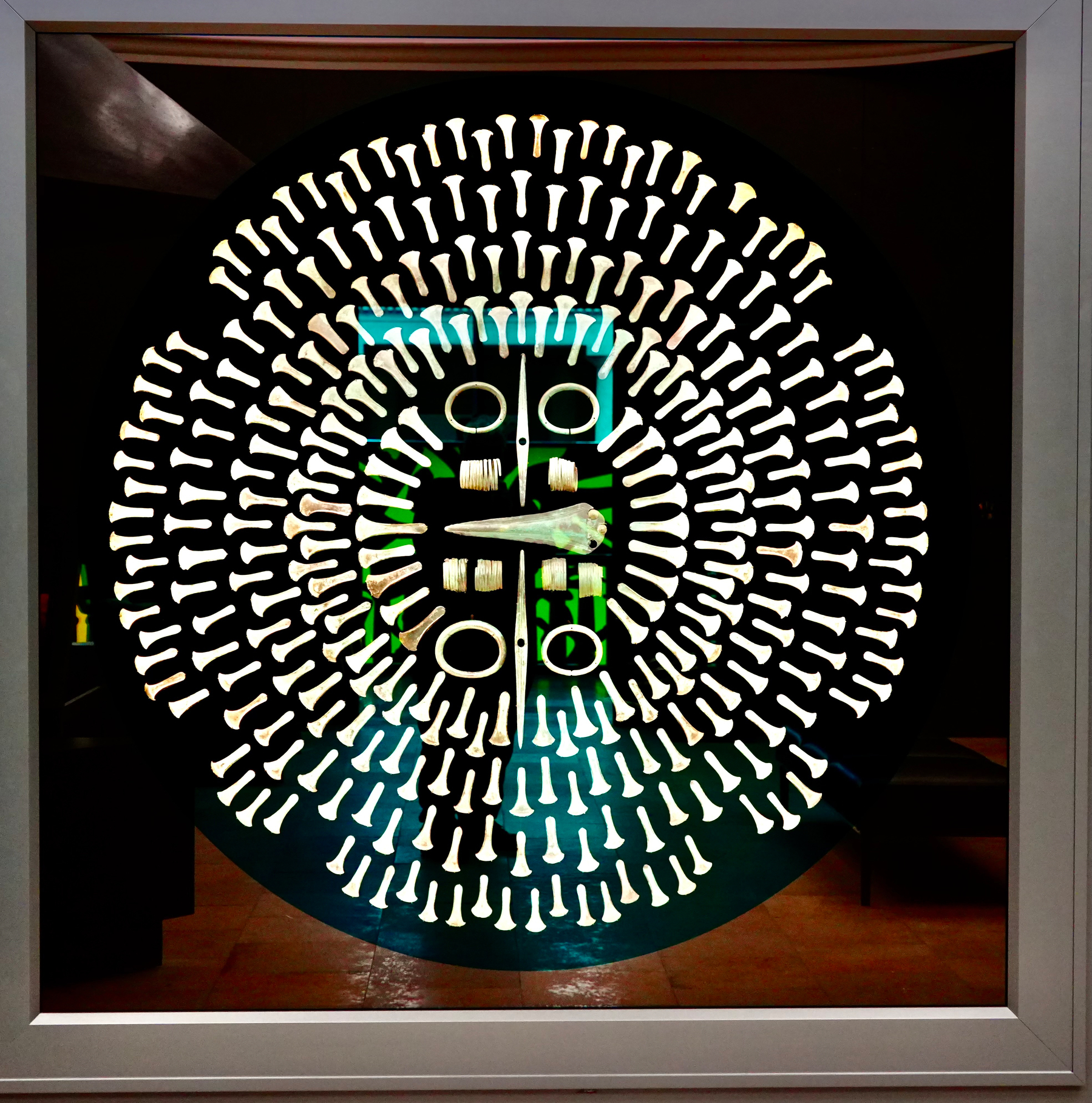
A circular artwork composed of numerous white bone-like shapes forms a symmetrical and intricate pattern against a dark background.

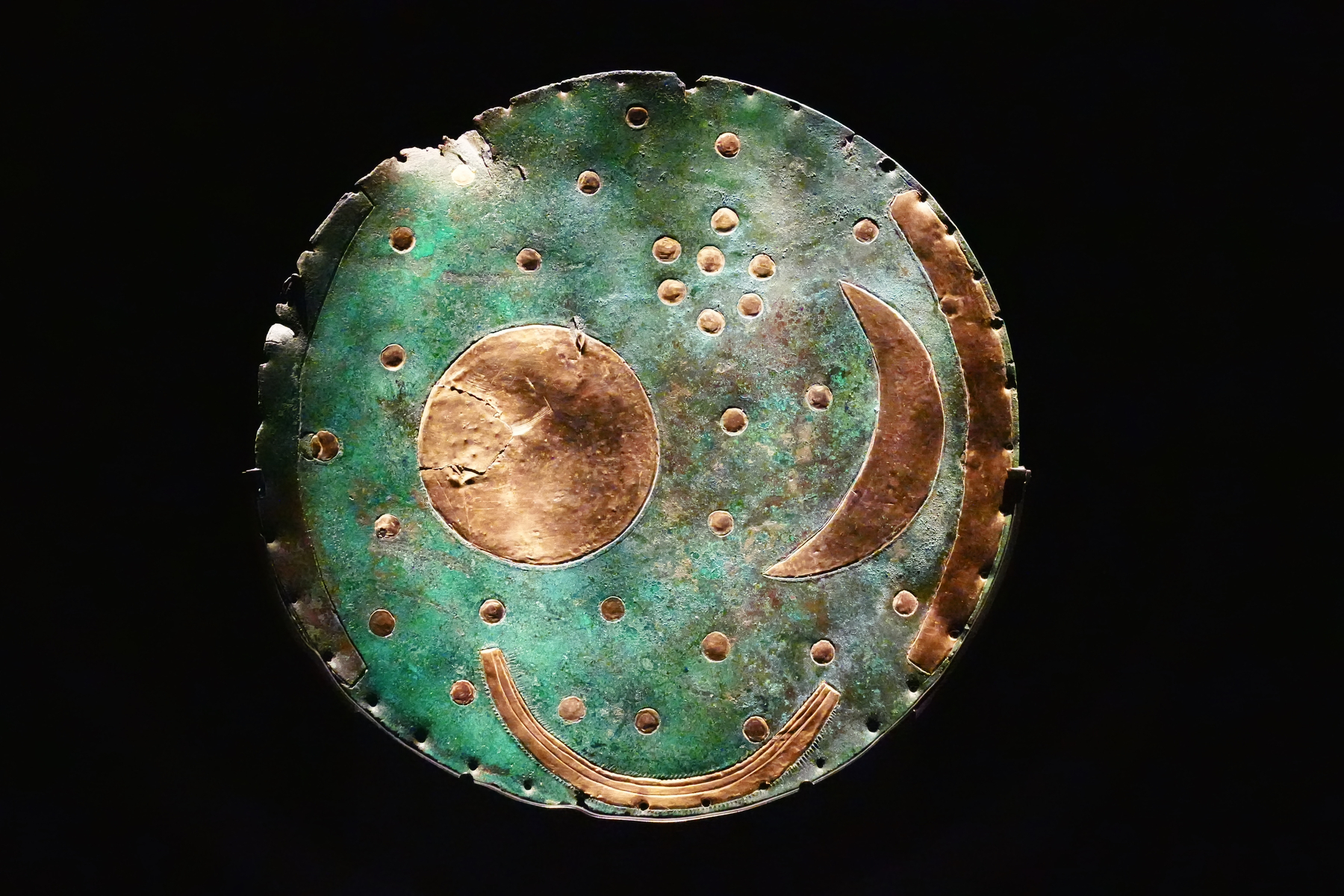
Himmelsscheibe front

A bronze disc features a depiction of celestial bodies including the sun, moon, and stars, thought to represent an ancient star map.

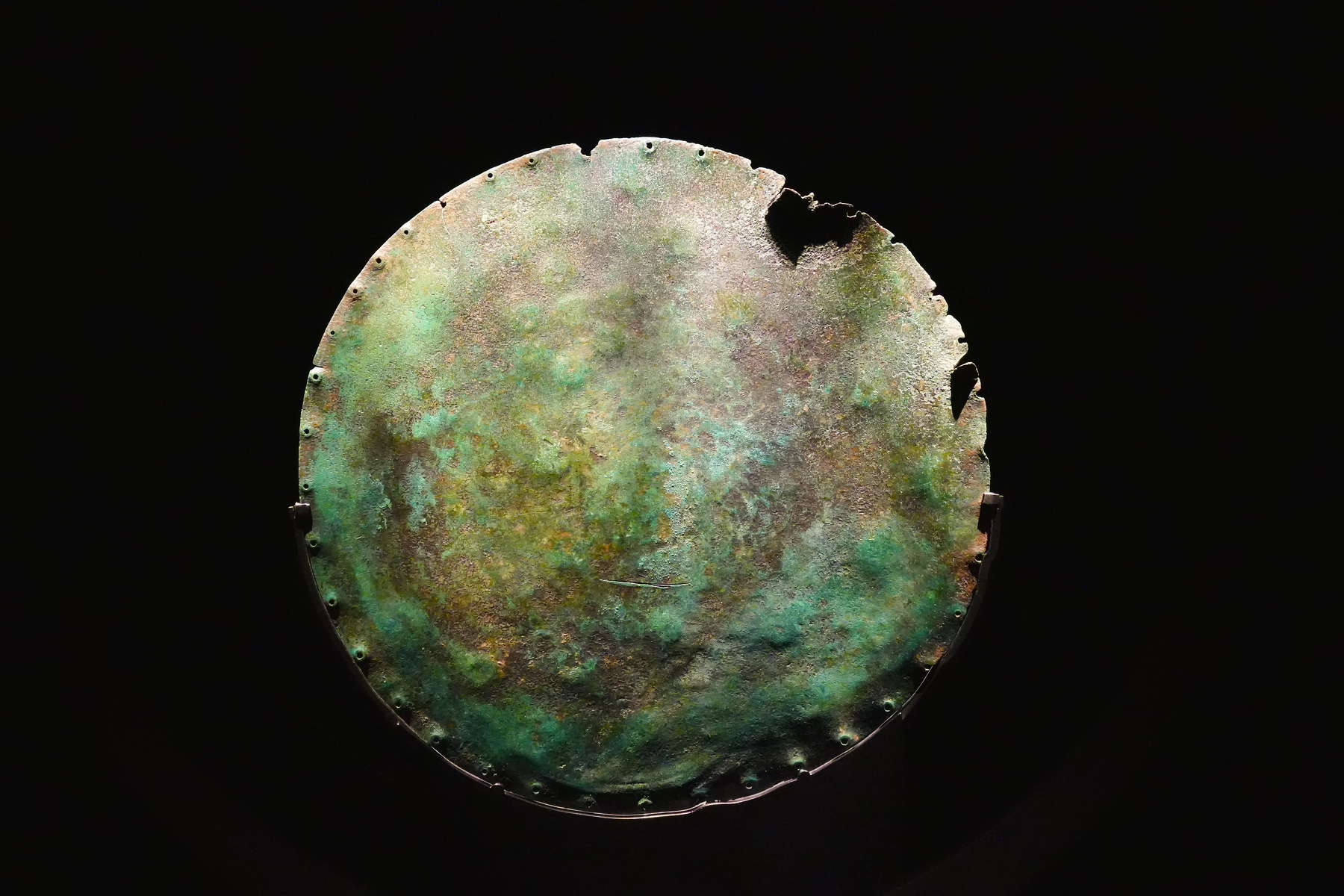
Himmelsscheibe back

A circular, weathered, and greenish artifact with a textured surface and uneven edges is displayed against a dark background.

www.landesmuseum-vorgeschichte.de/en/

The first floor takes us from the beginning of the Iron Age to the Reformation.

Quite a short time compared to the floor above.

But because of the sheer number of objects and contexts this floor feels more condensed and “sped up”.

In short: There was trade with Rome, some served in the Roman Army, the Thuringians had their short lived kingdom, the Franks came, Christianity, Reformation, puh.
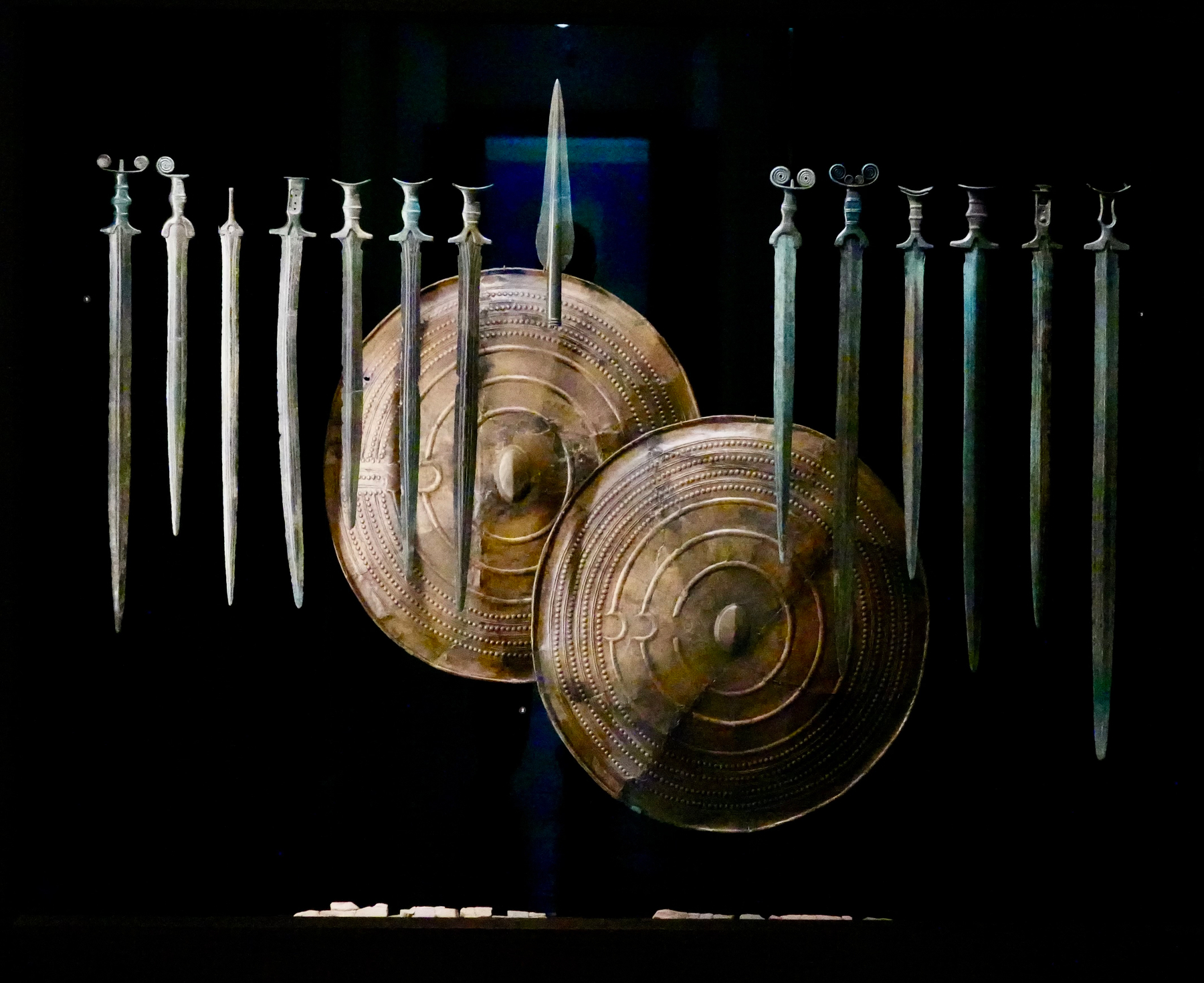
A collection of ancient swords and two ornate shields are displayed in a dark setting.

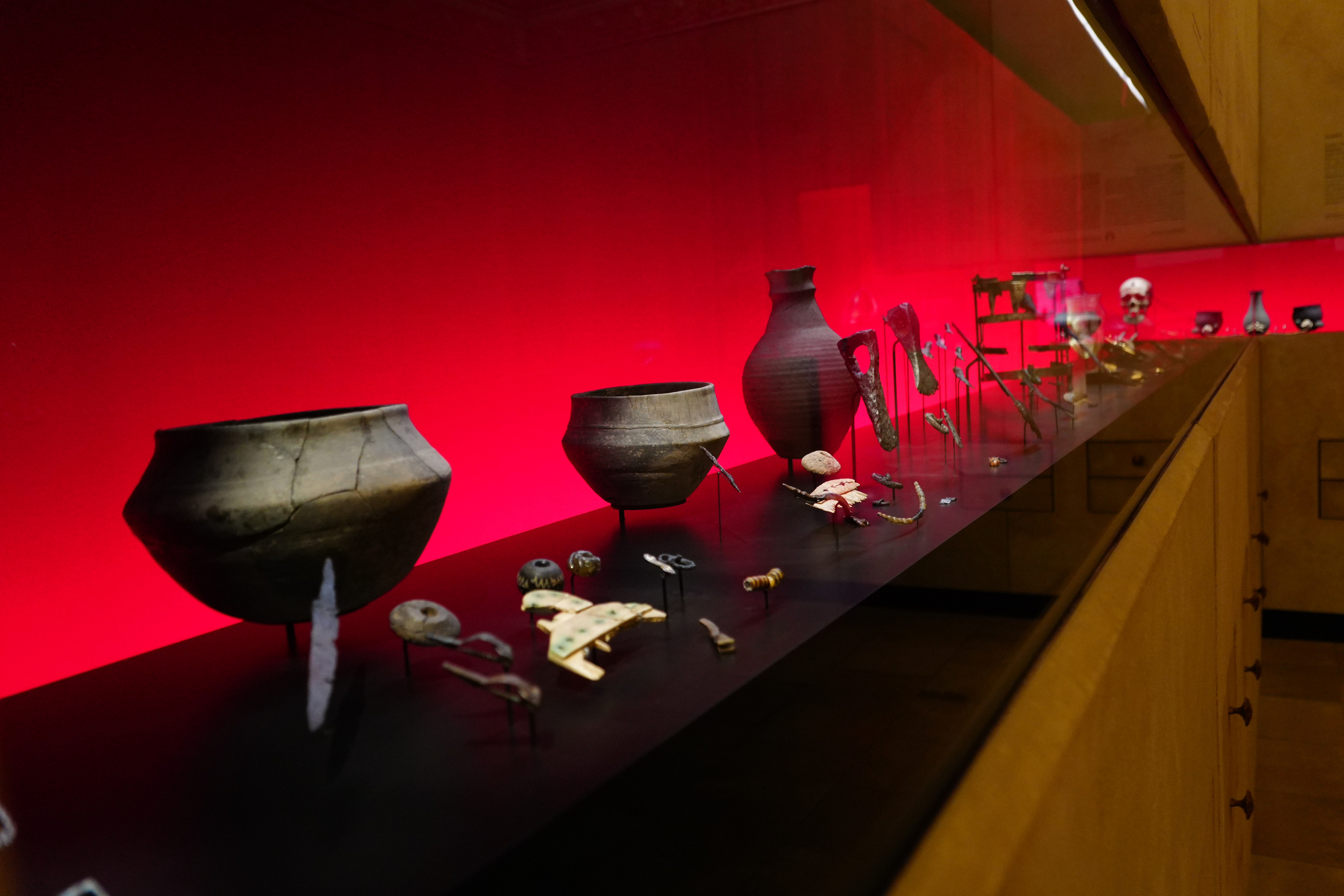
A display of ancient pottery and artifacts is showcased against a vibrant red backdrop.

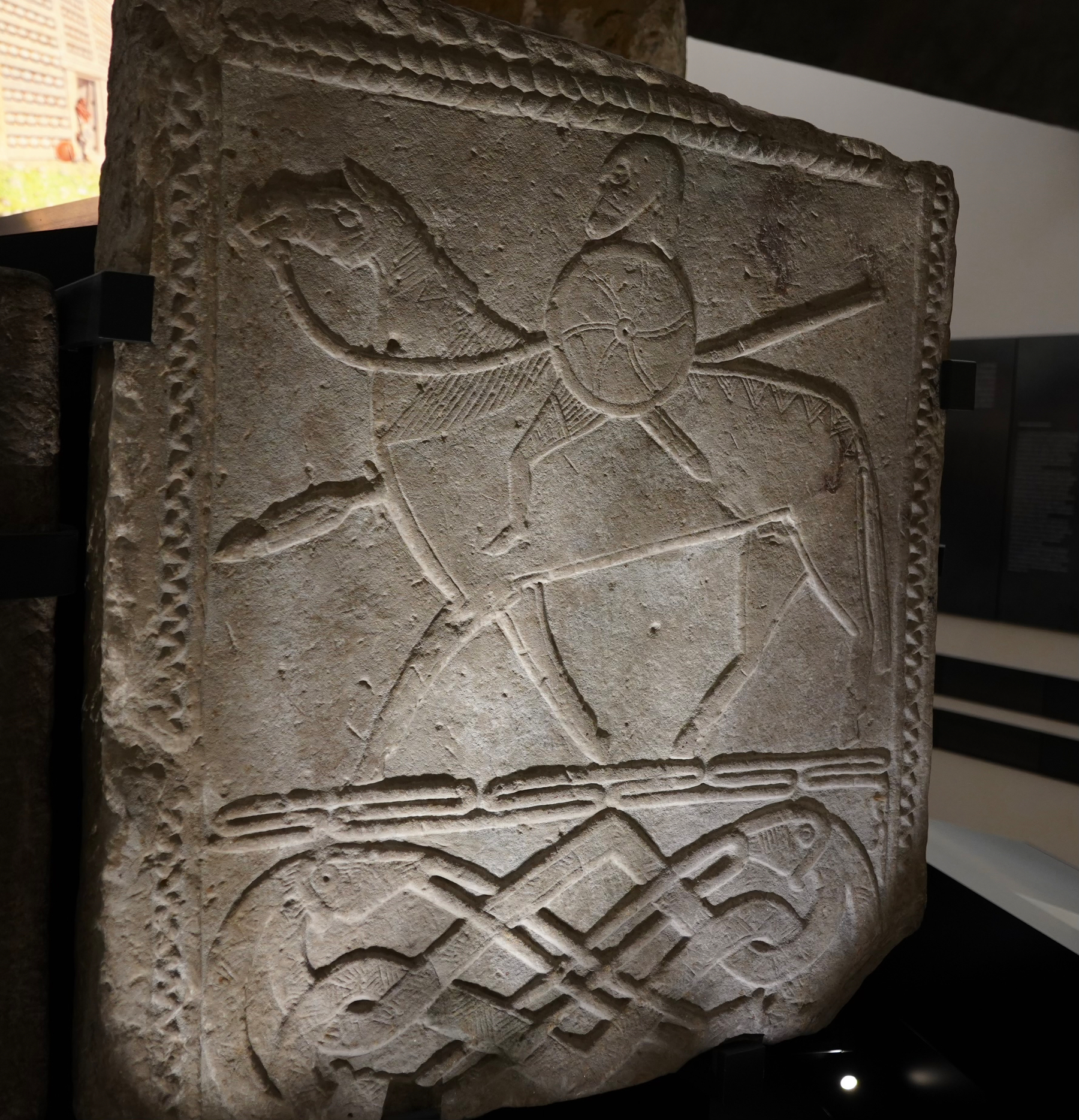
A stone carving depicts a warrior on horseback with a shield, featuring intricate patterns below.

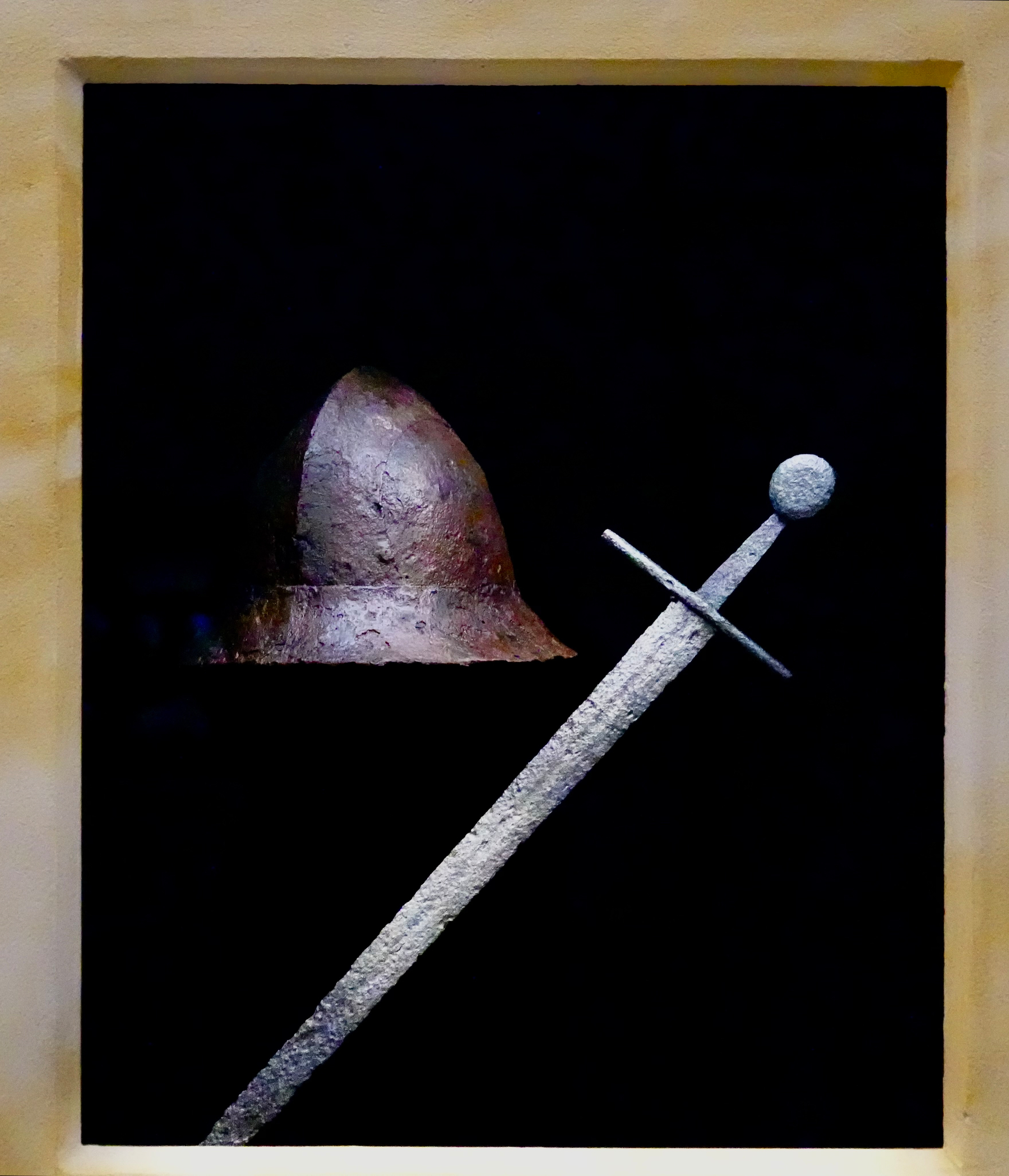
A medieval helmet and sword are displayed against a black background.

Day 5

Dolmengöttin Langeneichstädt
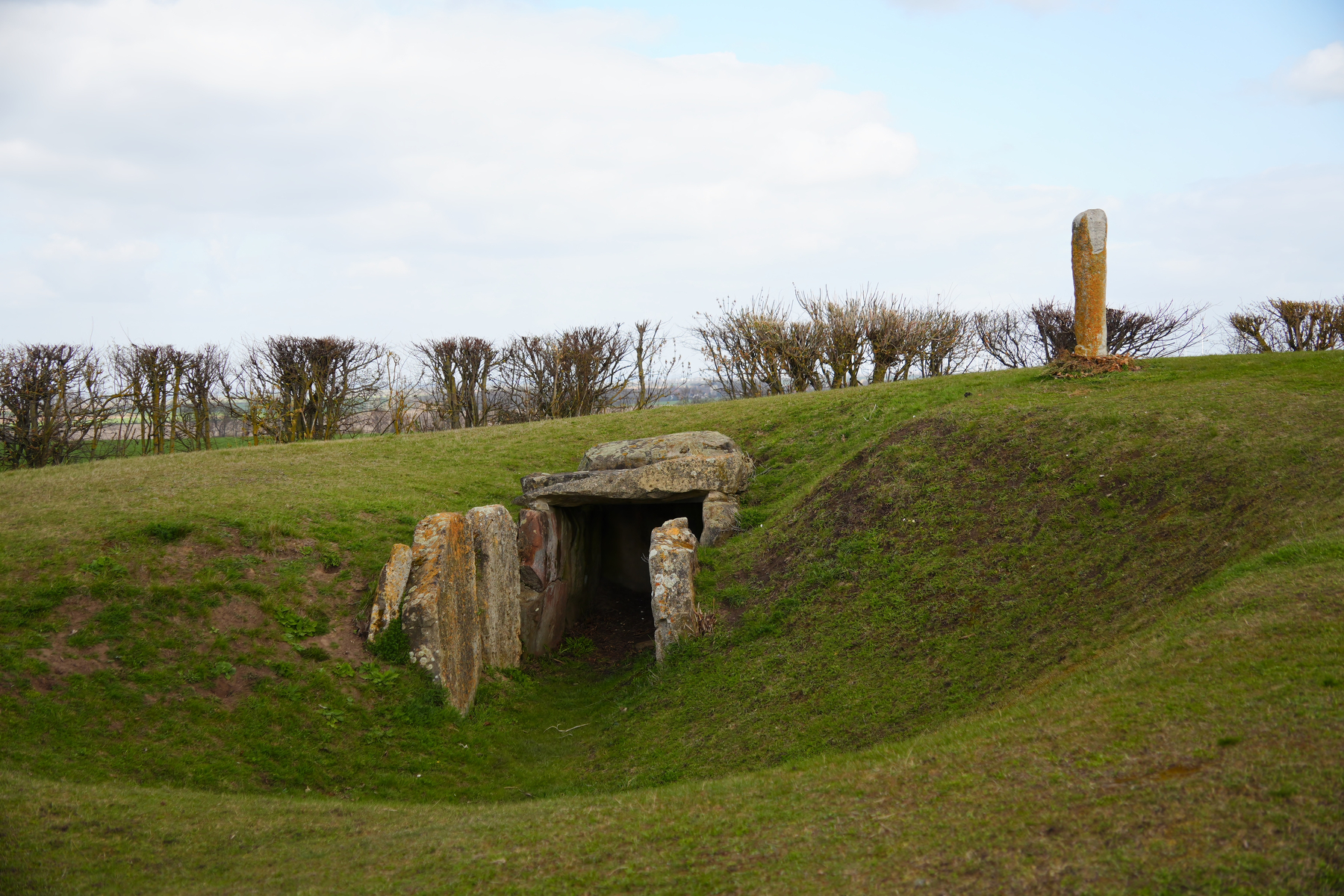
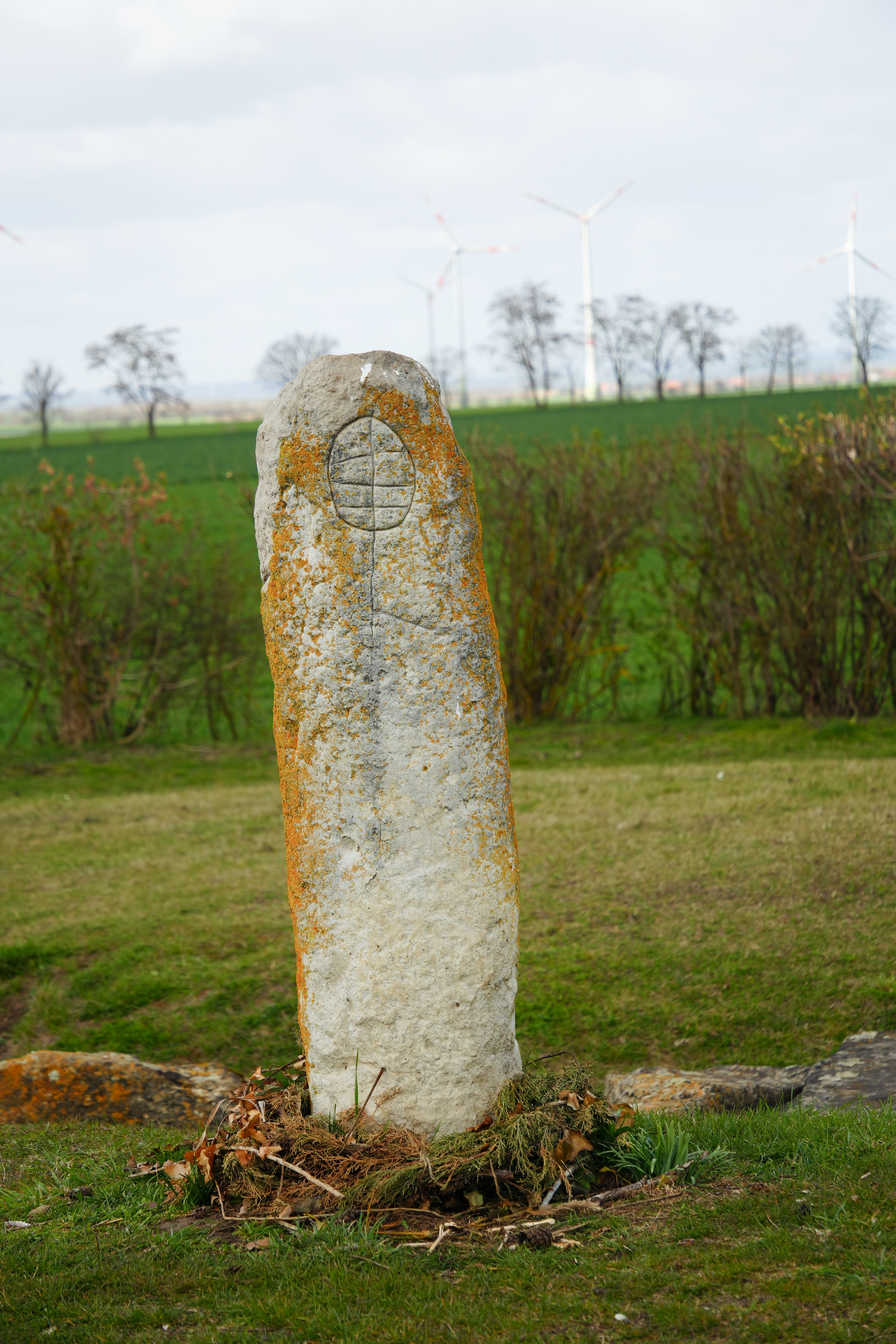
A grassy mound with a stone entrance leads to an ancient burial chamber, accompanied by a standing stone nearby.

A tall, weathered stone stands upright in a grassy field, adorned with a carved circular design, with wind turbines visible in the background.

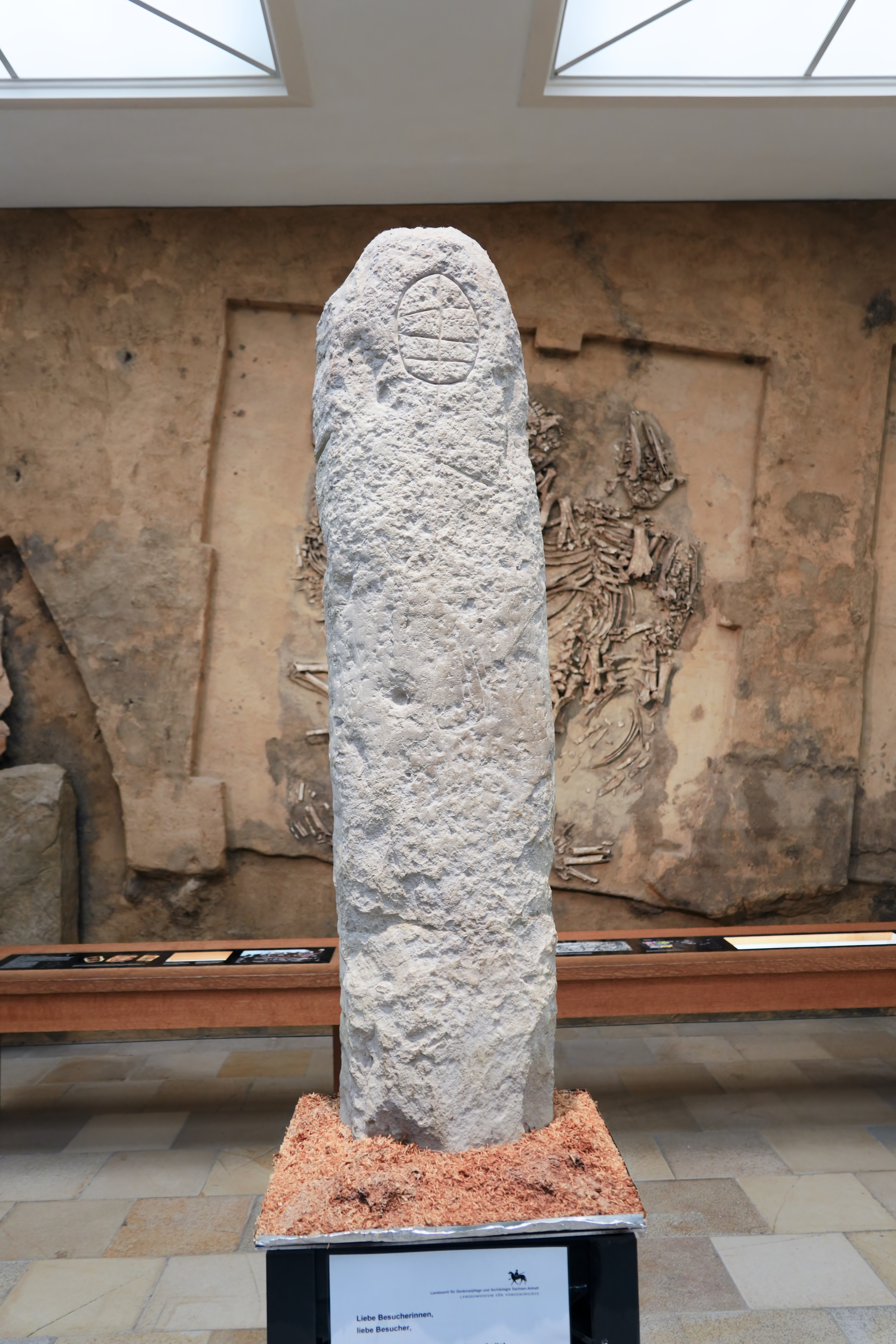
A tall ancient stone pillar with carvings stands displayed in a museum, surrounded by a historical exhibit in the background.

The last picture is the original in the Landesmuseum, see yesterday.

dolmengoettin.de

Eichstädter Warte

Same site as the Dolmengöttin, separated by a few meters and a few millennia
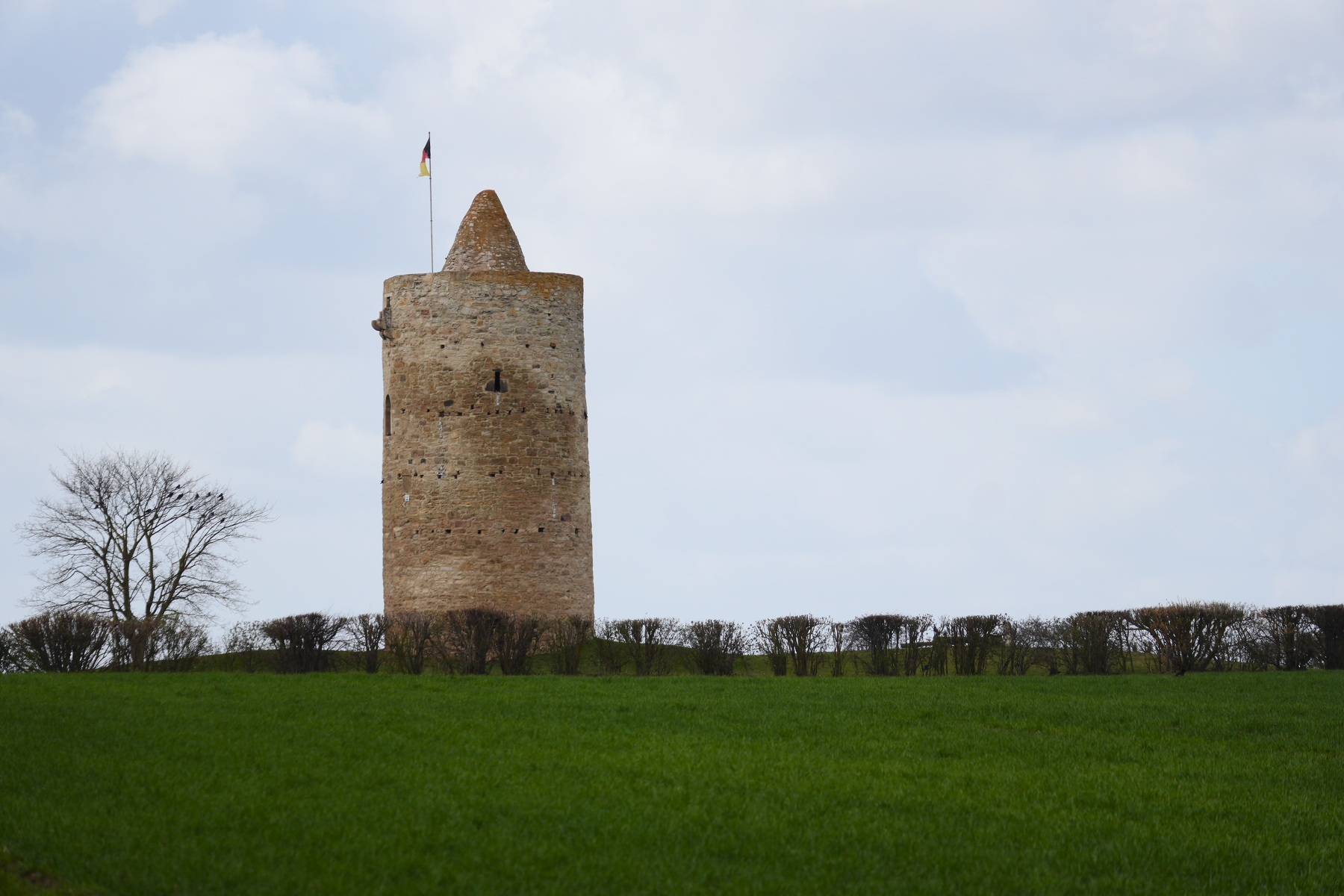
A stone tower with a conical top stands in a grassy field, topped with a flag, under a cloudy sky.

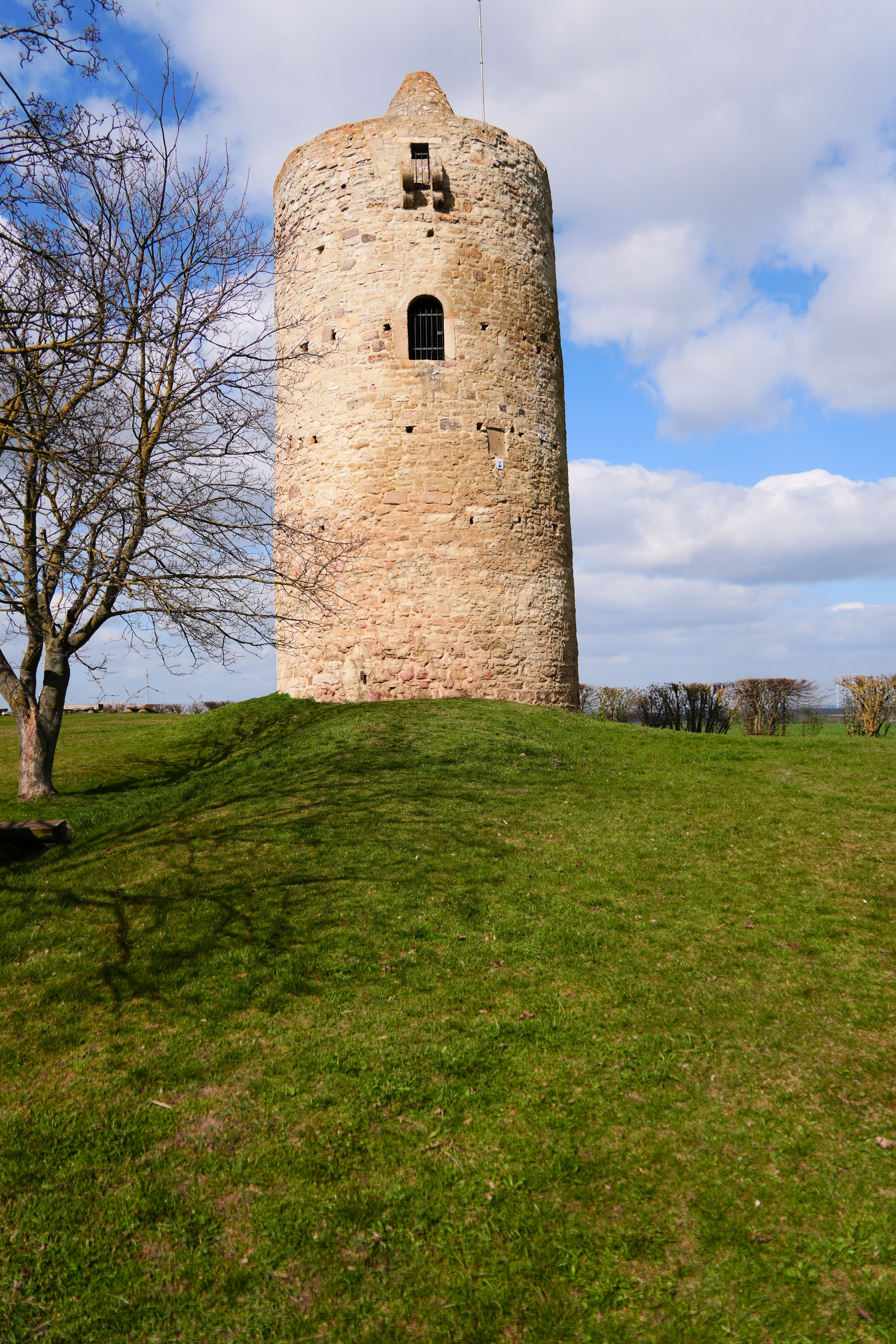
A tall, cylindrical stone tower stands on a grassy hill, surrounded by trees under a partly cloudy sky.

Medieval watchtower, build around 1000 CE by Heinrich I to watch for marauding Hungarians (there was more than the one tower, then)

Eichstädter Warte

A windmill on the way
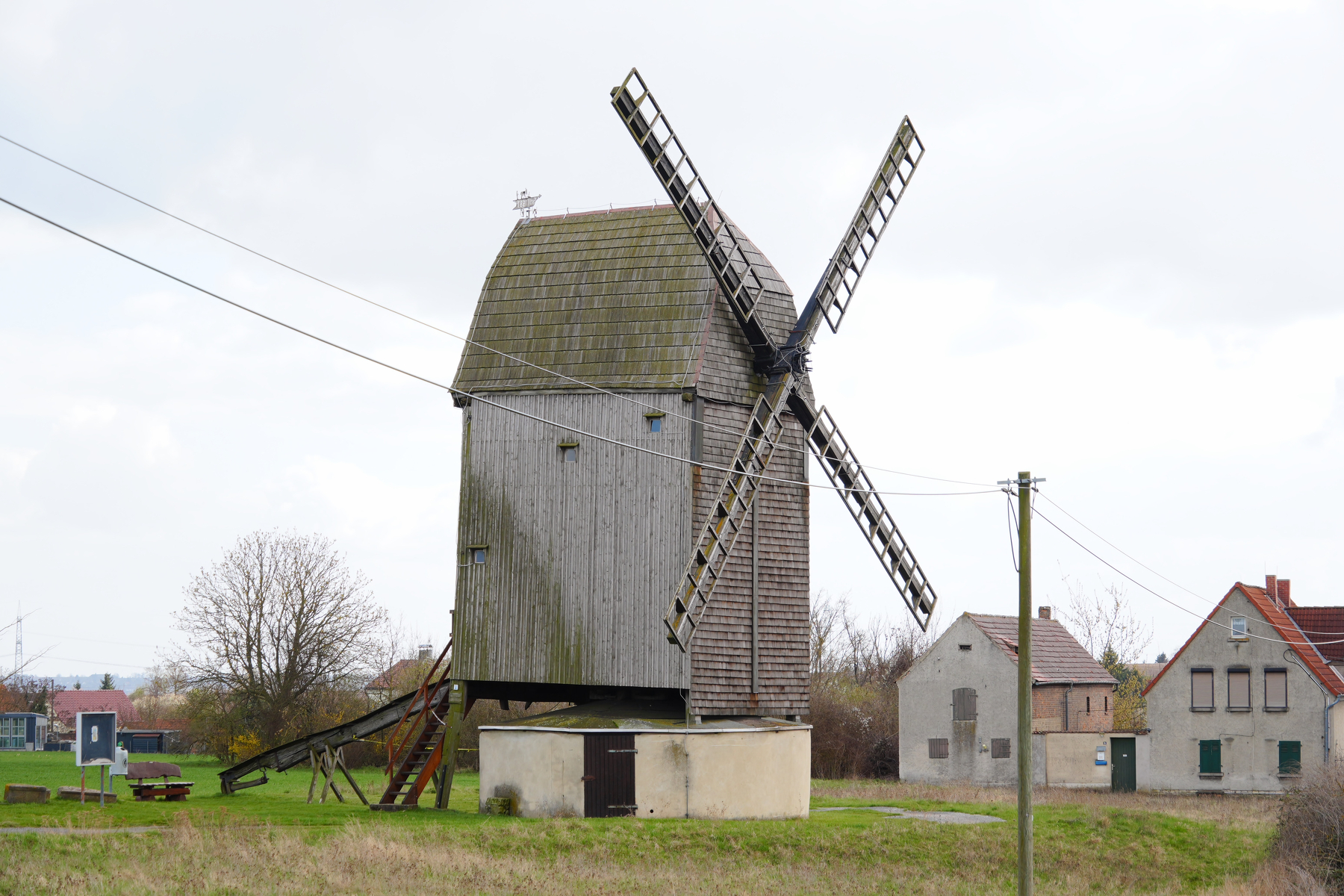
A rustic wooden windmill stands in a grassy field near several small houses under a cloudy sky.

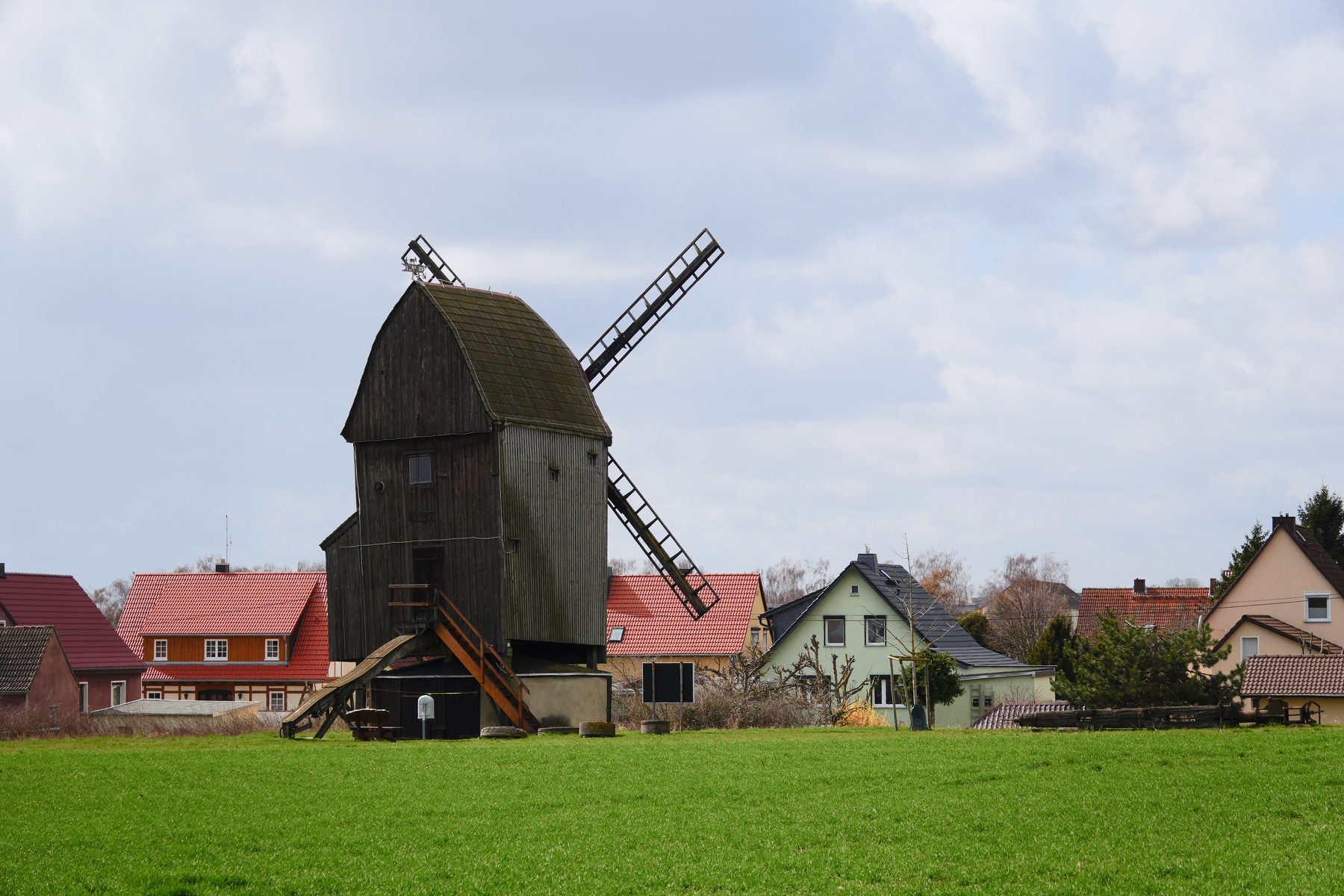
A rustic wooden windmill stands amid a village with colorful houses under a cloudy sky.

We saw a few mill ruins, mostly Dutch-style mills; this was the only post mill.

Burg Querfurt
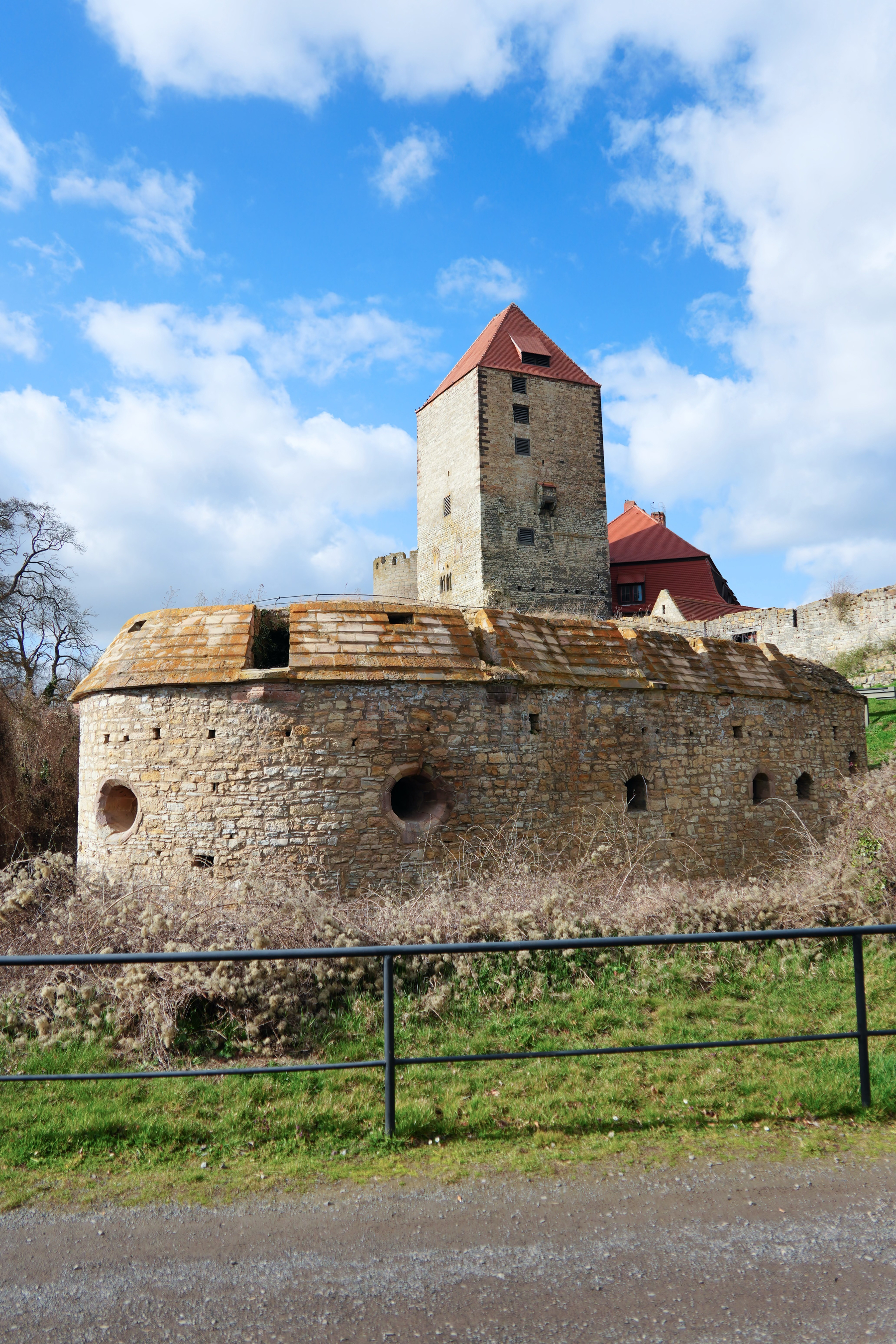
A stone medieval fortress with a tall central tower and red roof is set against a blue sky with clouds, surrounded by grass and a metal railing.

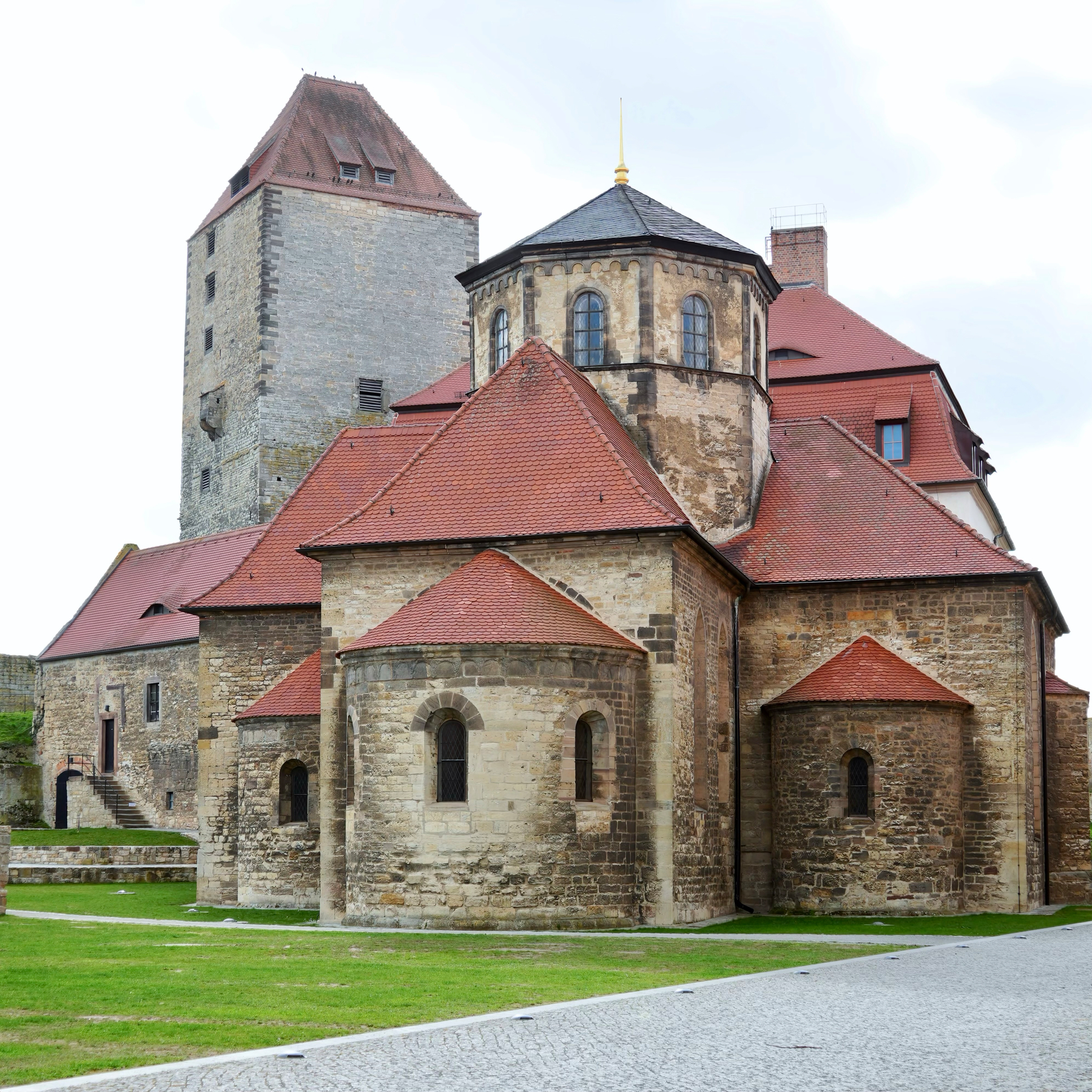
A medieval church with stone walls and red-tiled roofs stands next to a cobblestone pathway and grassy area in the fortress

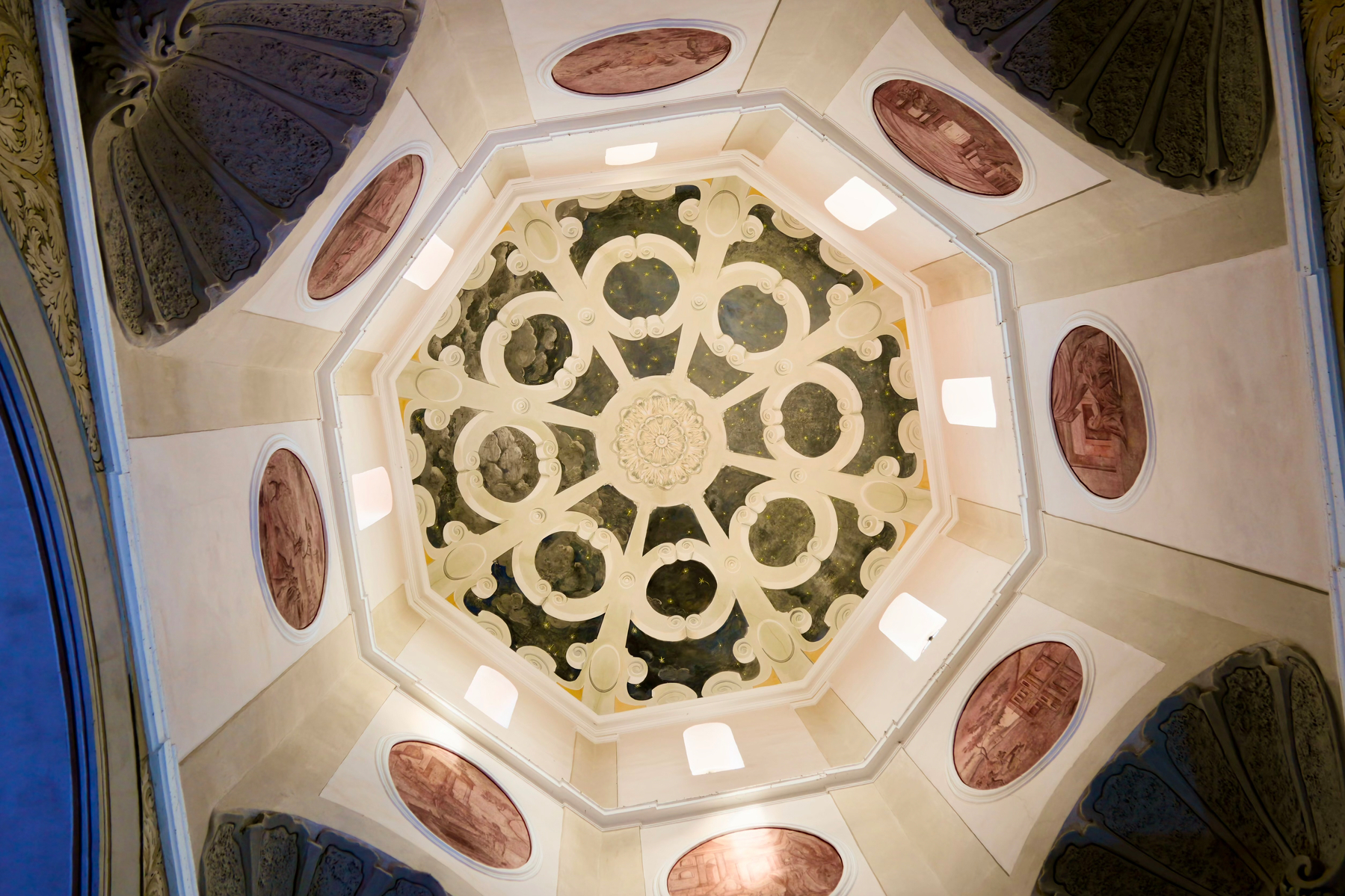
An ornate, circular ceiling with intricate patterns and circular frescoes encircles a dome lit by small rectangular windows.

www.burg-querfurt.de/en/

Naumburg
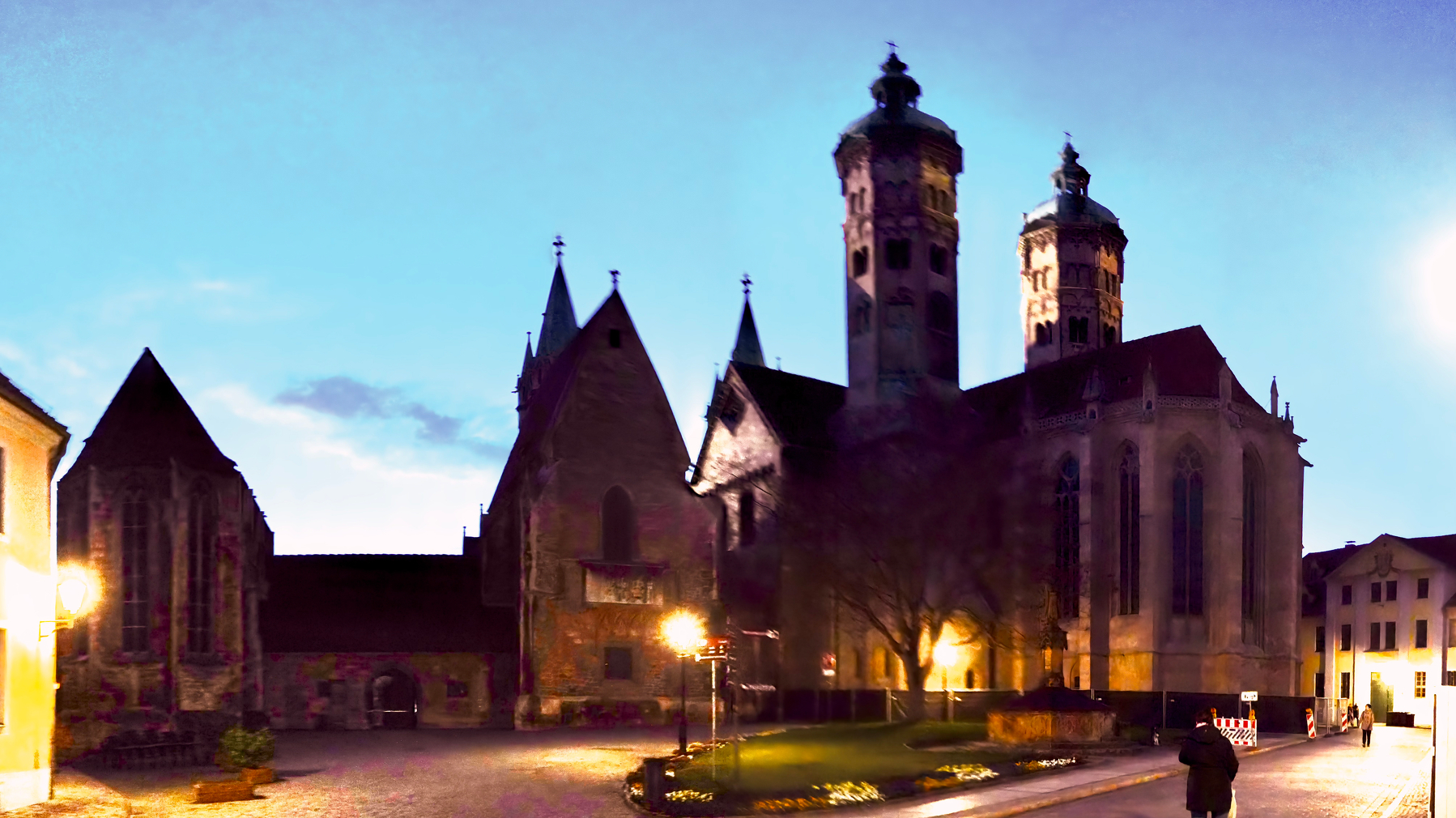
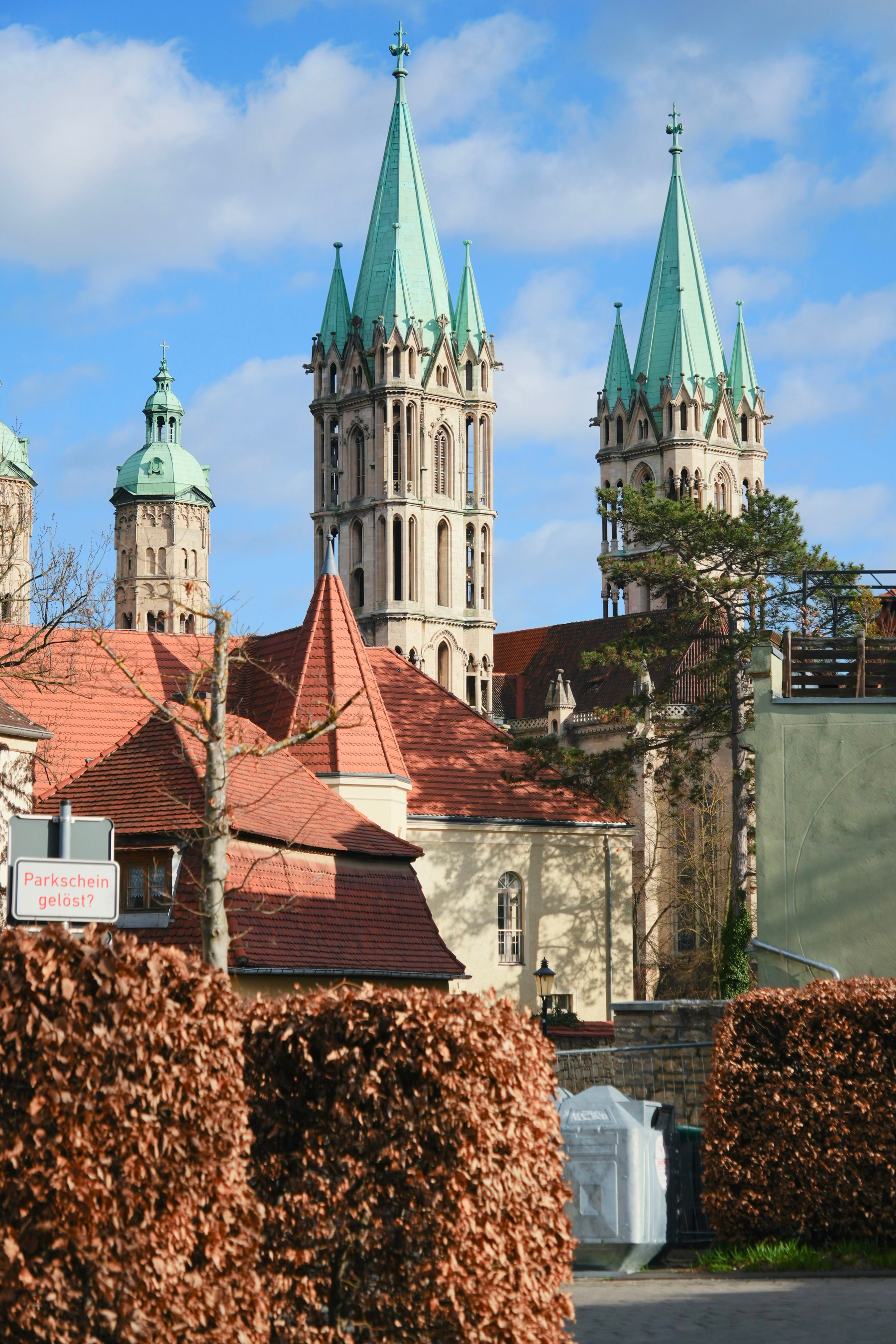
Historic buildings with tall, green-roofed spires rise above red-tiled roofs and a neatly trimmed hedge.

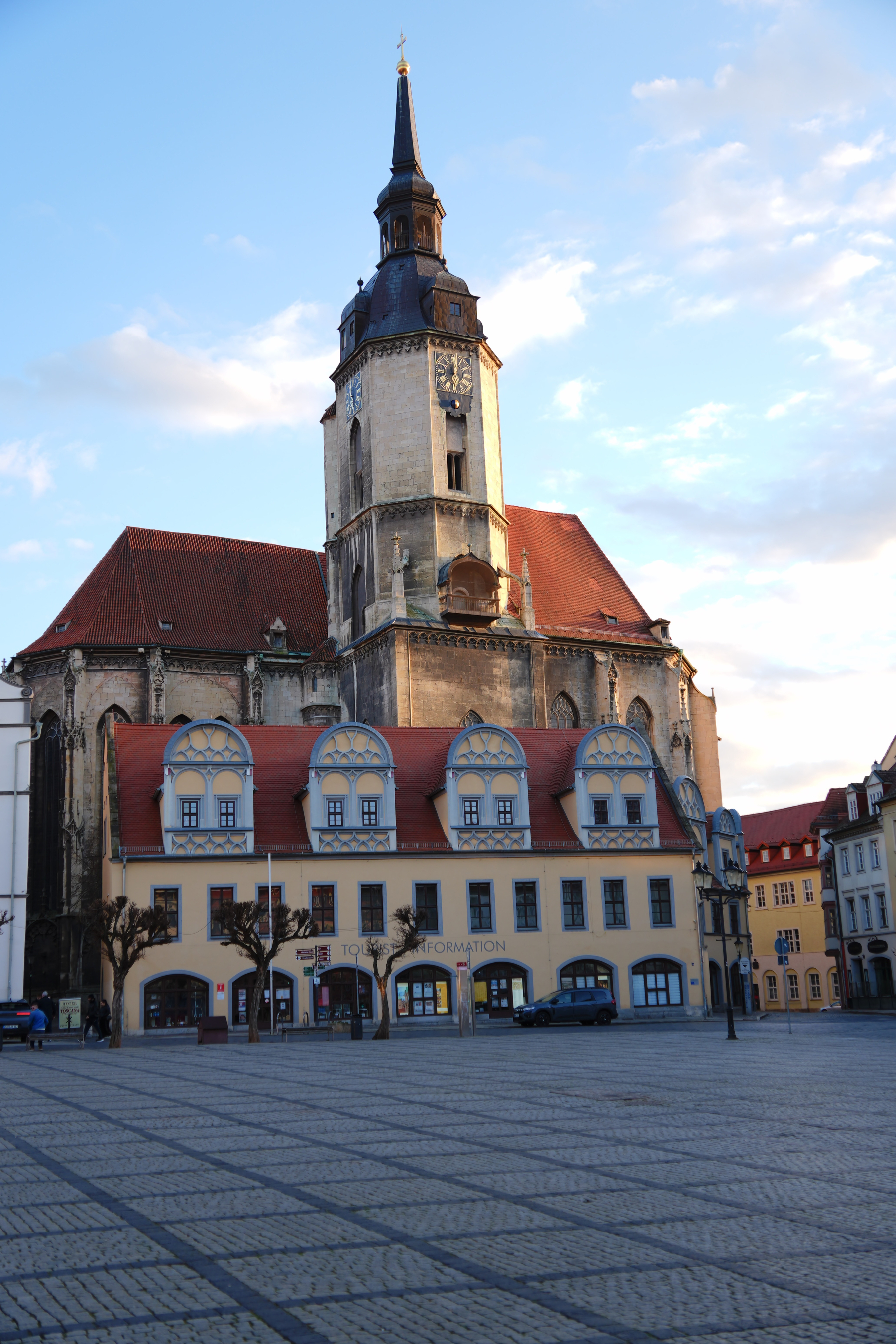
A historic church with a prominent tower stands behind a row of traditional buildings in a cobblestone square, bathed in warm sunlight.

A historic church with tall towers and a glowing street lamp stands in a dimly lit town square at dusk.

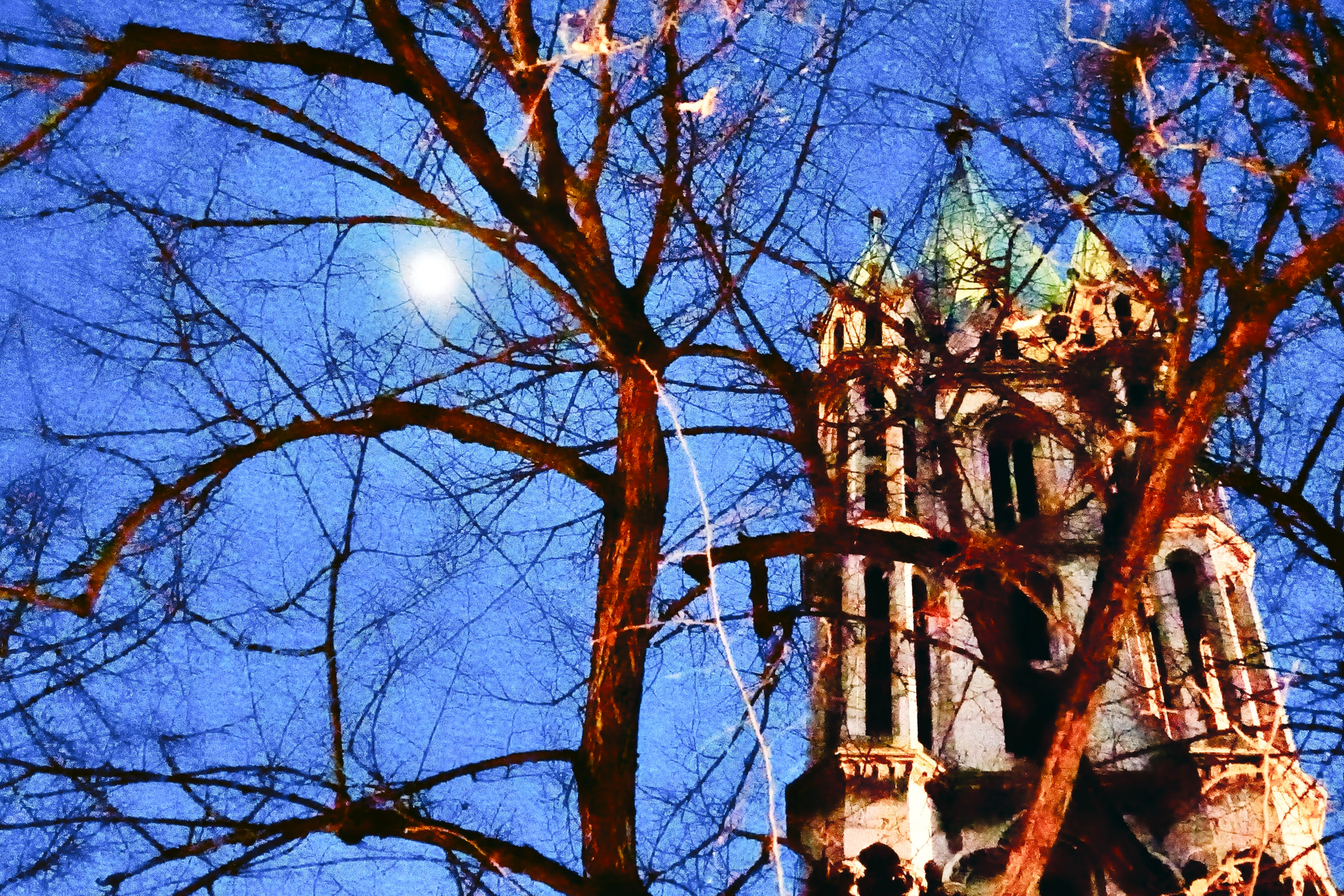
A moonlit night sky frames a gothic-style tower and bare tree branches. en.wikipedia.org/wiki/Naum…

Day 6

Bad Lauchstädt
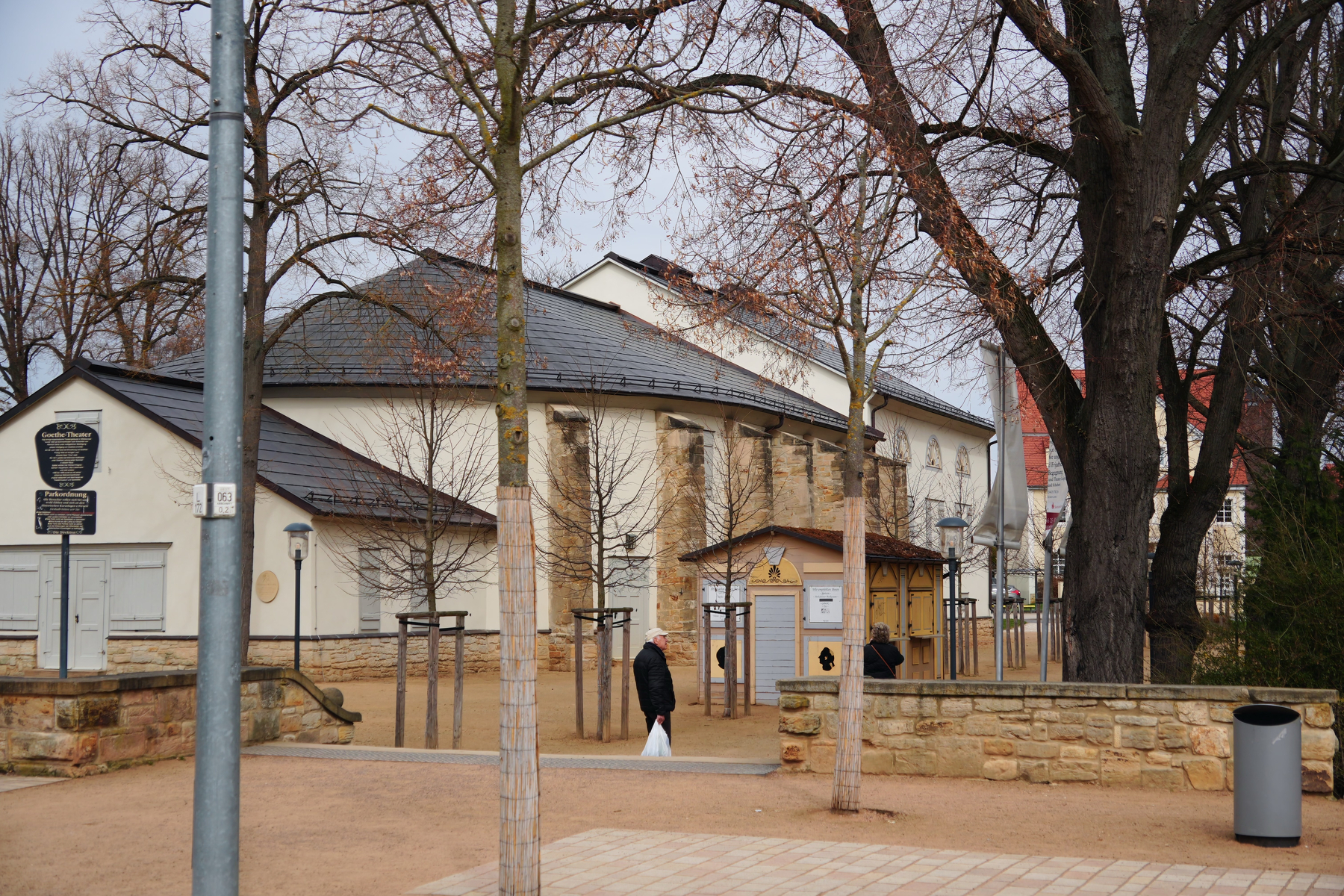
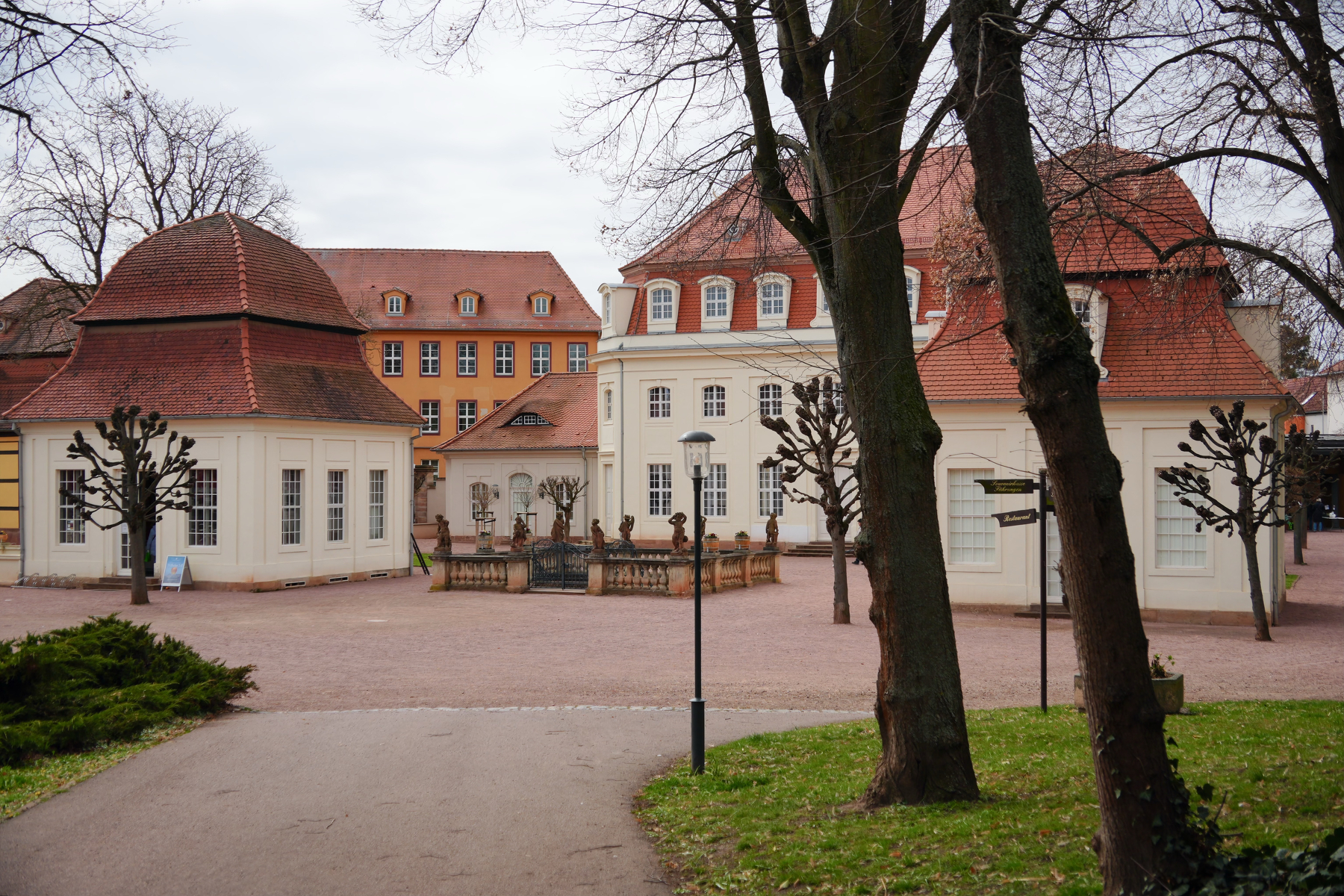
A person walks through a park area flanked by leafless trees and historical buildings, the Goethe Theater.

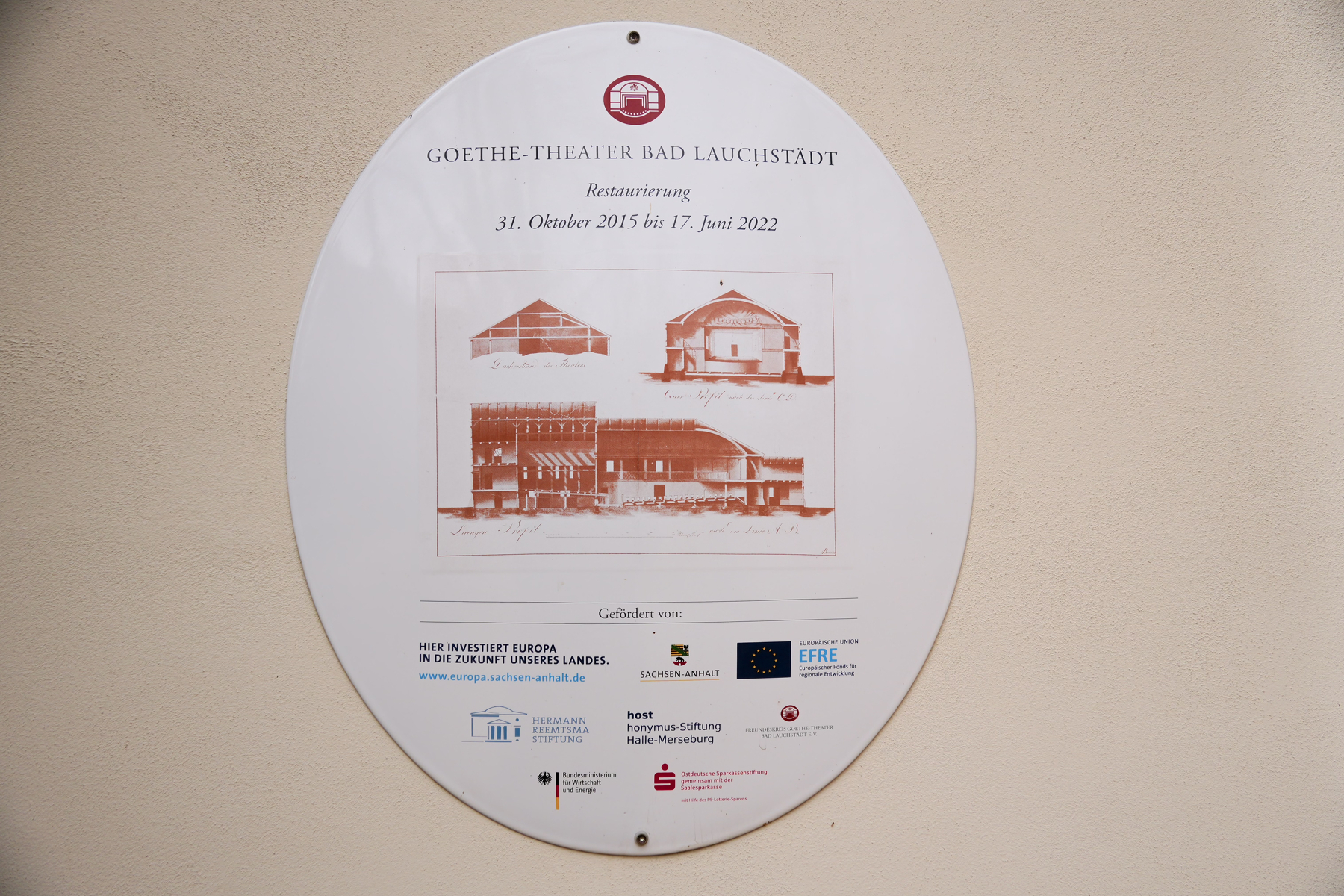
An information plaque detailing restoration dates for the Goethe-Theater Bad Lauchstädt features architectural sketches and logos of supporting organizations.

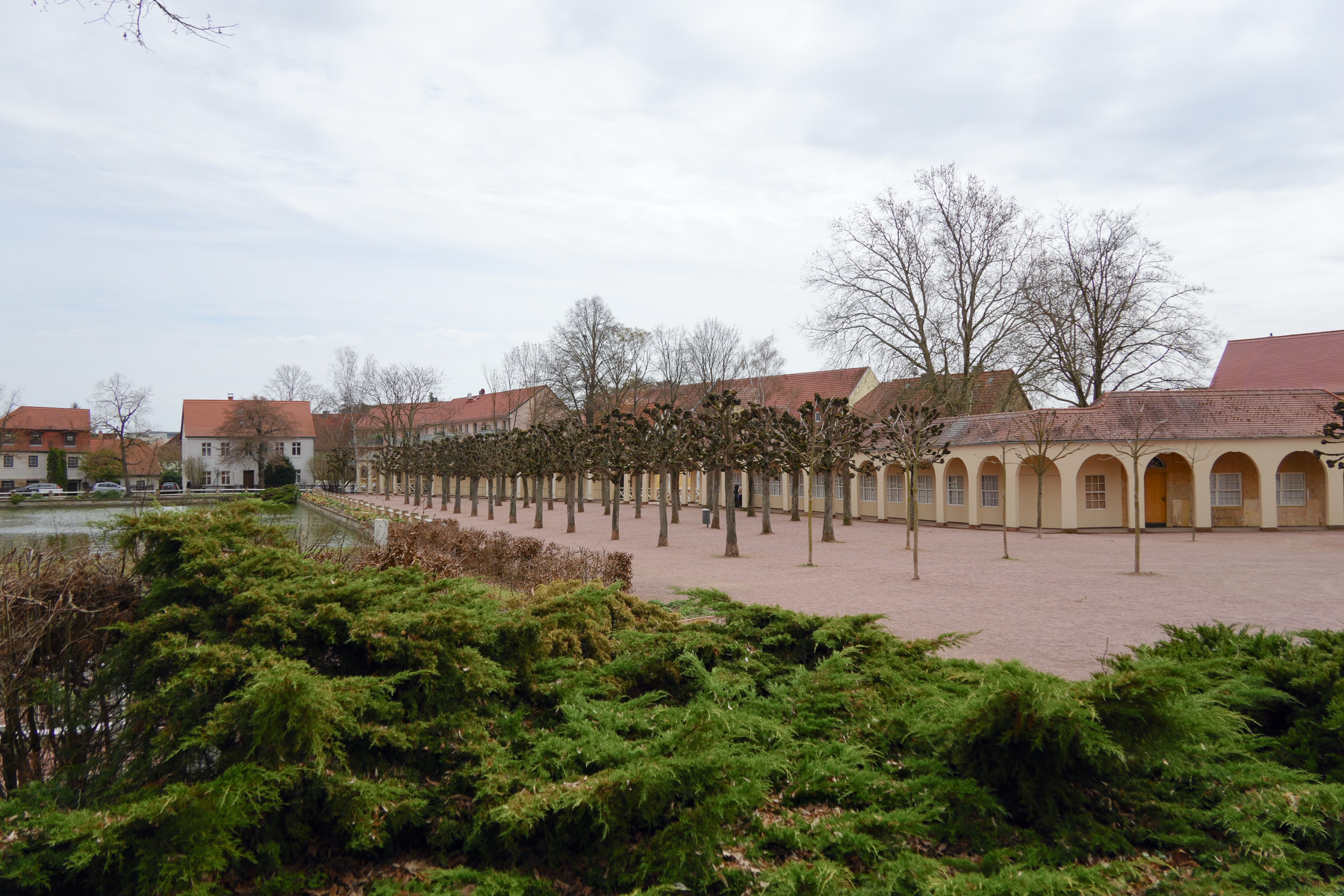
A row of pruned trees lines a pathway in a landscaped area with nearby buildings and a cloudy sky.

A historic building with red-tiled roofs is flanked by trimmed trees and a pathway in a park-like setting.

This small spa was the summer holiday location for the court at Weimar, which explains why Goethe was seconded to help design the theater there and got to run it, as one of his jobs was theater director to the court.

Goethe

Naumburger Dom

Yesterday we managed to get here just after the cathedral closed. Today we got here in time to an open door for the town. The cathedral was way livelier than I like for photos. One of the things we looked at was the cathedral treasure vault under the cloister.
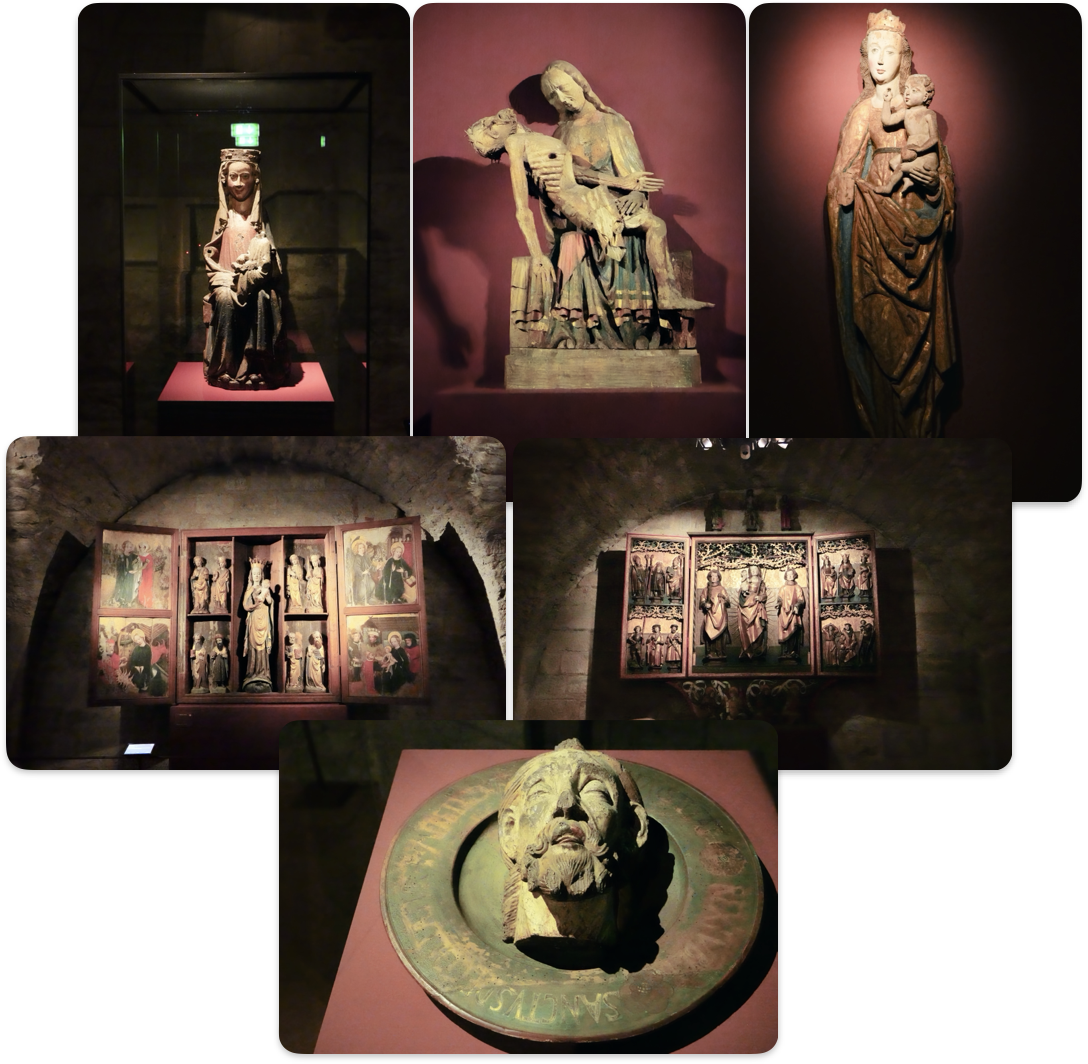
A collection of medieval religious sculptures and paintings is displayed in a dimly lit museum setting.

en.wikipedia.org/wiki/Naum…

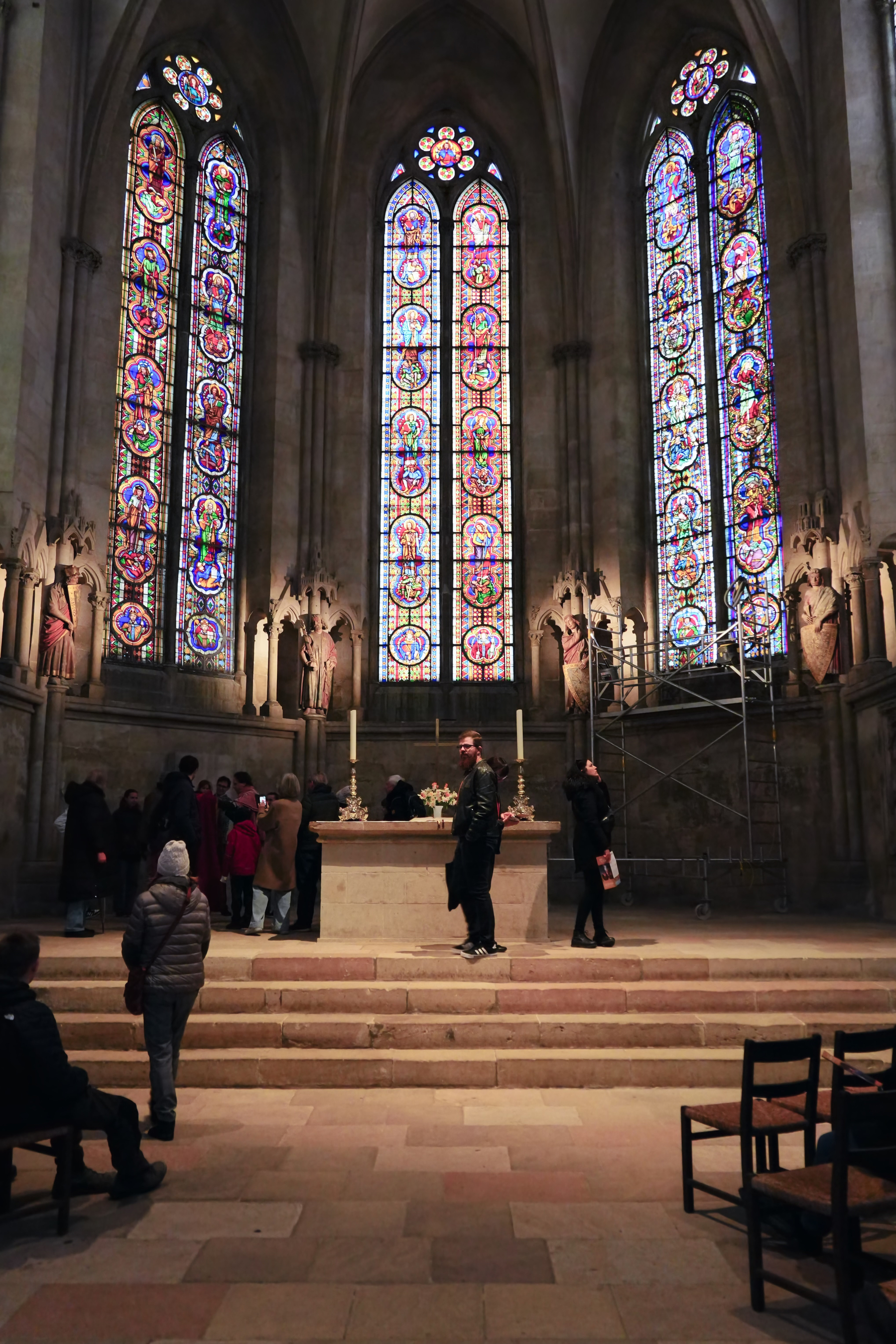
West Choir, this includes the famous sculptures of the founders
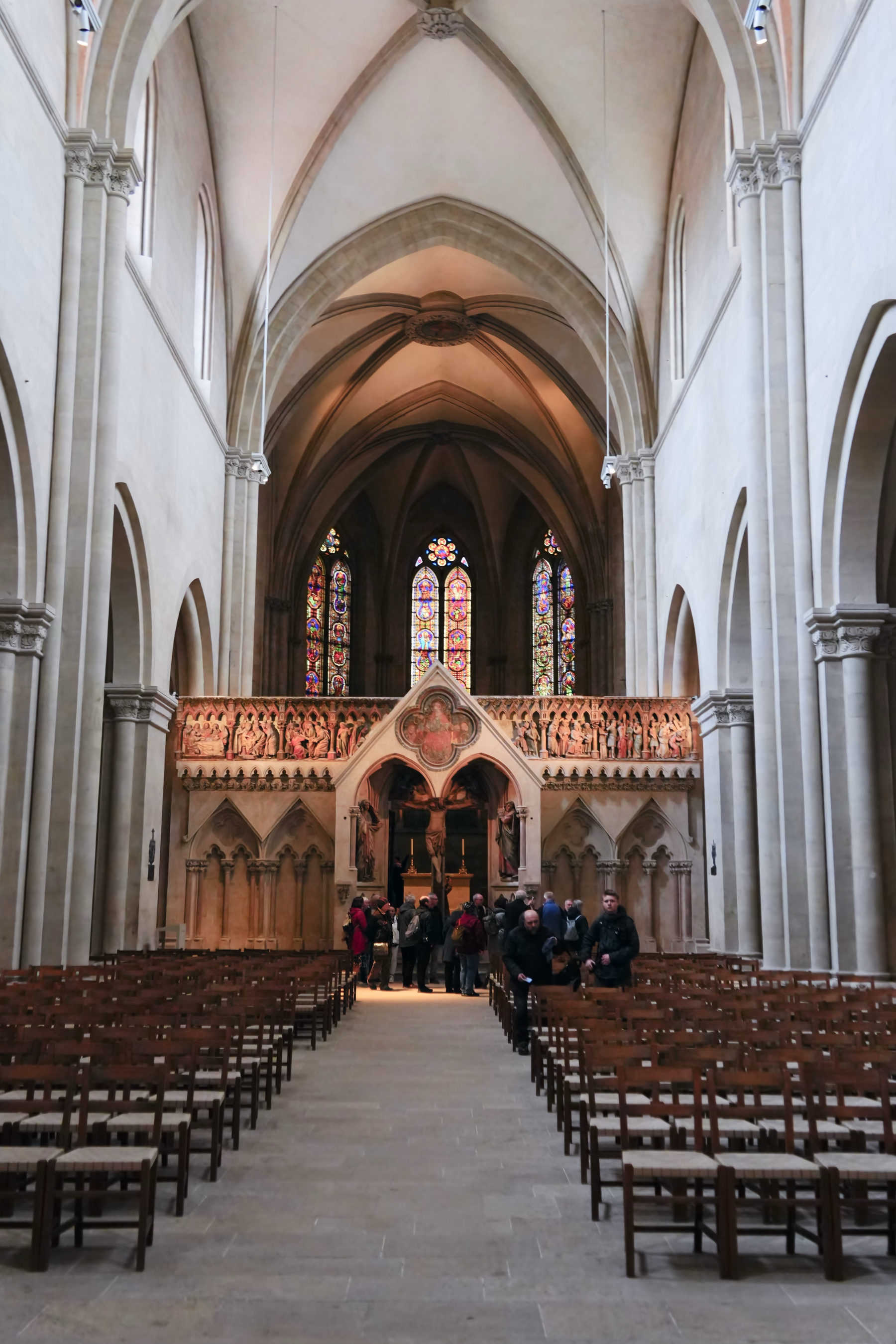
A group of people stand gathered near the ornate altar area in a cathedral with arched ceilings and stained glass windows.

A group of people is gathered inside a cathedral, admiring the stained glass windows and sculptures on the altar.

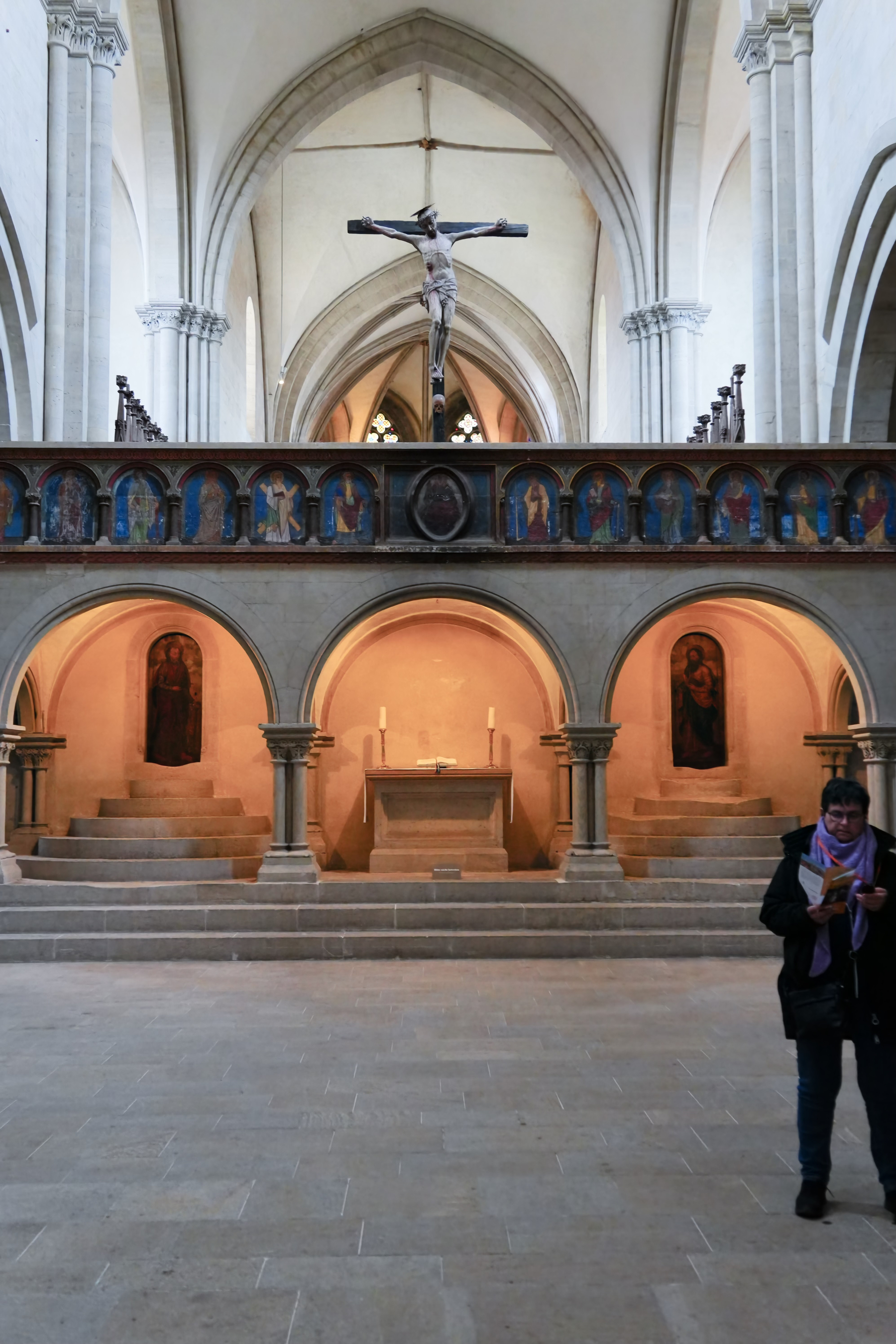
East Choir

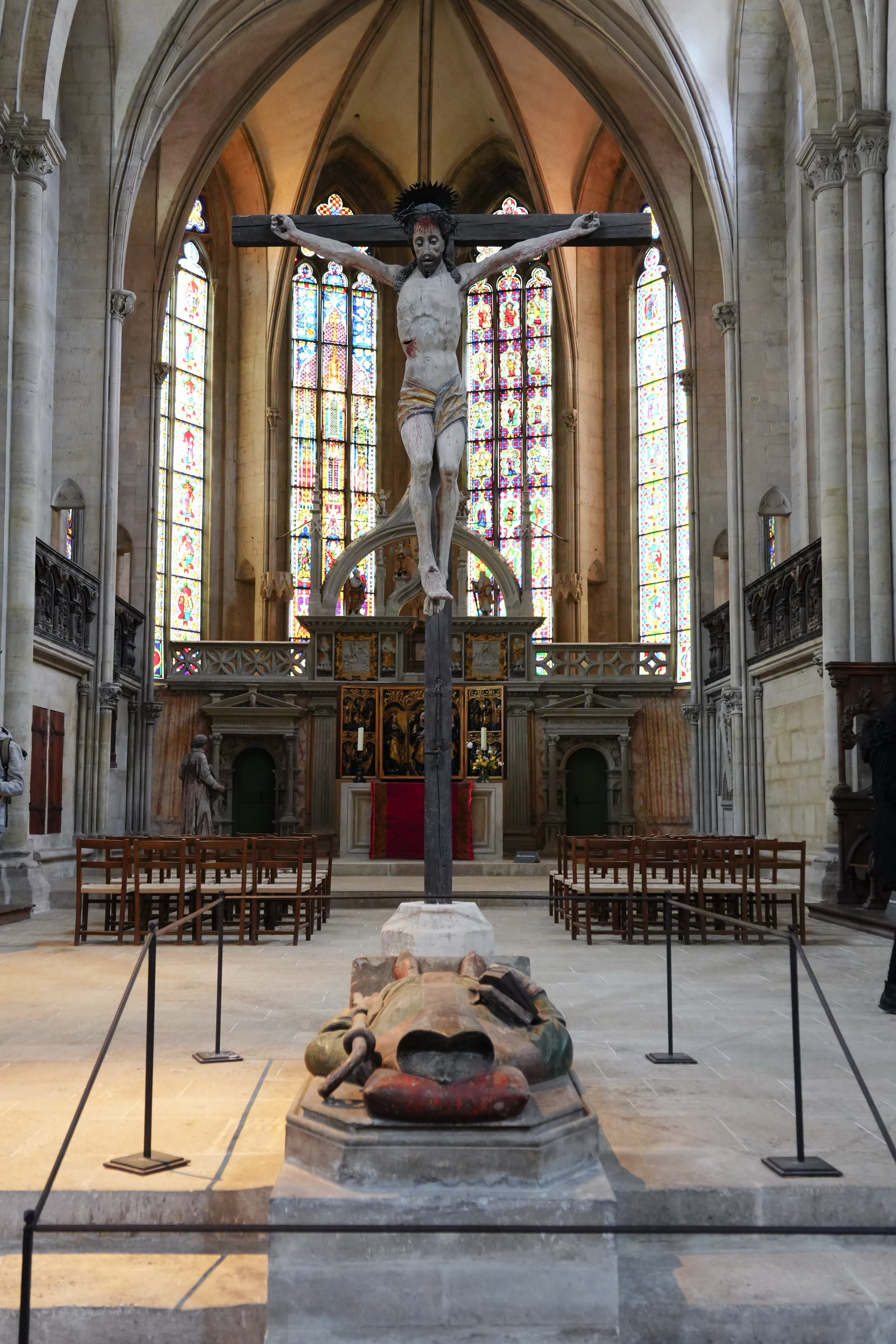
A person stands inside a historic church interior featuring a large archway with religious artwork and a crucifix above.

A large crucifix stands prominently in a cathedral with stained glass windows and ornate architecture.

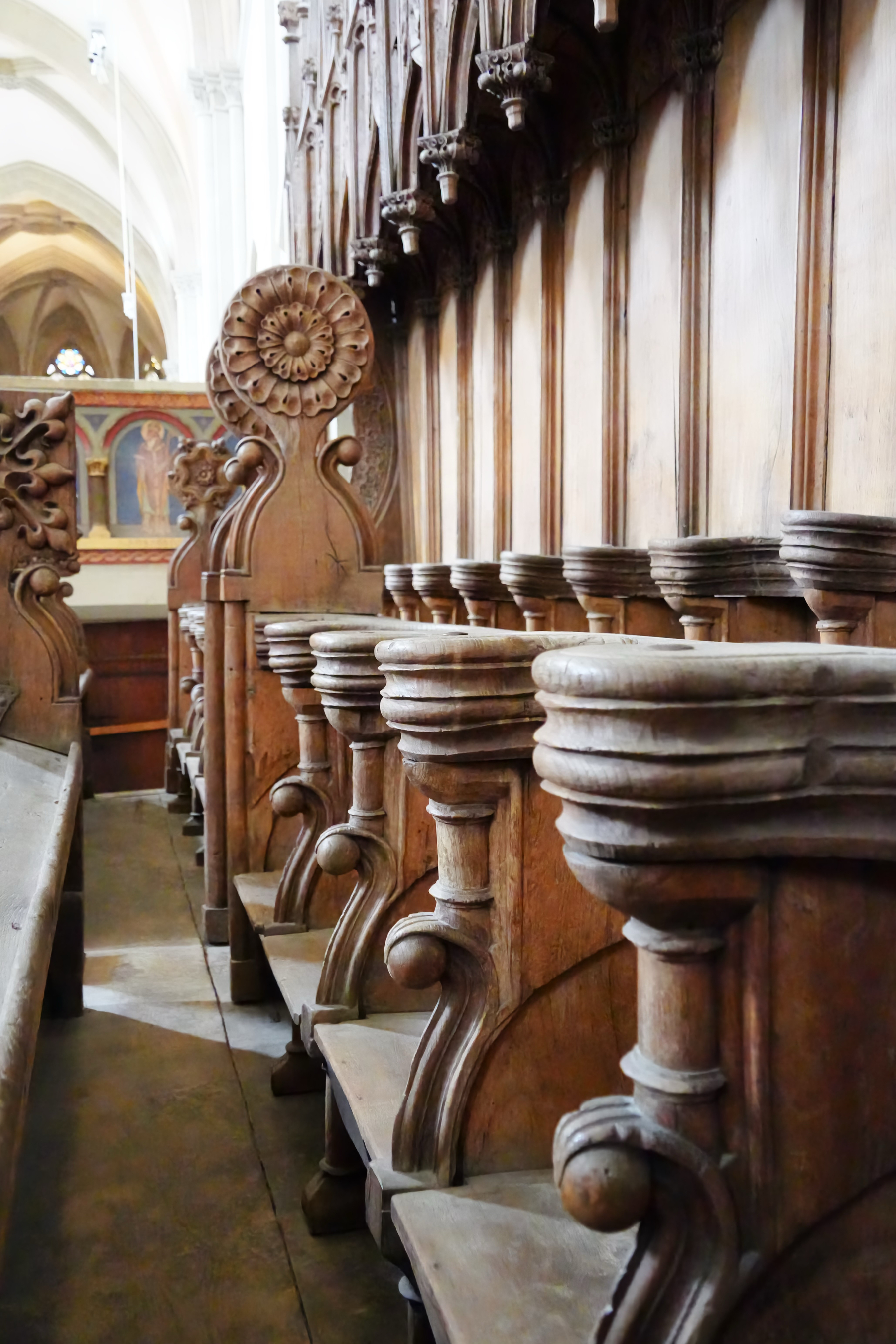
A row of intricately carved wooden choir stalls is lined up in a historical church or cathedral setting.

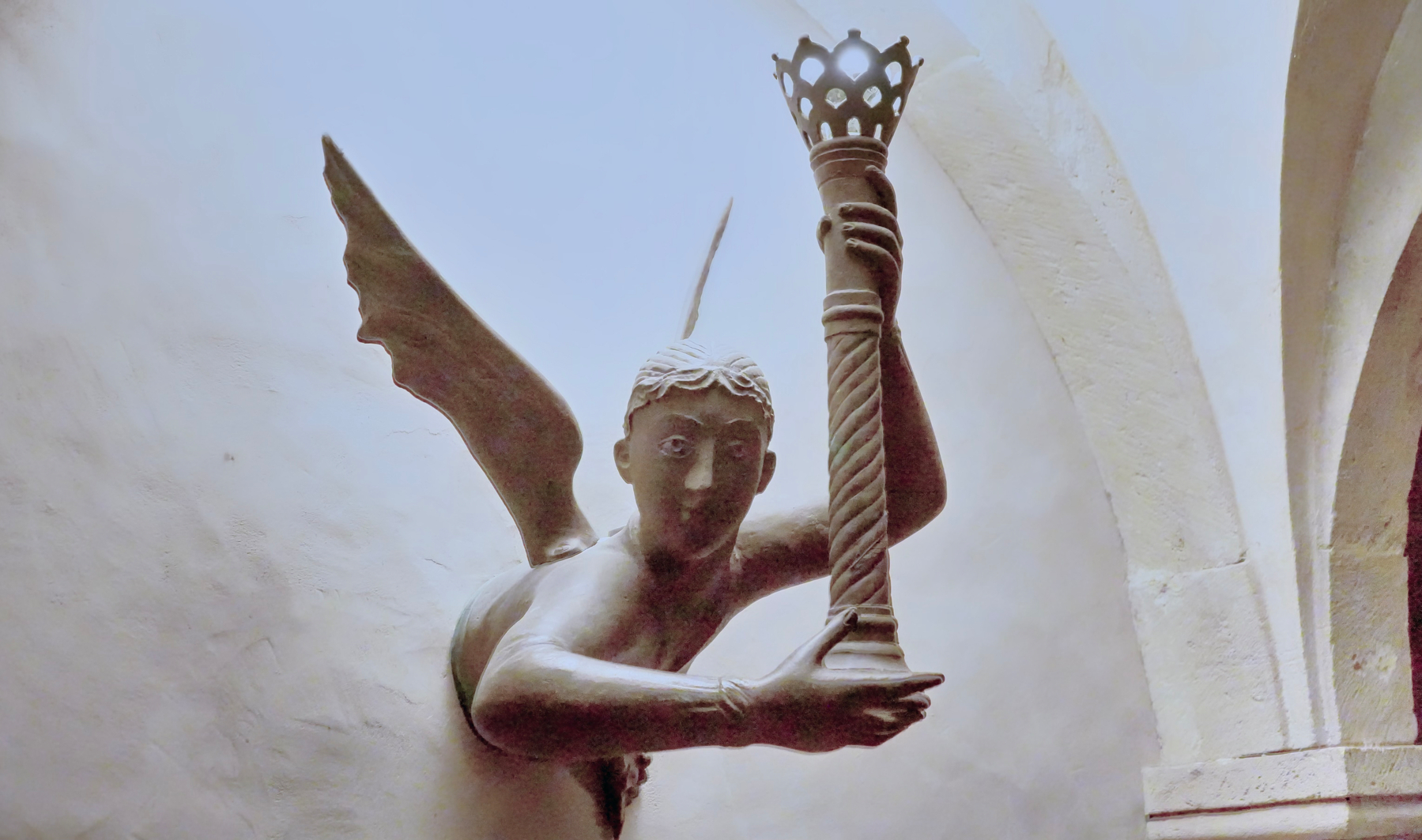
A winged sculpture holds a torch-like object, mounted against a textured wall with an arched design.

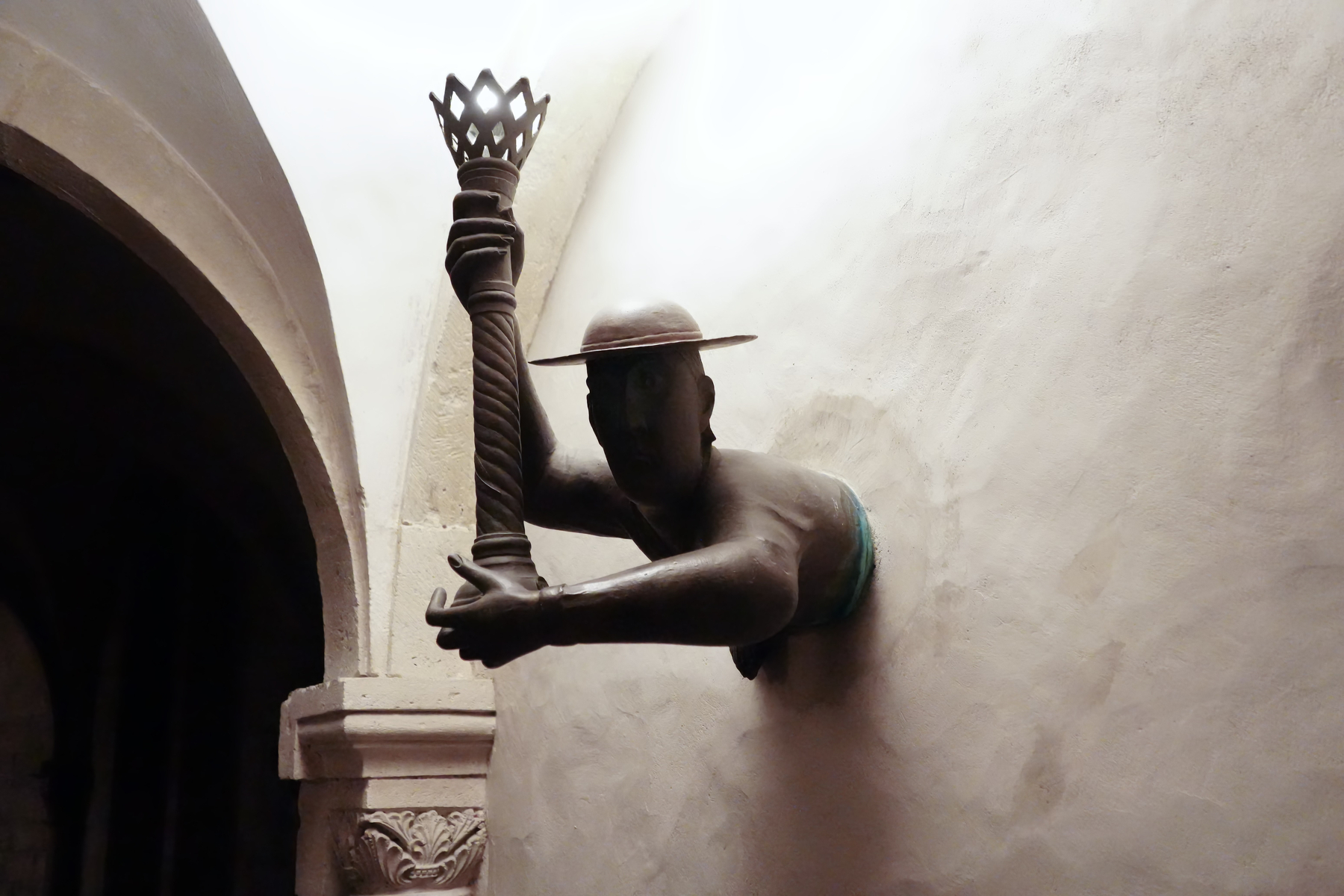
A wall-mounted sculpture depicts a figure wearing a hat, holding a torch-like object.

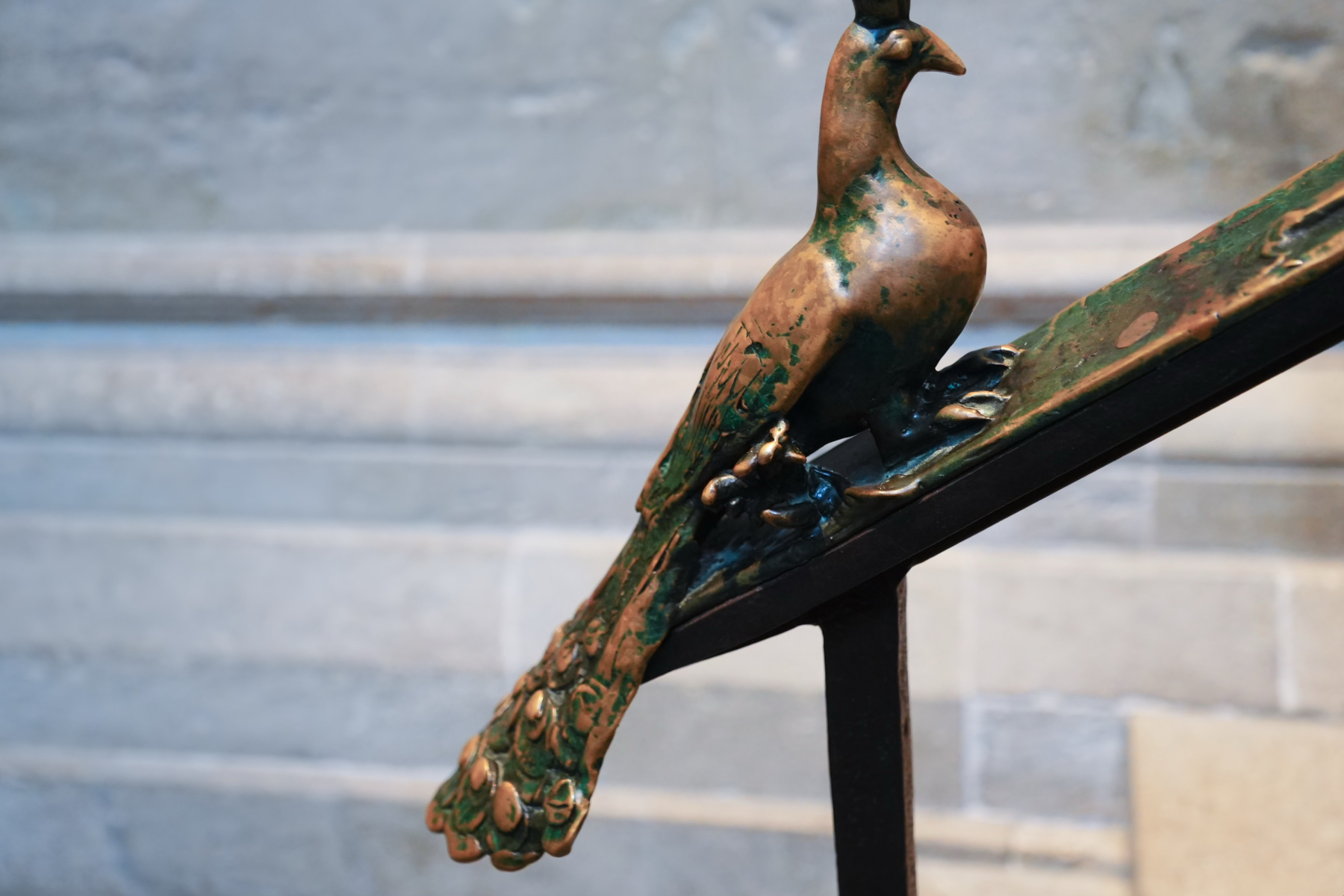
A bronze sculpture of a bird with a long tail is perched on a metal railing.

How we liked it

Cycling

Cycling on this trip was challenging. The weather was poor, and cycling infrastructure in the area is minimal. Many roads are cobblestone with no dedicated cycling paths, making for an uncomfortable ride—especially uphill.

We cycled through Merseburg, where our hotel was located, and rode through Halle with our bikes, though we drove there by car. Our visit to the Dolmengöttin was entirely by bicycle; on other days, we used the car.

Next time, we would leave the bicycles at home, not least because the bike rack increases fuel consumption.

Thoughts and conclusions

Today’s Sachsen-Anhalt (the bits we covered)

As a tourist, you can feel a bit unwelcome—not due to the locals, but because of the infrastructure. Finding something to drink, eat, or a place to sit can be difficult. Presumably, this is because the tourist season only starts in April; we may have been too early.

Many places to eat serve only kebab, which can become monotonous.

There are many well-preserved historic sites, but locating them can be tricky. We did not find a single source listing all of them.

The Neolithic finds are well-documented and linked on himmelswege.de, though addresses are sometimes missing.

Other sites—such as Naumburg Cathedral, Bad Dürrenberg Saltworks, Goethe Theater Bad Lauchstedt, and Burg Querfurt—are all impressive, but you need to know they exist.

Neolithic Sachsen-Anhalt

We focused mainly on the area south of the Elbe, west of the Saale, and north of the Unstrut. This region was significant in Neolithic times, with at least three major wooden henges discovered so far.

The Sonnenobservatorium Goseck, dating to around 5000 BCE, is the oldest known sun observatory in the world. It has been reconstructed and can be visited for free. Its simplicity belies its sophisticated purpose, which connects it to the Nebra Sky Disk.

There may be an older observatory somewhere, but locating it will be difficult, as only discolored postholes would remain.

Schönebeck (ca. 2150 BCE) was excavated and then reburied; it cannot be visited. While it is the youngest of the henges, its complexity lies between Goseck and Pömmelte.

Schönebeck

Nearby is the Ringheiligtum Pömmelte (ca. 2800 BCE), which has been reconstructed with a shop, additional information, and amenities like coffee and toilets.

This grand structure features round concrete blocks with information about sacrificial remains. It was not merely a religious site; evidence suggests it was used as a meeting point for a large area, with people coming from both sides of the Elbe. Some burials were also found here.

The other burials—the Dolmen of the Dolmengöttin and the burial of Bad Dürrenberg—are less impactful for visitors.

This leaves the Nebra Sky Disk. Its purpose is linked to the Sonnenobservatorium Goseck. Visiting the Arche Nebra and the Landesmuseum für Vorgeschichte in Halle provides extensive information about the disk. Either, or preferably both, is worth seeing.

Videos on the Landesmuseum site (German)

Overall

A cool trip. Next time don’t bring the bikes. Go a little bit later in the year when it is warmer and provision your day trips.

It’s going to be historical, archaeological, (mostly) cyclable und fun

We are going on a weeks vacation on the other side of the Rhine, which always entails a short moment of hesitation, inhibition, but also a sense of adventure.

The centre of our exploration is going to be Merseburg. While the city itself is an ottonian foundation with some medieval bits left over, we are after older, much older, remains. And Merseburg is smack in the middle of it.

Many of these attractions are within cycling (ebike) distance of our hotel, and if I squint at the weather forecast, the weather might be holding up.

There is also a website for the whole region called Sky Paths which gives an overview of the attractions.

#history #archaeology #vacation #cycling

On the way back from Raeren I stopped at Töpfereimuseum Langerwehe which is closed for renovations. Have to come back in a year or three.

#HistoryCycle #history #photography #fotografie #steingut #steinzeugkeramik #stoneware #steengoed

Yesterday I drove to #Raeren (pronounced Raaren) to look at some (more) stoneware pottery. Specifically I went here: Töpfereimuseum Raeren

If you’re ever in the area (think Aachen) than it’s WELL worth a visit.

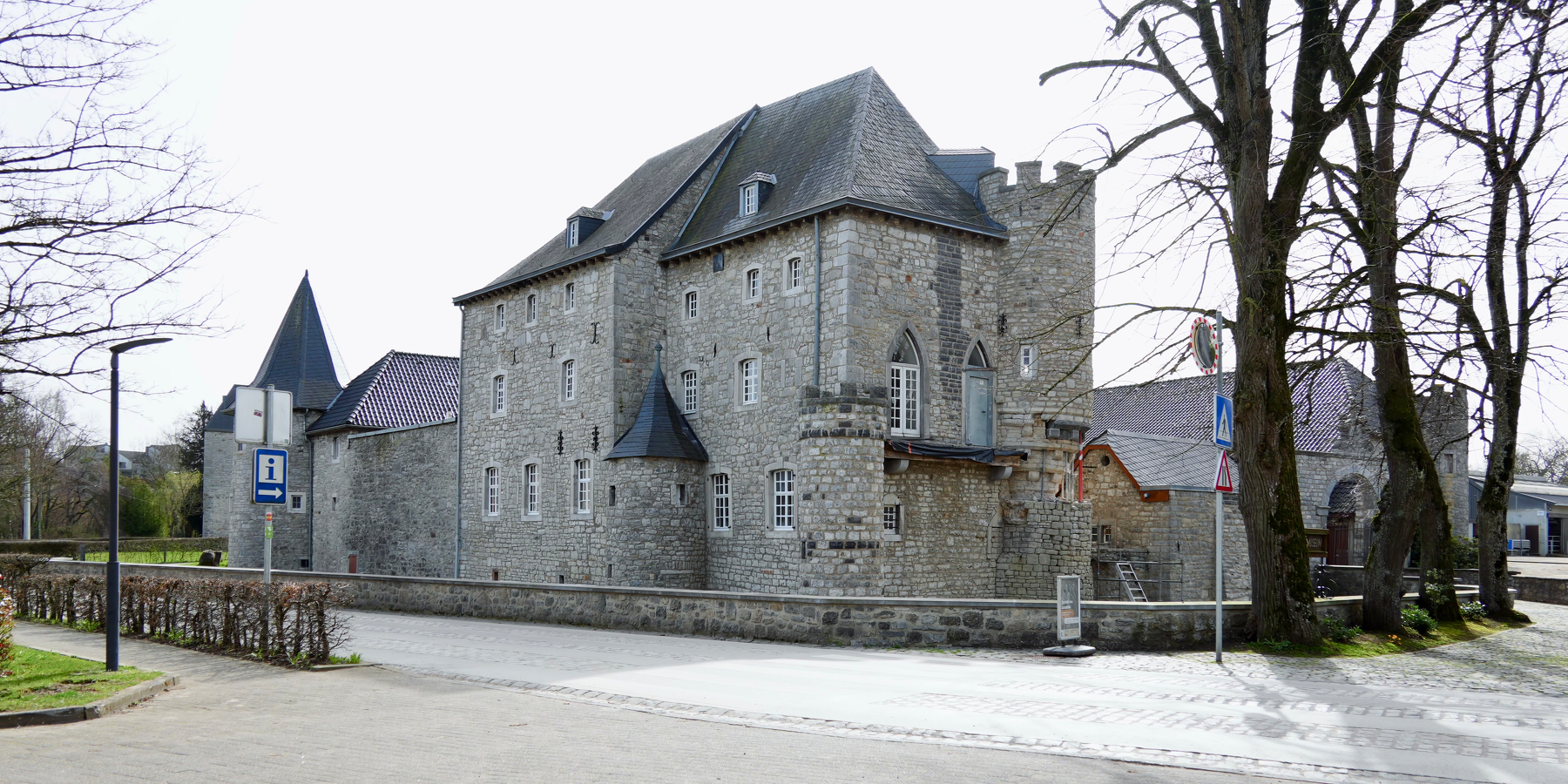
The museum is in a castle.

A stone building with medieval-style architecture is surrounded by trees and a paved path.

Inside a nice collection of Rhenish stoneware and on stoneware production and trade. Raeren traded via Colognes Alter Markt but also served some markets themselves. The relatively close Langerwehe produced stoneware mostly for “local” consumption, Raeren produced mostly for long distance (Hanse) trade.

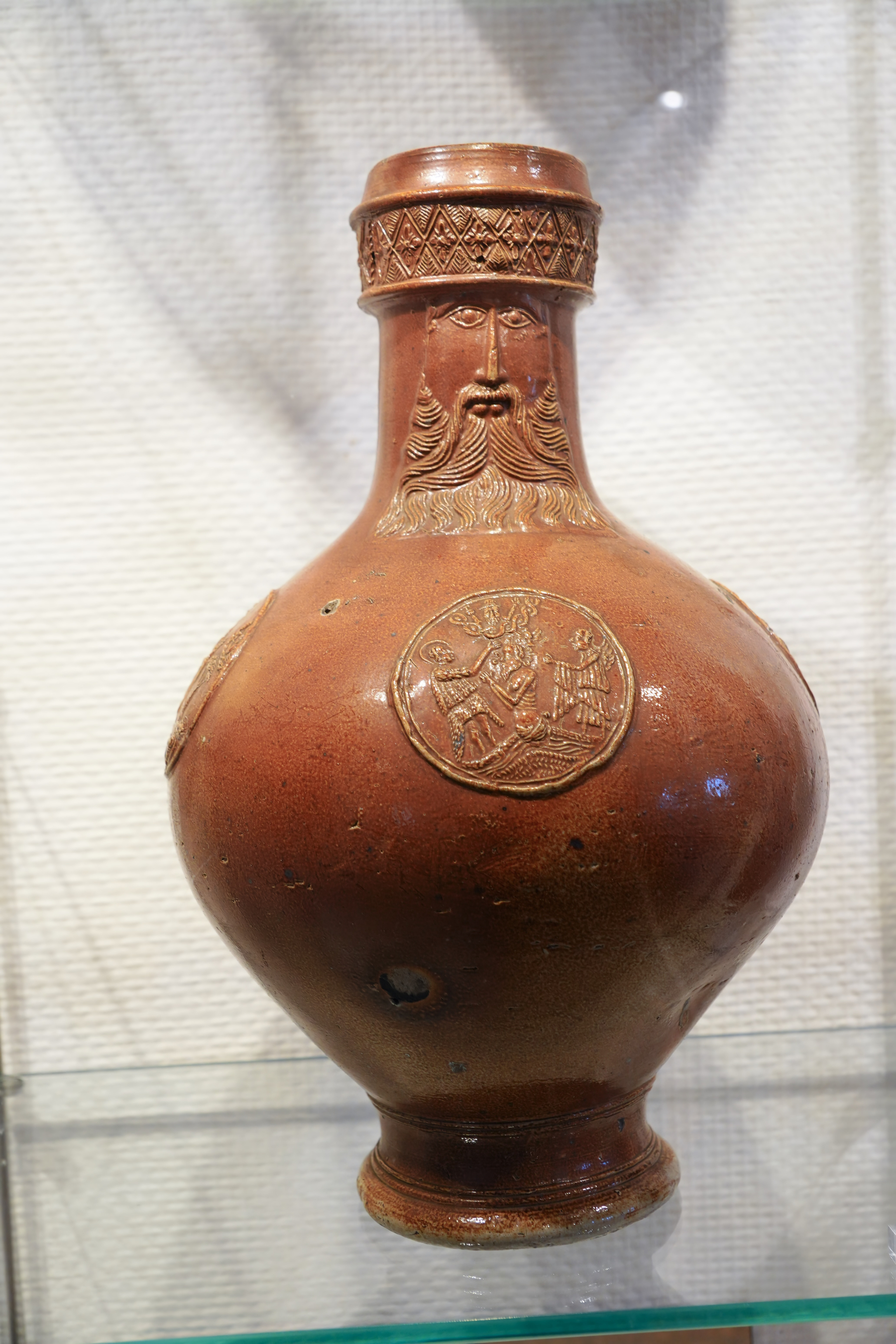
While picking up some of the popular forms of Rhenish stoneware, eg Bartmann Krüge, they also developed distinctive forms.

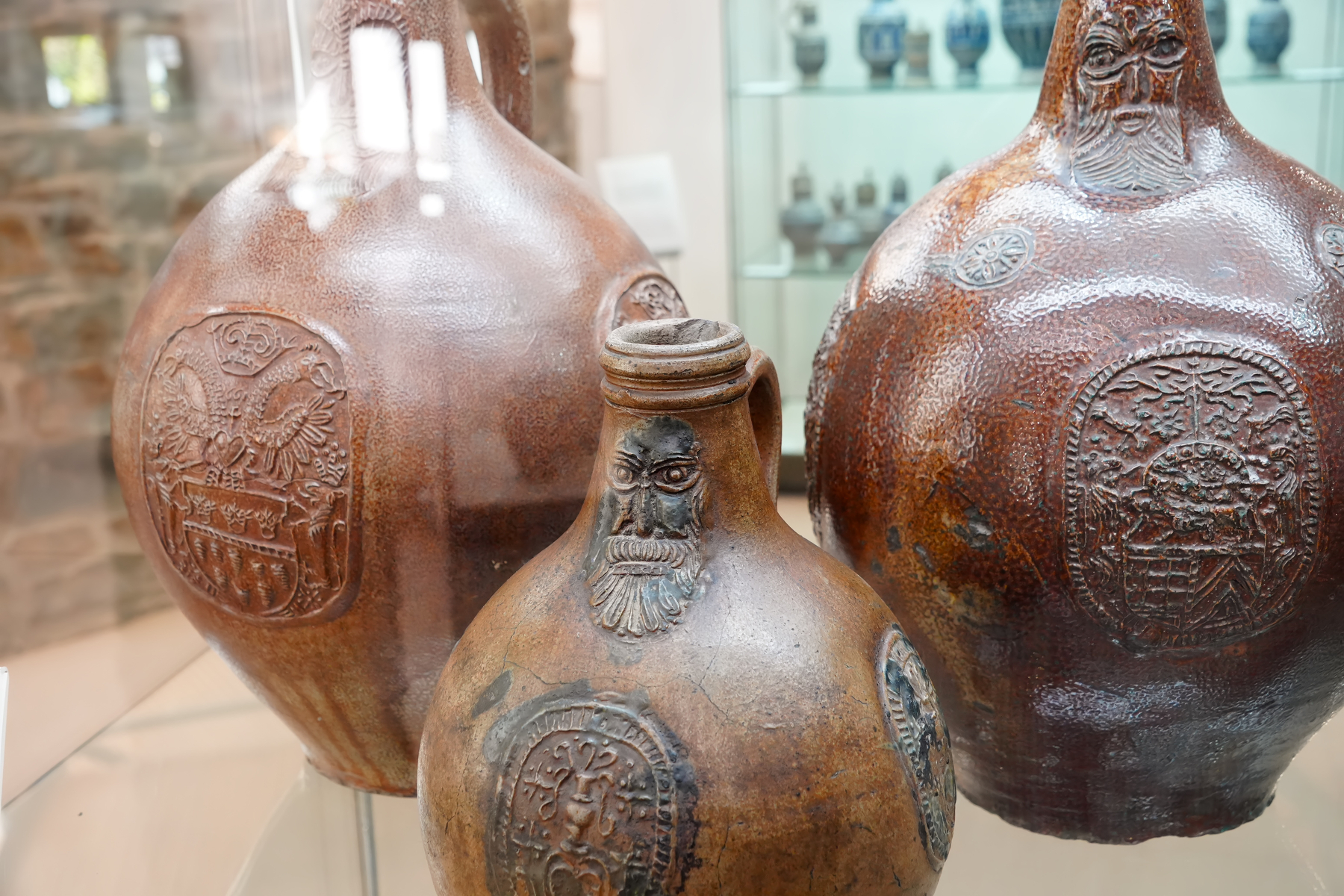
A brown, intricately designed jug features a bearded face and embossed medallions on its surface. A Bartmann Krug.

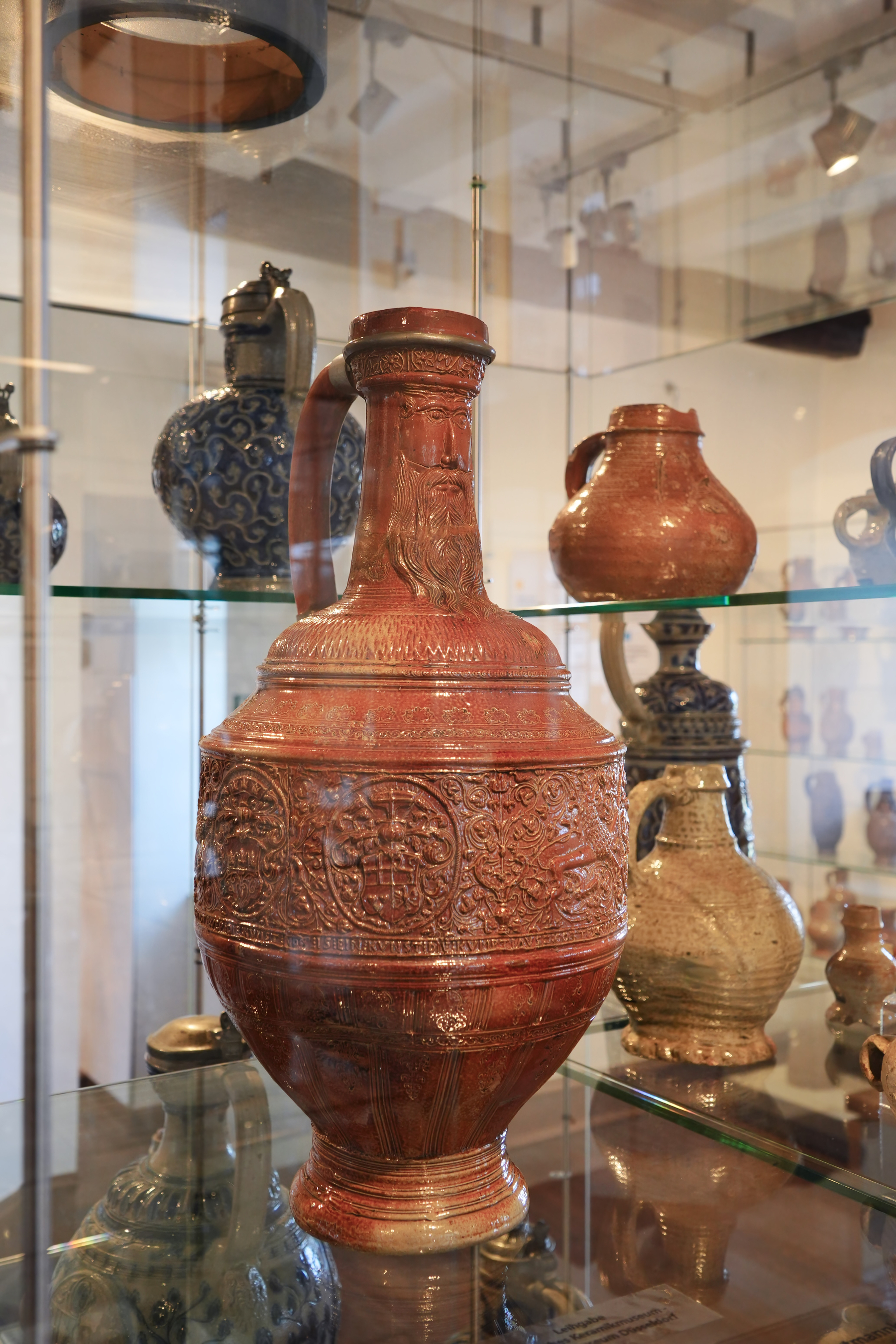
A display case features a collection of ornate pottery, with a large, intricately decorated jug in the foreground.

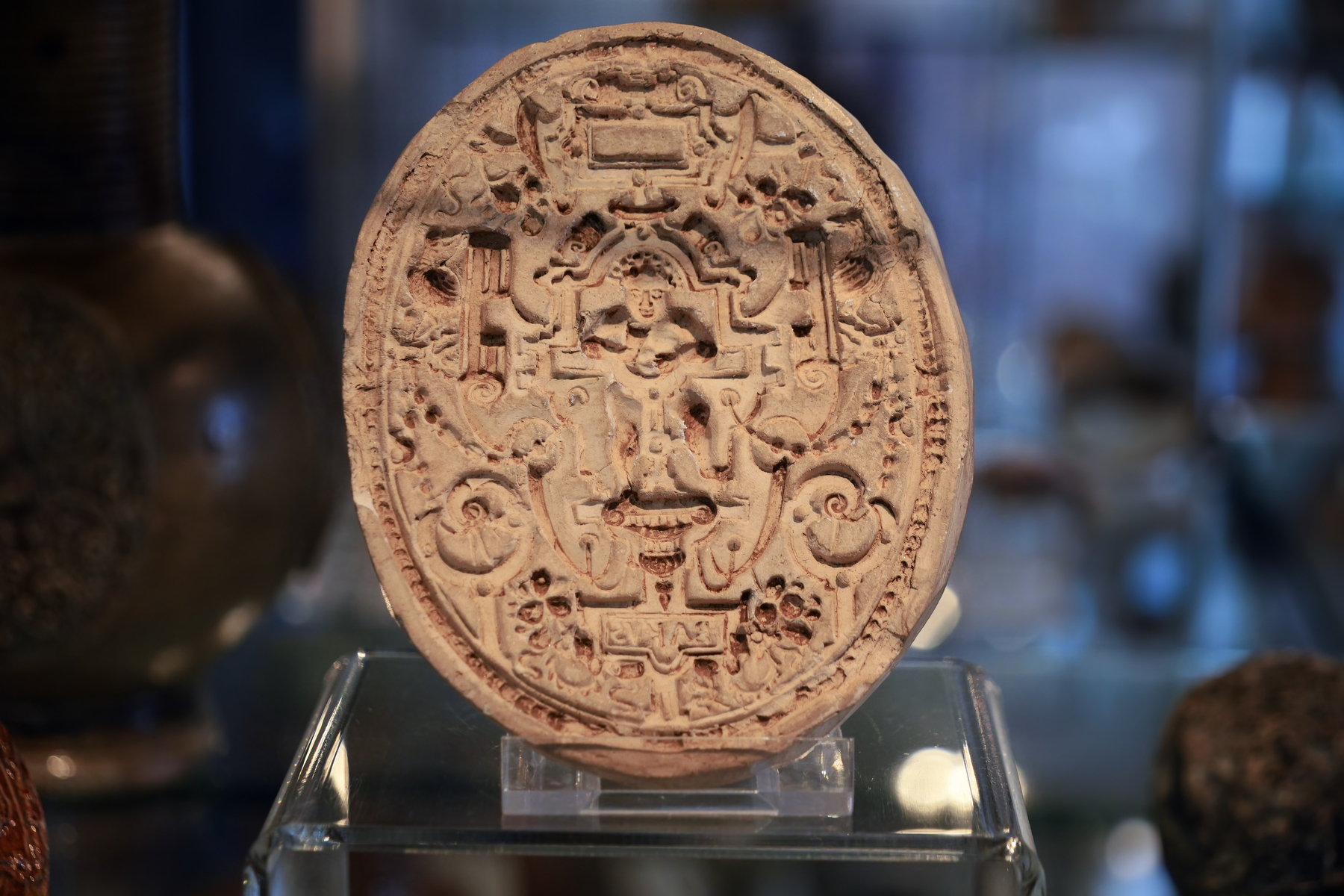
And here one of the forms used to emboss the jugs (which were produced by the tens of thousands.

A detailed, circular clay boss is displayed on a clear stand with intricate carvings and symbols.

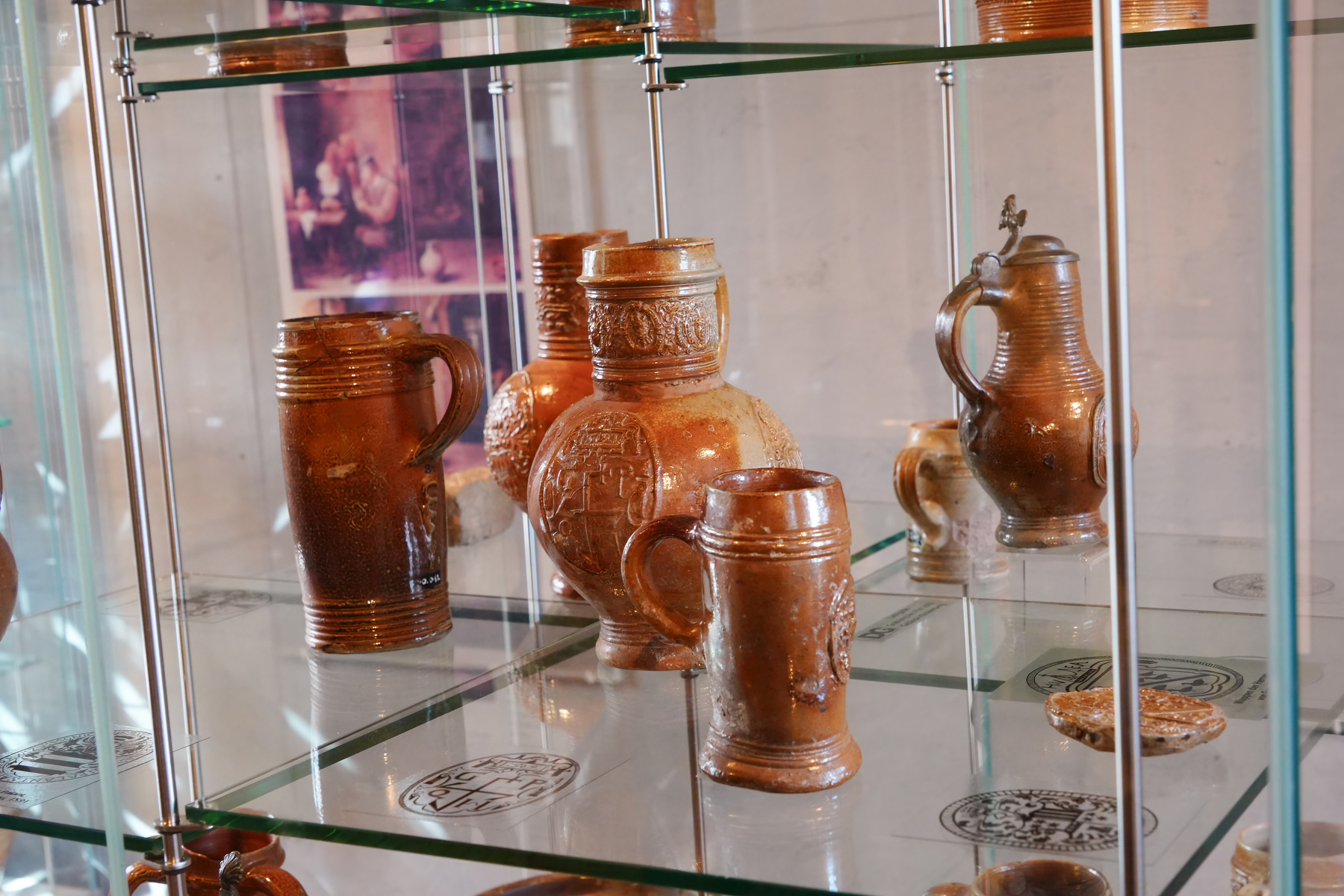
If you were a good (large) customer you got your coat of arms on the jugs, which were also used for religious (pro catholic/protestant) or political messaging. Early propaganda/advertising

Several earthenware jugs and mugs are displayed on glass shelves in a cabinet.

#HistoryCycle #history #photography #fotografie #steingut #steinzeugkeramik #stoneware #steengoed

Tuesday, some history

We visited the LVR Landesmuseum Bonn as they have a smallish collection of Rhenish stoneware

They are also part of the Bartmann goes global project, which I’m following somewhat precariously.

Anyhow, this is what they have to say about stoneware

A display provides information in both German and English about Rhenish stoneware, covering its characteristics, production, and museum exhibition.

Paraphrasing slightly:

Rhenish stoneware, a variety of clay containers made over 400 years ago, is recognized by its shapes and images. Cups and jugs were especially popular. Rhenish stoneware was sold worldwide, making it a global phenomenon.

Potteries in Cologne, Frechen, Raeren, and Siegburg produced Rhenish stoneware. Soft clay was pressed into molds to create various images, from simple designs like flowers and coats-of-arms to scenes from the Bible or other stories. Finally, the containers were fired in kilns.

Rhenish stoneware is exhibited in museums because it was practical and beautiful. It reflects the people’s desire for both practicality and aesthetics over 400 years ago. Many objects were decorated with pictures, a common practice during that period, even among the less affluent.

A display case features six vintage stoneware jugs of varying shapes and designs, each resting on white pedestals.

A large, ornate belarmine jug with intricate designs and a glazed finish is displayed in a museum setting.

I quite liked the stoneware exhibited and also the rest of the museum, well worth a visit if you are in Bonn.

Next trip to Raeren, originally I wanted to go to Brühl first, but the museum is only open on Sundays, which does not work for the next few weeks. So, Töpfereimuseum Raeren

My simple project, identify sources of mediaeval Cologne trading goods, has now evolved into a fairly large scale research project.

Everything started so well.

The first trading good I looked at was stoneware. Specifically the Bartmann Krug.

A brown, ceramic bottle with a bearded human face design is displayed in a museum setting.

Right period, major production centres well with bicycle distance, most of the production centres even have a museum.

A hand-drawn map labeled Rheinisches Steinzeug features the Rhine various cities like Cologne and Siegburg, and dots marking locations such as Raeren, Frechen, and Höhr-Grenzhausen.

But, some of the information shown at the first two museums seemed to be a bit contradictory. So, as you do, I tried to find some information in books and online. Unfortunately, the publicly accessible books are broad generalist books. Online wasn’t much better. I started downloading papers, which then presented quite another challenge, namely, too much information [1].

I also stumbled across the website of a project between various research institutions called Bartmann goes global another wonderful timesink.

So, with one thing or another, I have now got a growing Obsidian vault with 250+ (and counting) documents. Which I’m now cross referencing [2]. As you do.

[1] as in, eg. Finding the downloadable archive of the Hansische Geschichtsverein, who have been publishing about the handsome, including Cologne, for the last 150 years plus.

[2] which led me to confront my lack of skill with bash and python scripts

#HistoryCycle #steingut #stoneware #steengoed #bycicle #retirement

Rhenish Stoneware 3

www.zahr.koeln/2025/11/1…

In that post I visited Frechen to look at the Keramion Museum, follow the Töpferpfad and see, whatever there still is to see. I did, however, manage to miss two excavated kilns.

So, today I went back.

Here is a description of the kilns Töpferhof in der Broichgasse (in German)

A large, metallic, pyramid-shaped skylight structure with large windows is embedded in a brick base, surrounded by a few plaques and light snow on the ground.

The kilns are under this pyramid and since all the windows were covered with raindrops, I couldn’t photograph the inside.

Here, at least, are the signage at the site.

An informational sign provides details about historical pottery kilns, featuring diagrams and text in German.

A weathered outdoor sign displays an old photograph and descriptive text, set against a backdrop of residential houses and leaf-strewn ground.

A detailed sign describes an earthenware kiln with a diagram and German text explaining its dimensions and operation.

The sign describes the production of earthenware, including details about kiln construction and the firing process.

An informative sign details a ceramic oven and its historical significance, accompanied by an image of a decorative ceramic plate.

A descriptive sign explains the structure and function of a Kannenofen, highlighting its sloped firing chamber and design features in German.

An informational plaque describes a Kannenofen pottery kiln, featuring an image of a ceramic pot.

A descriptive plaque about a pottery kiln used for stoneware production is displayed with an image of a decorative ceramic jug.

On my Rhenish Stoneware map the next stops should be in Badorf and Pingsdorf, both close to Brühl.

A hand-drawn map labeled Rheinisches Steinzeug features the Rhine various cities like Cologne and Siegburg, and dots marking locations such as Raeren, Frechen, and Höhr-Grenzhausen.

Rhenish Stoneware 2

Yesterday I visited the Stadtmuseum Siegburg to pick up on the exploration of Rhenish Stoneware, one of the successful trading goods of medieval Cologne, as previously mentioned here.

Because I wasn’t awfully keen on a 80 km plus bike ride in the winter with snow on the forecast we went by car and also cleared some errands on the way to and from Siegburg.

A simple, hand-drawn map illustrates the Rhine River with marked locations: Cologne and Siegburg and the Rivers Rhine and Sieg

For background on Siegburgs history, here is Wikipedia on the city.

Unfortunately photographing was not allowed, so only two pictures.

A collection of various ancient clay pottery pieces, including jugs and pots, is displayed. Found at Aulgasse, excavated 1962

More information on Siegburger Steinzeug, German only, Wikipedia. Siegburg produced two qualities of stoneware, one for domestic consumption and traded all over the surrounding area and the Bergische Land, Wikipedia. And then there was the “good stuff” which was traded from Cologne. Cologne traders came per boat up the Rhine and the Sieg to Siegburg to collect the stoneware, also Siegburg traders brought it to the market in Cologne. From there it went all over the Baltics, Scandinavia, Netherlands and England.

And now for some gruesomeness, the top of Siegburgs pillory:

Stone sculpture of a solemn face, illuminated with dramatic lighting, is the top of the medieval city pillory.

Some more stuff on salt

The Hanse and the Dutch (specifically Zeeland) traded Baiensalz (salt from the Bay de Bourgneuf, Spain and Portugal). This salt trade was possible because it was part of a larger trade network see WIKI german

A simple, stylized map depicts regions labeled with “Lisboa,” “Setobal,” “Brouage,” “Baie de Bourgneuf,” “Walcheren,

During the 16th century Zeeland and especially Walcheren was important in this trade and imported, refined and then exported large quantities of salt. Some of this salt traveled over the Rhine to Cologne, where, next to salt from Lüneburg, it was used to salt fish, but also was traded directly, see Trading goods of medieval Cologne and Ventgüter

Here is a map of that flow:

A hand-drawn map illustrates the Rhine River with marked locations including Cologne and Walcheren.

Very slowly getting into a rhythm

Well, almost, it still feels like (fairly extended) vacation, but I’m starting to allow myself to take time for my own stuff.

But talking about vacation, first we went back to Walcheren for another week, which despite the rain, and there was a lot of rain, was glorious. I also took a lot of photographs, so in terms of my retirement plans that also was quite productive.

People are walking near a city street with parked scooters and bicycles in front of a modern building. A lamp post in the foreground mirrors an obelisk in the middle of a roundabout.

A decorative carousel featuring painted horses with colorful saddles and bridles.

During our vacation we also visited Arnemuiden, which today is a fairly small, fairly modern looking suburb of Middleburg. Go a few centuries back Arnemuiden was an important harbour on Walcheren, sitting at the mouth of the river Arne which linked Arnemuide with the Verse Meer and thus with international trade. History of Arnemuiden

What piqued my interest is that Arnemuiden was an important trading center for salt. Originally Zeeuwse Zout was made by burning turf, but in the 16th century Iberian and French sea salt was refined on Walcheren.

Part of this salt was used to salt fish, some of which was traded down the Rhine and was then offloaded in Cologne, see Trading Goods of Cologne and especially Ventgüter.

Another part of this salt was traded directly, partly down the Rhine to Cologne, where it was either traded on, or used in the salt fish trade which provisioned large parts of the southern Holy Roman empire with fish for lent and other religious fast days.

In a (not really) surprising twist, cruising the History of Arnemuiden I happened on this page, Rheinisches Steinzeug

Coming back to photography, there was also time for a visit to Cologne Zoo.

A group of vibrant pink flamingos stands together on a grassy area

A cheetah is lounging on a grassy area, surrounded by trees and basking in the sunlight.