Rhenish Stoneware 3

www.zahr.koeln/2025/11/1…

In that post I visited Frechen to look at the Keramion Museum, follow the Töpferpfad and see, whatever there still is to see. I did, however, manage to miss two excavated kilns.

So, today I went back.

Here is a description of the kilns Töpferhof in der Broichgasse (in German)
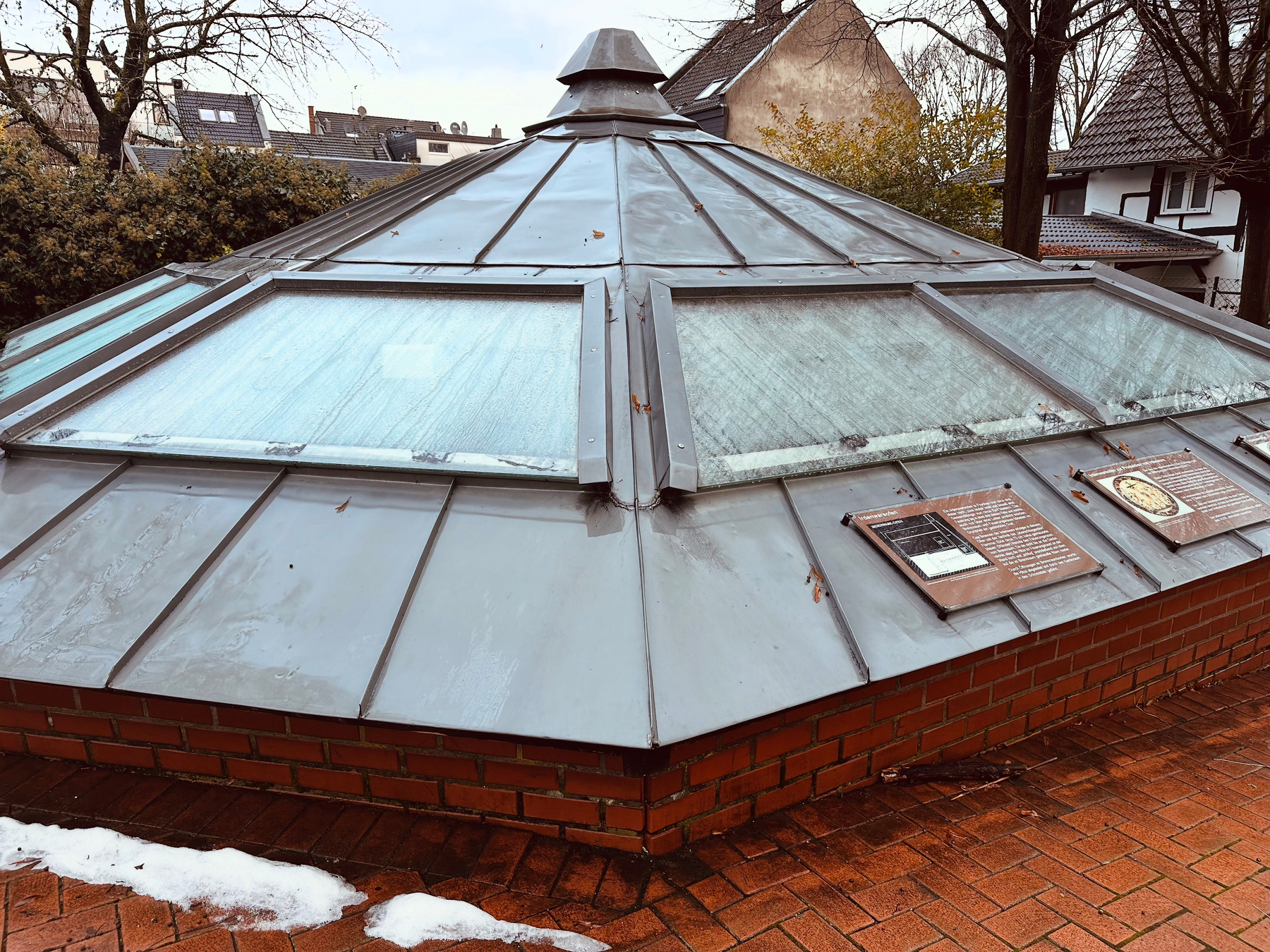
A large, metallic, pyramid-shaped skylight structure with large windows is embedded in a brick base, surrounded by a few plaques and light snow on the ground.

The kilns are under this pyramid and since all the windows were covered with raindrops, I couldn’t photograph the inside.

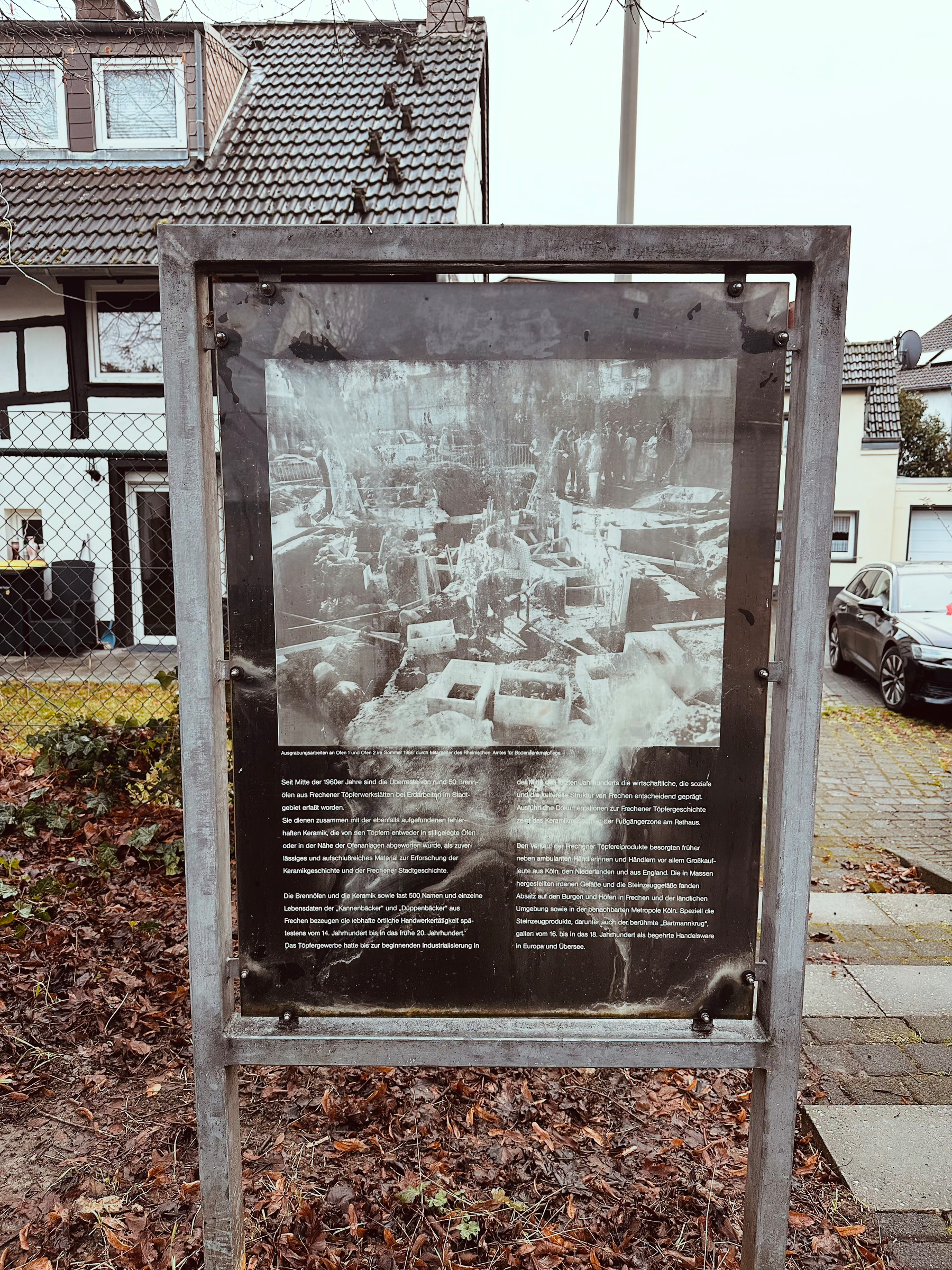
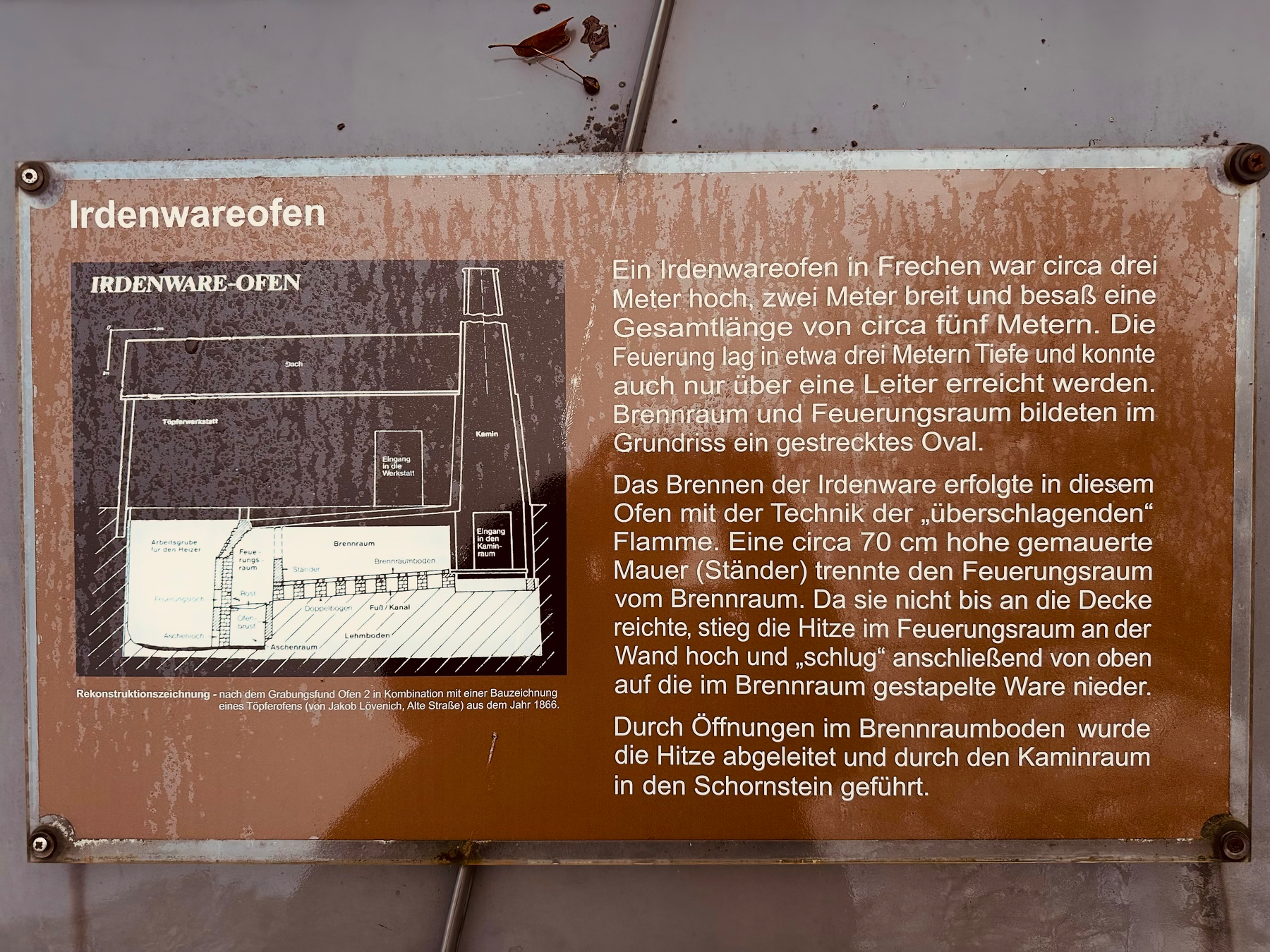
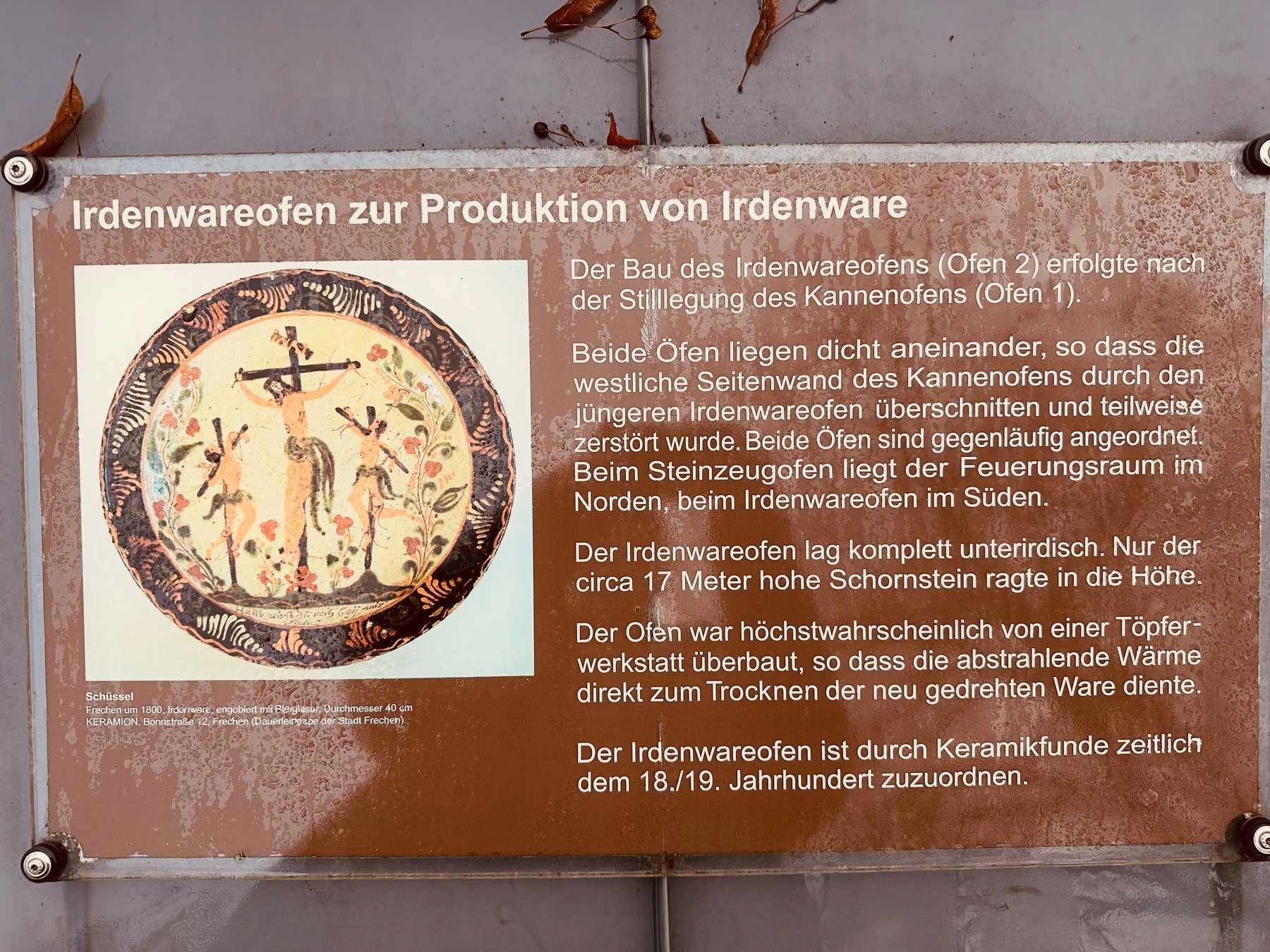
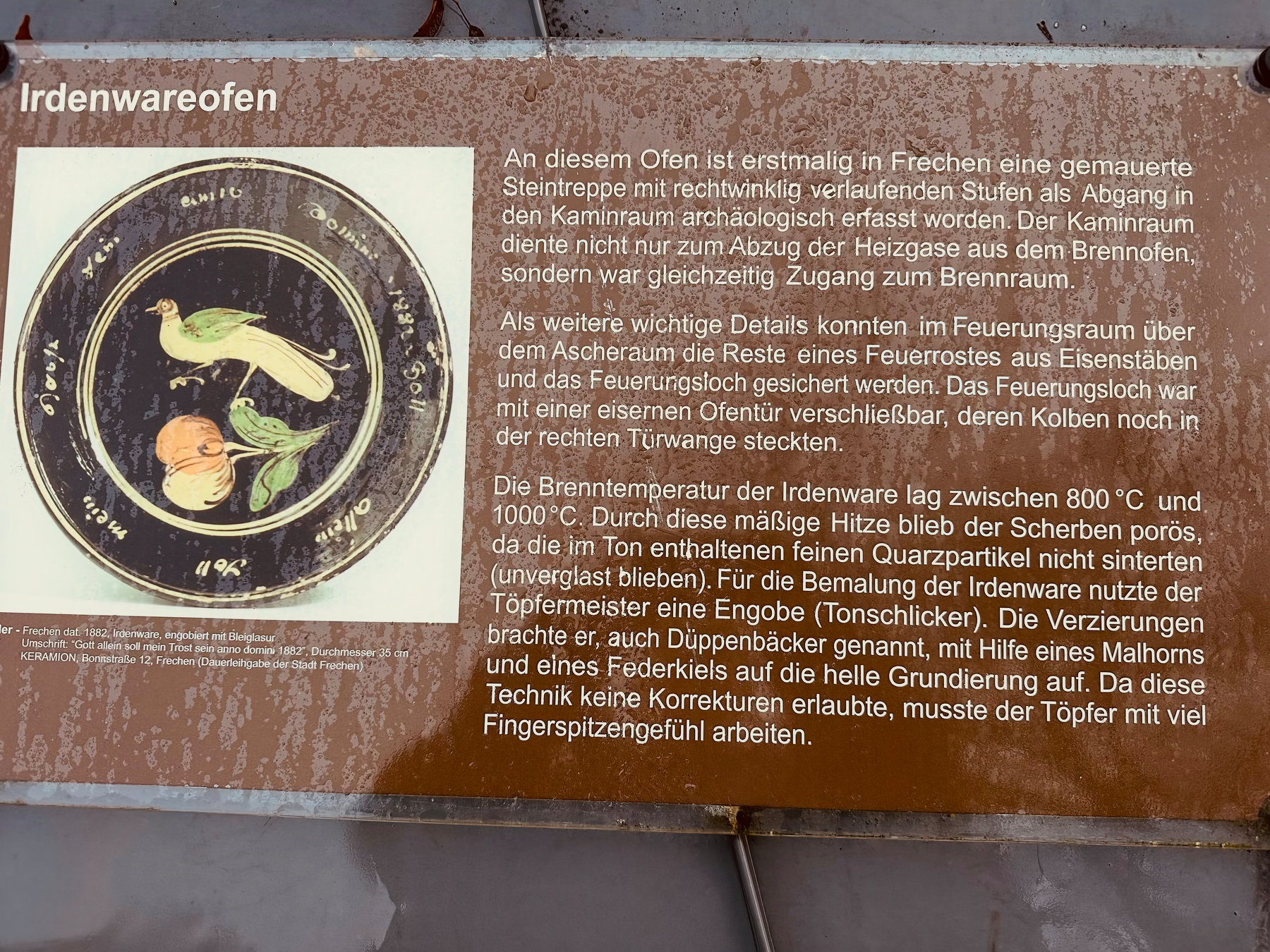
Here, at least, are the signage at the site.
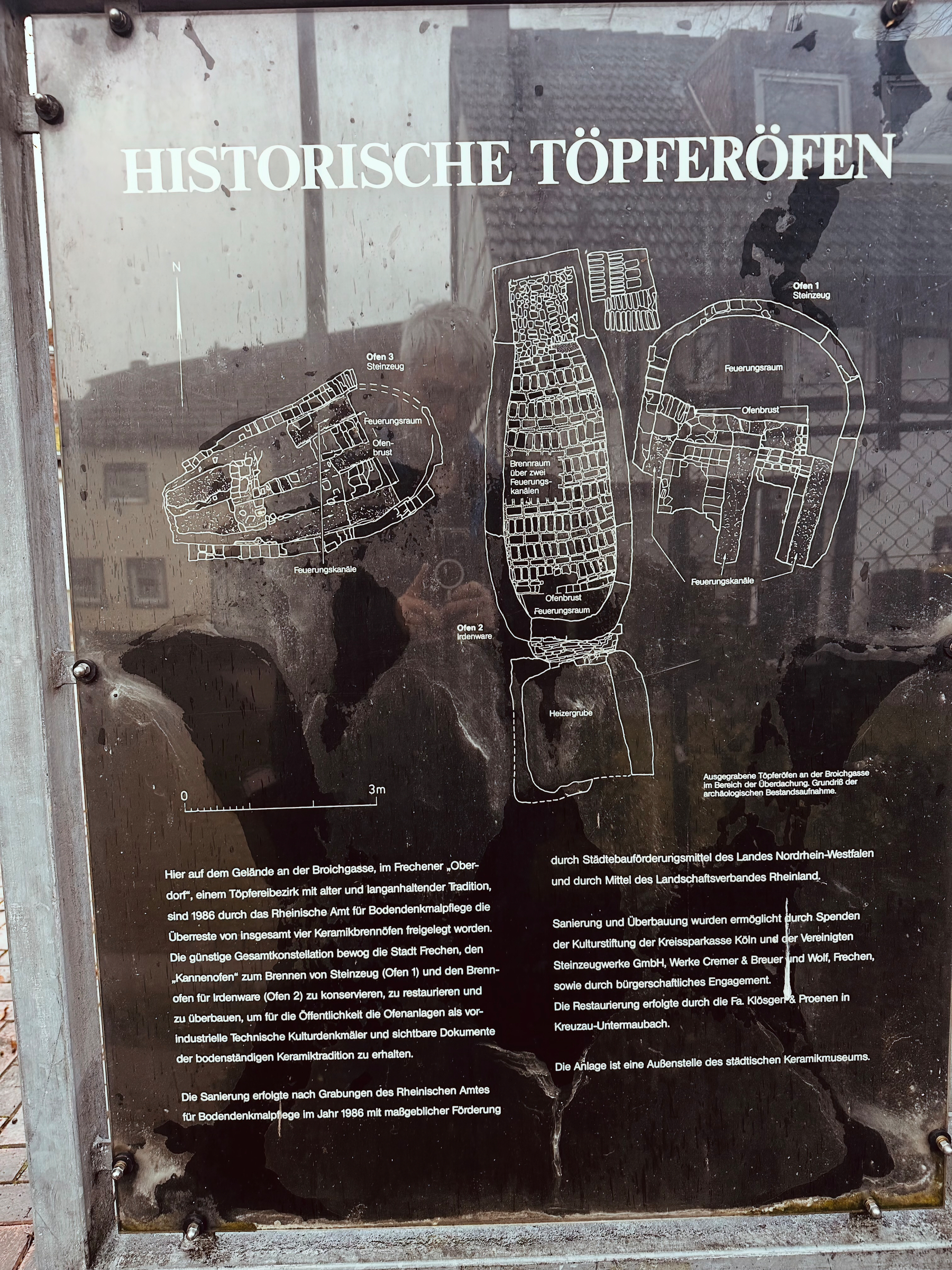
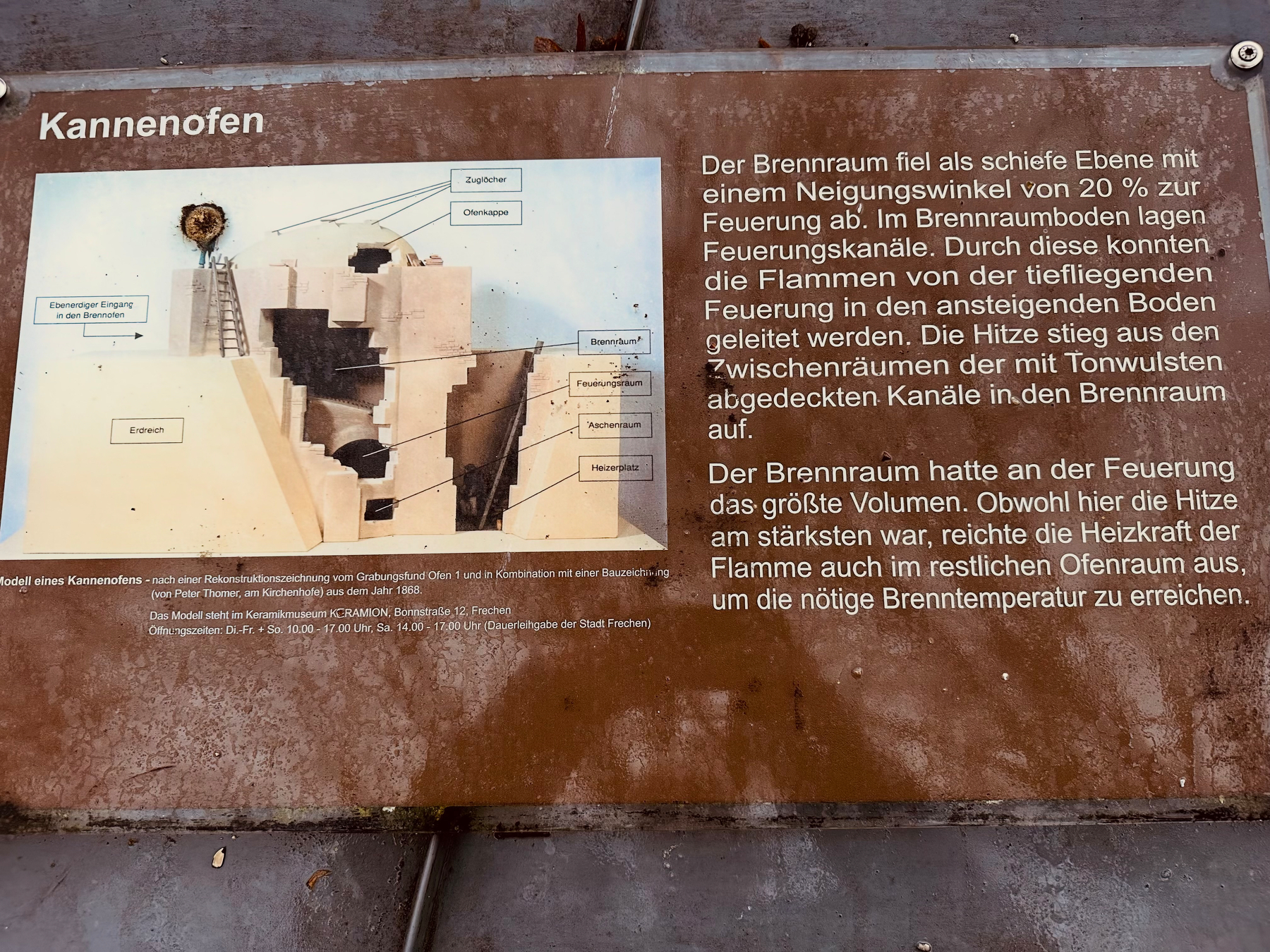
An informational sign provides details about historical pottery kilns, featuring diagrams and text in German.

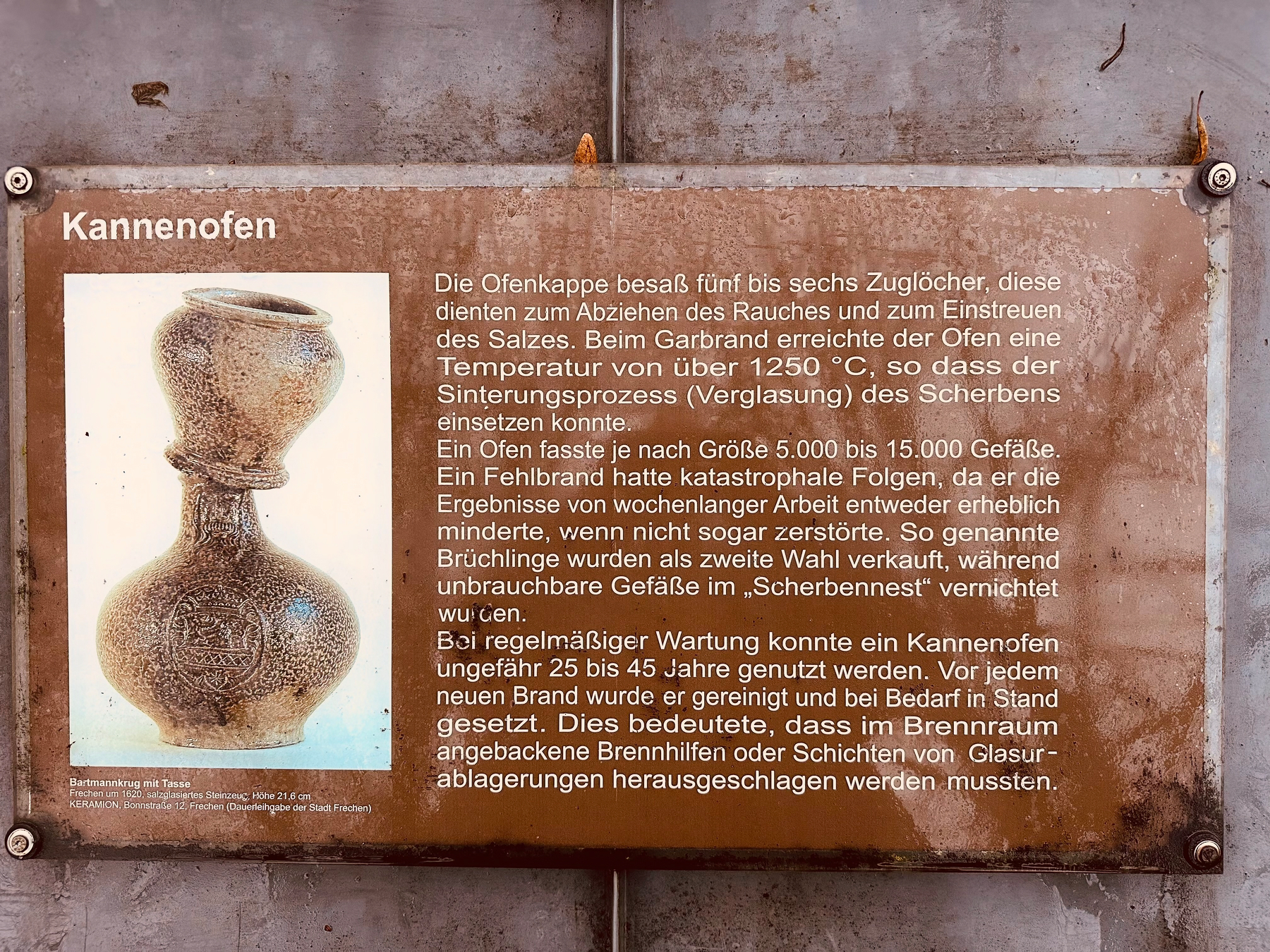
A weathered outdoor sign displays an old photograph and descriptive text, set against a backdrop of residential houses and leaf-strewn ground.

A detailed sign describes an earthenware kiln with a diagram and German text explaining its dimensions and operation.

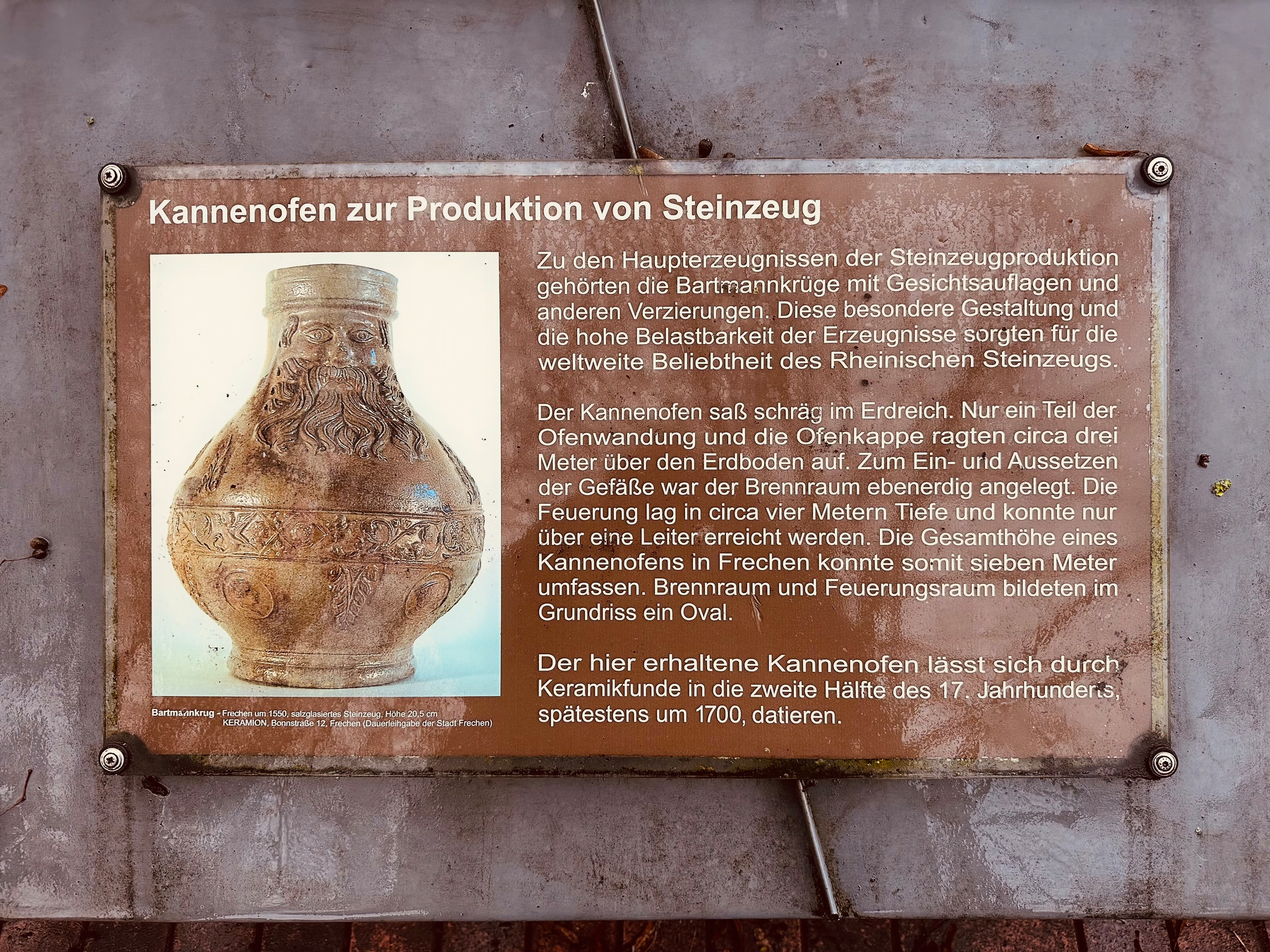
The sign describes the production of earthenware, including details about kiln construction and the firing process.

An informative sign details a ceramic oven and its historical significance, accompanied by an image of a decorative ceramic plate.

A descriptive sign explains the structure and function of a Kannenofen, highlighting its sloped firing chamber and design features in German.

An informational plaque describes a Kannenofen pottery kiln, featuring an image of a ceramic pot.

A descriptive plaque about a pottery kiln used for stoneware production is displayed with an image of a decorative ceramic jug.

On my Rhenish Stoneware map the next stops should be in Badorf and Pingsdorf, both close to Brühl.
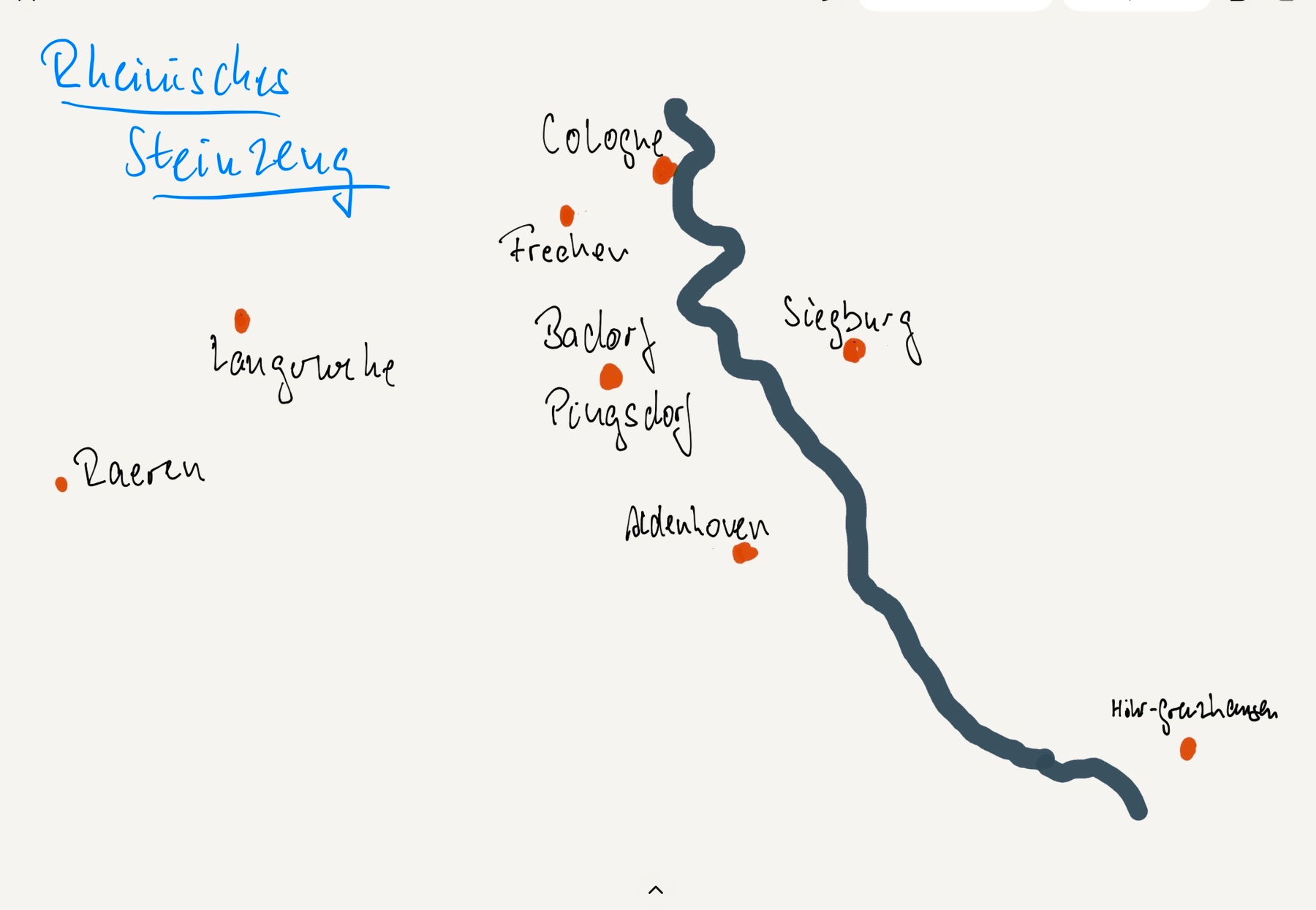
A hand-drawn map labeled Rheinisches Steinzeug features the Rhine various cities like Cologne and Siegburg, and dots marking locations such as Raeren, Frechen, and Höhr-Grenzhausen.