Posts in "HistoryCycle"

Rhenish Stoneware 2

Yesterday I visited the Stadtmuseum Siegburg to pick up on the exploration of Rhenish Stoneware, one of the successful trading goods of medieval Cologne, as previously mentioned here.

Because I wasn’t awfully keen on a 80 km plus bike ride in the winter with snow on the forecast we went by car and also cleared some errands on the way to and from Siegburg.

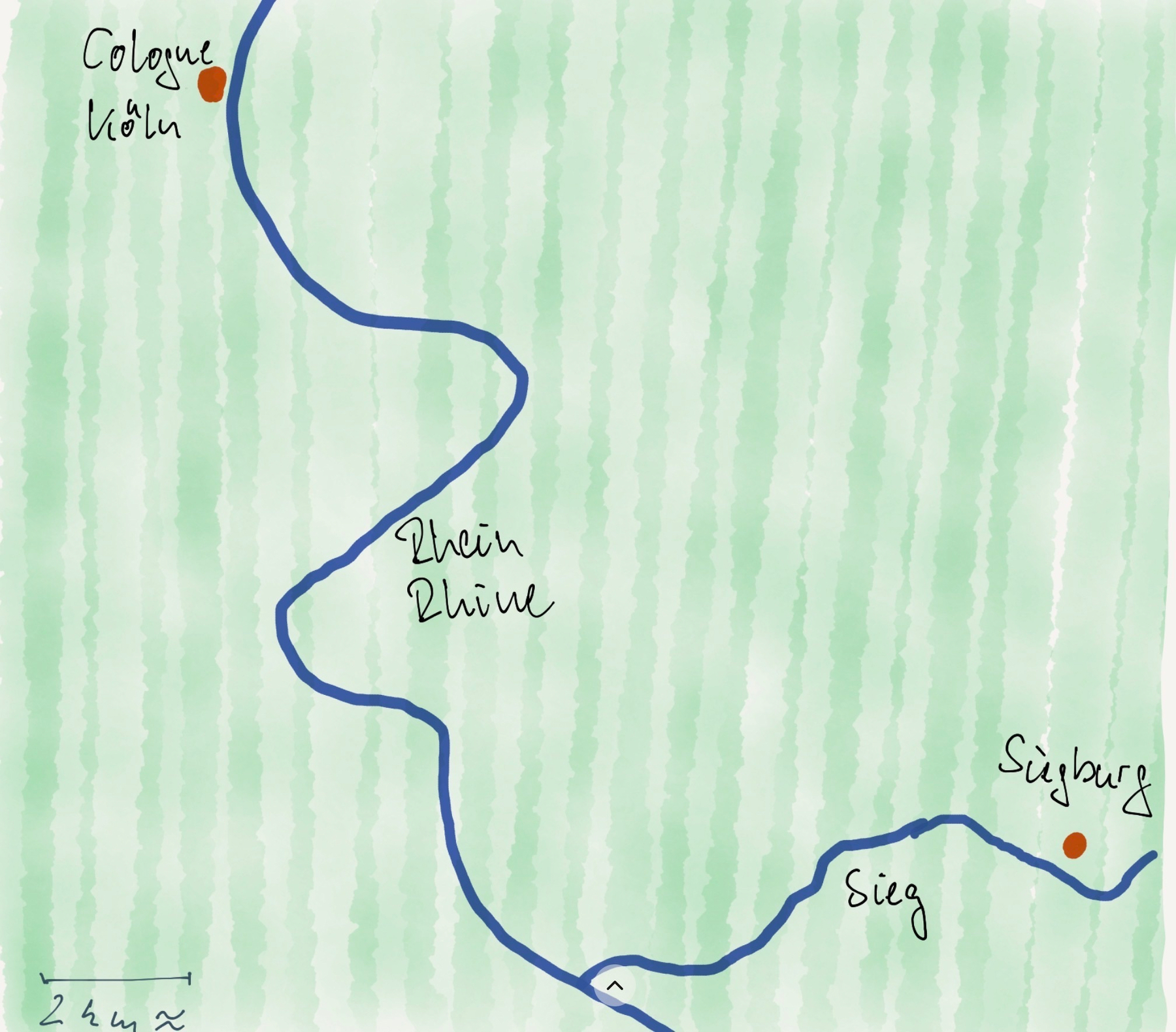
A simple, hand-drawn map illustrates the Rhine River with marked locations: Cologne and Siegburg and the Rivers Rhine and Sieg

For background on Siegburgs history, here is Wikipedia on the city.

Unfortunately photographing was not allowed, so only two pictures.

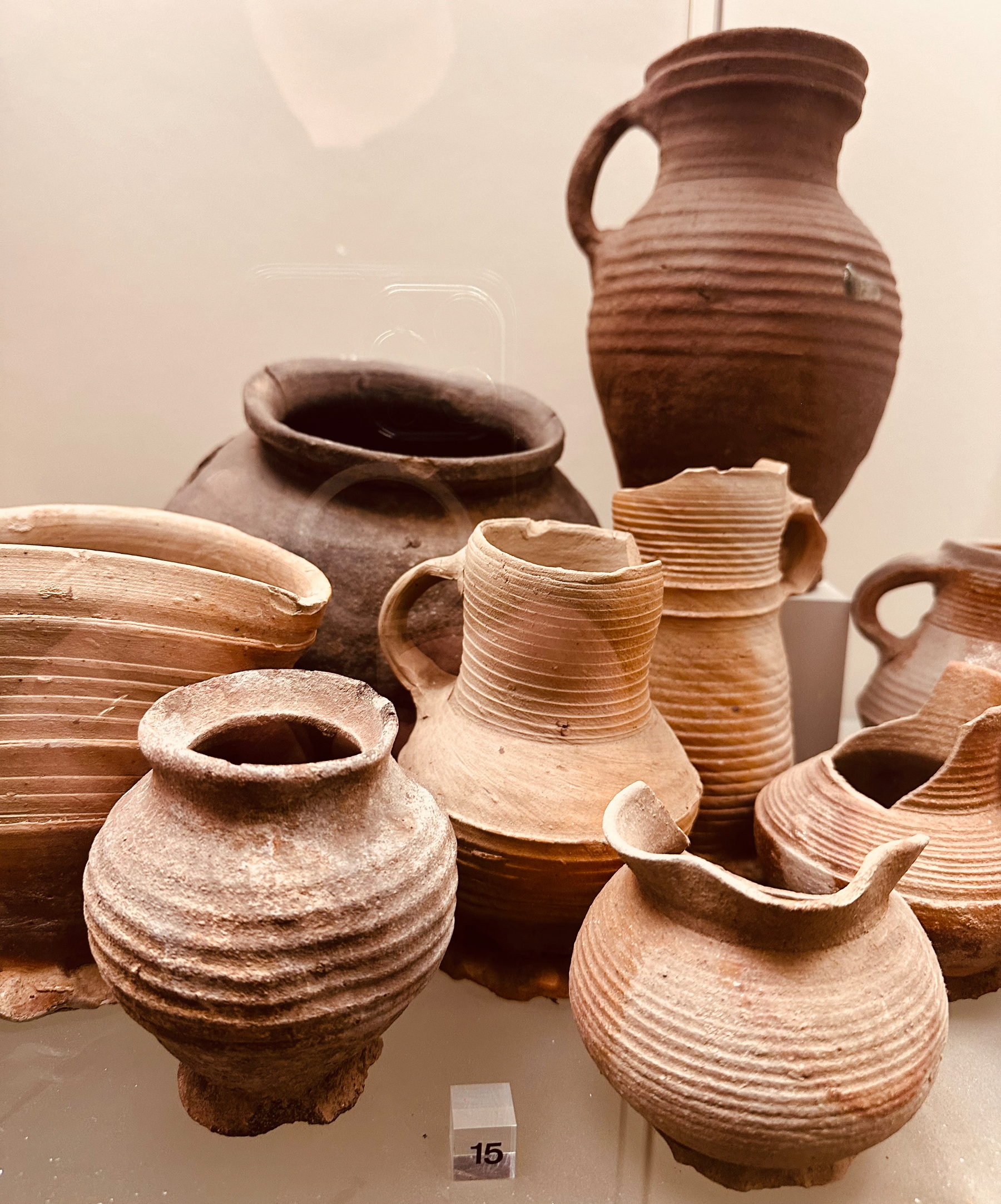
A collection of various ancient clay pottery pieces, including jugs and pots, is displayed. Found at Aulgasse, excavated 1962

More information on Siegburger Steinzeug, German only, Wikipedia. Siegburg produced two qualities of stoneware, one for domestic consumption and traded all over the surrounding area and the Bergische Land, Wikipedia. And then there was the “good stuff” which was traded from Cologne. Cologne traders came per boat up the Rhine and the Sieg to Siegburg to collect the stoneware, also Siegburg traders brought it to the market in Cologne. From there it went all over the Baltics, Scandinavia, Netherlands and England.

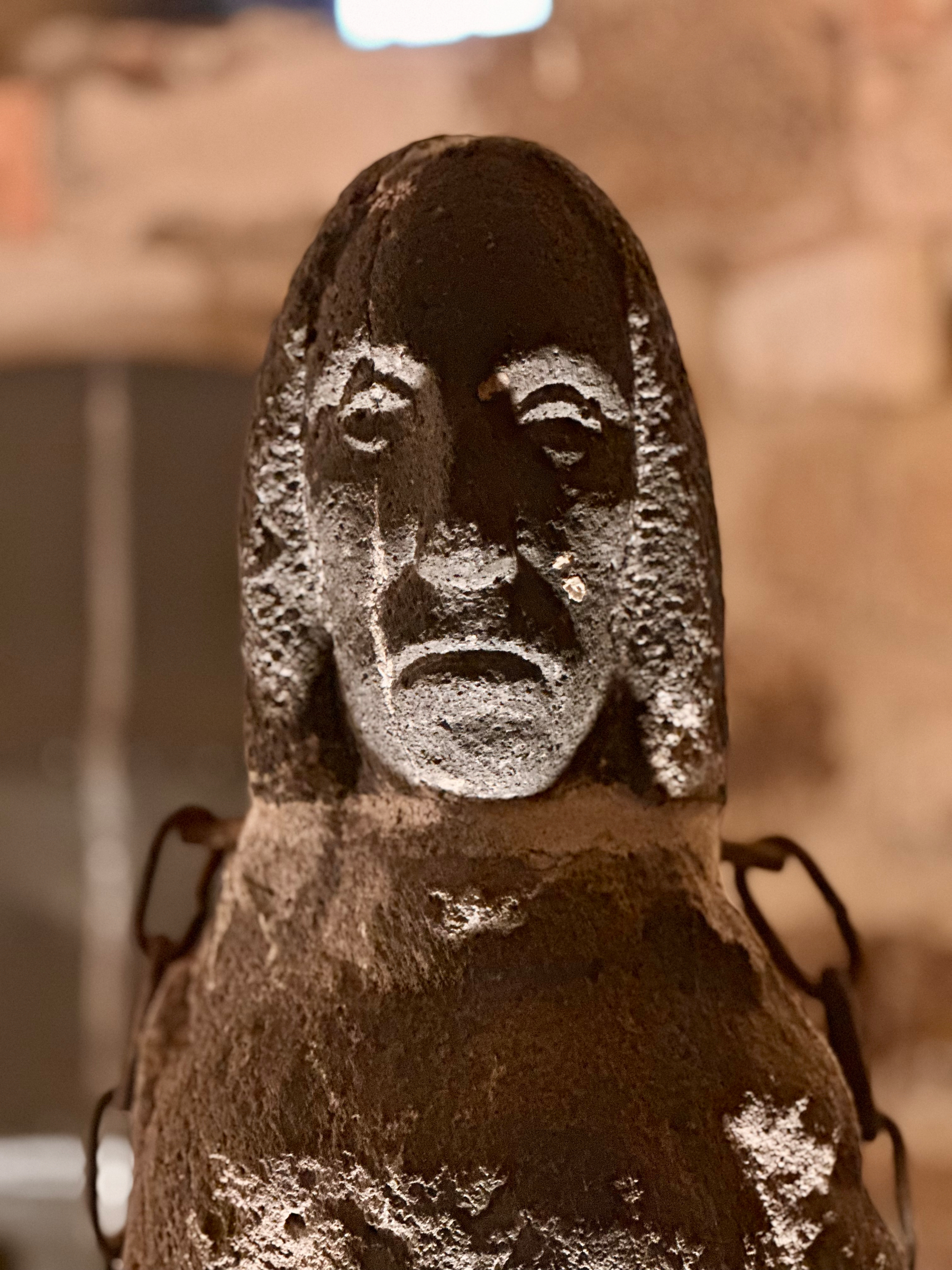
And now for some gruesomeness, the top of Siegburgs pillory:

Stone sculpture of a solemn face, illuminated with dramatic lighting, is the top of the medieval city pillory.

‘Neujahrsvorsatz’ #FotoVorschlag

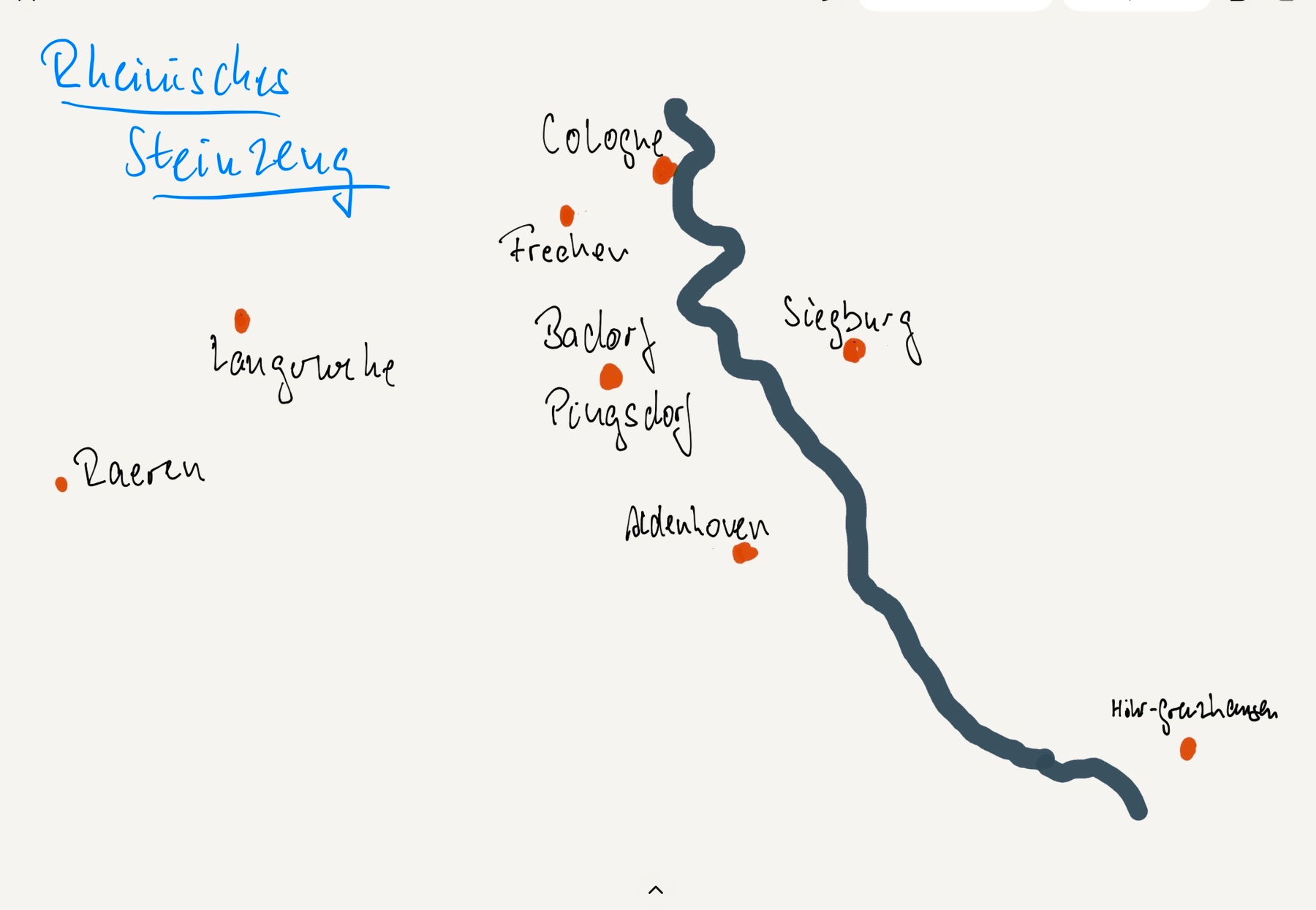
A hand-drawn map labeled Rheinisches Steinzeug features the Rhine various cities like Cologne and Siegburg, and dots marking locations such as Raeren, Frechen, and Höhr-Grenzhausen.

Nächste Tour Siegburg, muss nur etwas wärmer werden.

#photography #fotografie #fahrrad

Some more stuff on salt

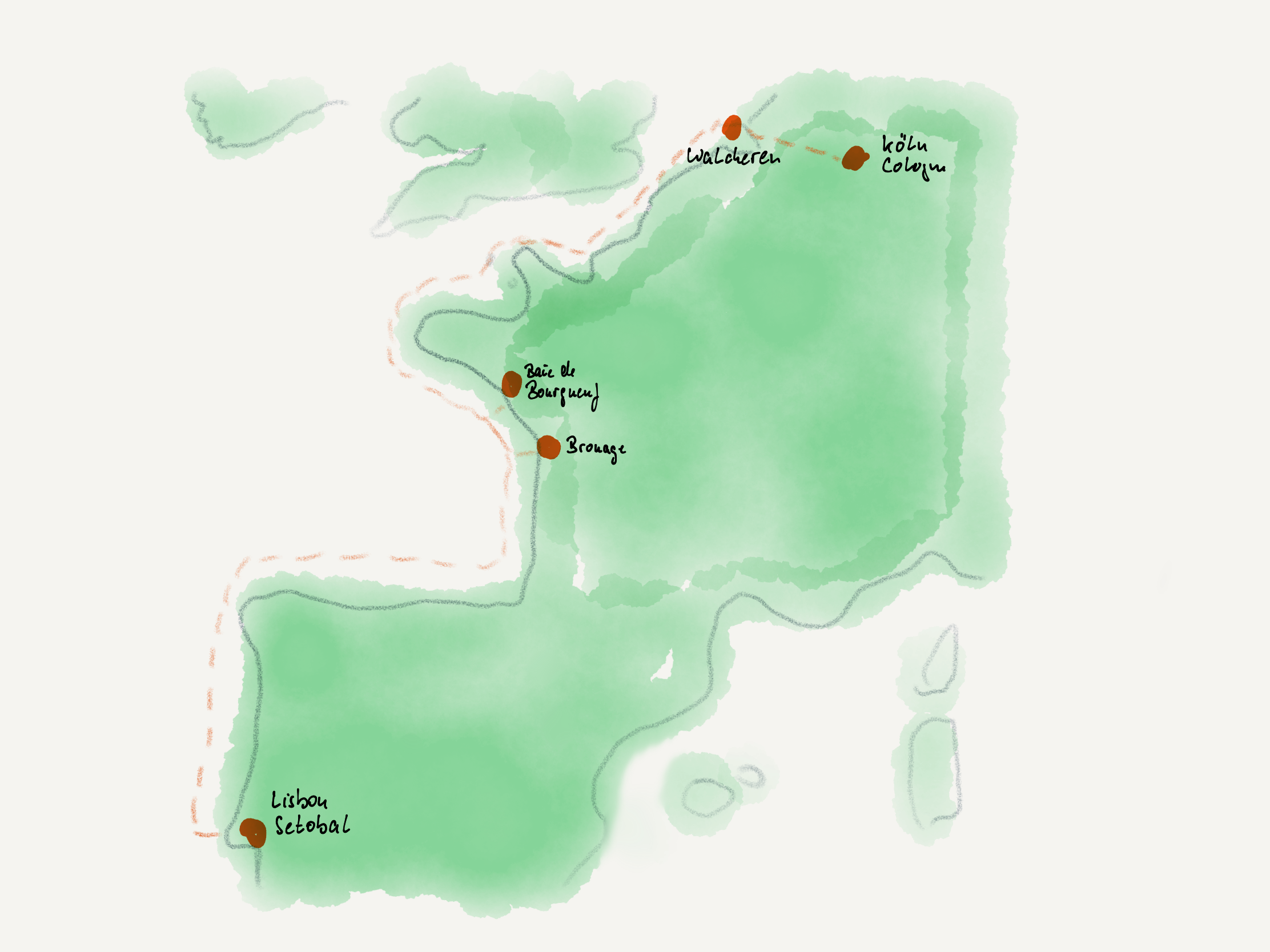
The Hanse and the Dutch (specifically Zeeland) traded Baiensalz (salt from the Bay de Bourgneuf, Spain and Portugal). This salt trade was possible because it was part of a larger trade network see WIKI german

A simple, stylized map depicts regions labeled with “Lisboa,” “Setobal,” “Brouage,” “Baie de Bourgneuf,” “Walcheren,

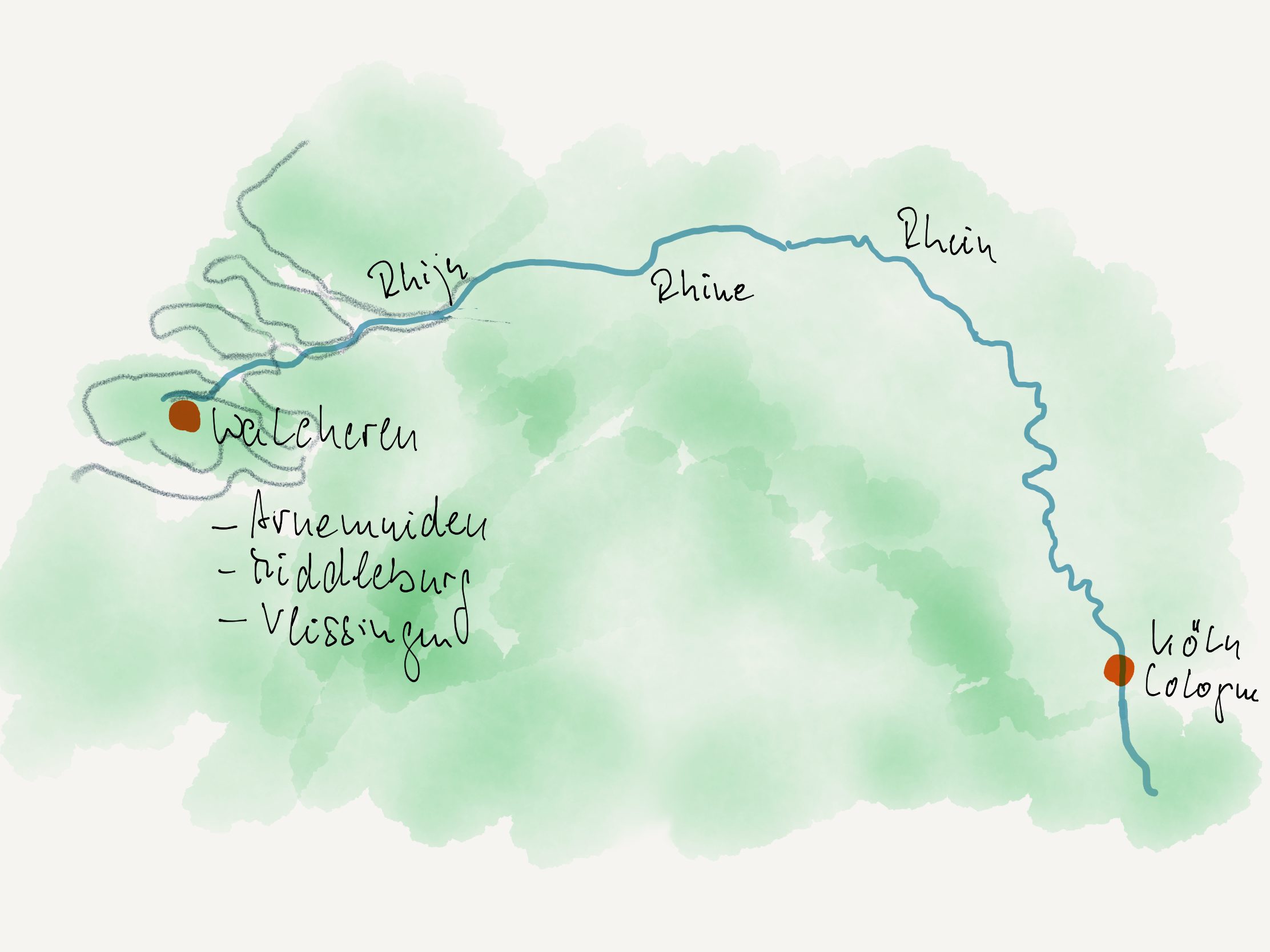
During the 16th century Zeeland and especially Walcheren was important in this trade and imported, refined and then exported large quantities of salt. Some of this salt traveled over the Rhine to Cologne, where, next to salt from Lüneburg, it was used to salt fish, but also was traded directly, see Trading goods of medieval Cologne and Ventgüter

Here is a map of that flow:

A hand-drawn map illustrates the Rhine River with marked locations including Cologne and Walcheren.

Very slowly getting into a rhythm

Well, almost, it still feels like (fairly extended) vacation, but I’m starting to allow myself to take time for my own stuff.

But talking about vacation, first we went back to Walcheren for another week, which despite the rain, and there was a lot of rain, was glorious. I also took a lot of photographs, so in terms of my retirement plans that also was quite productive.

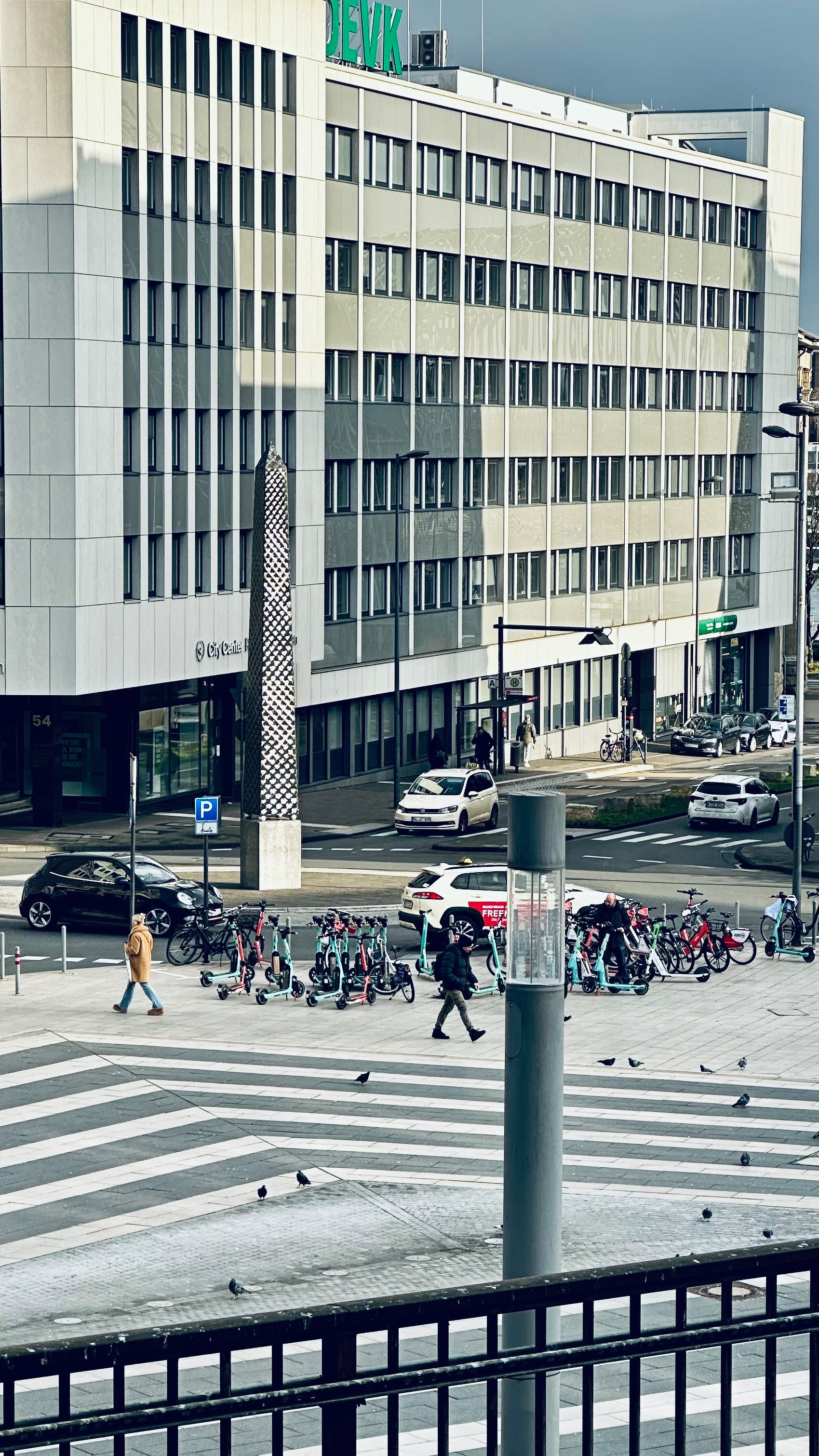
People are walking near a city street with parked scooters and bicycles in front of a modern building. A lamp post in the foreground mirrors an obelisk in the middle of a roundabout.

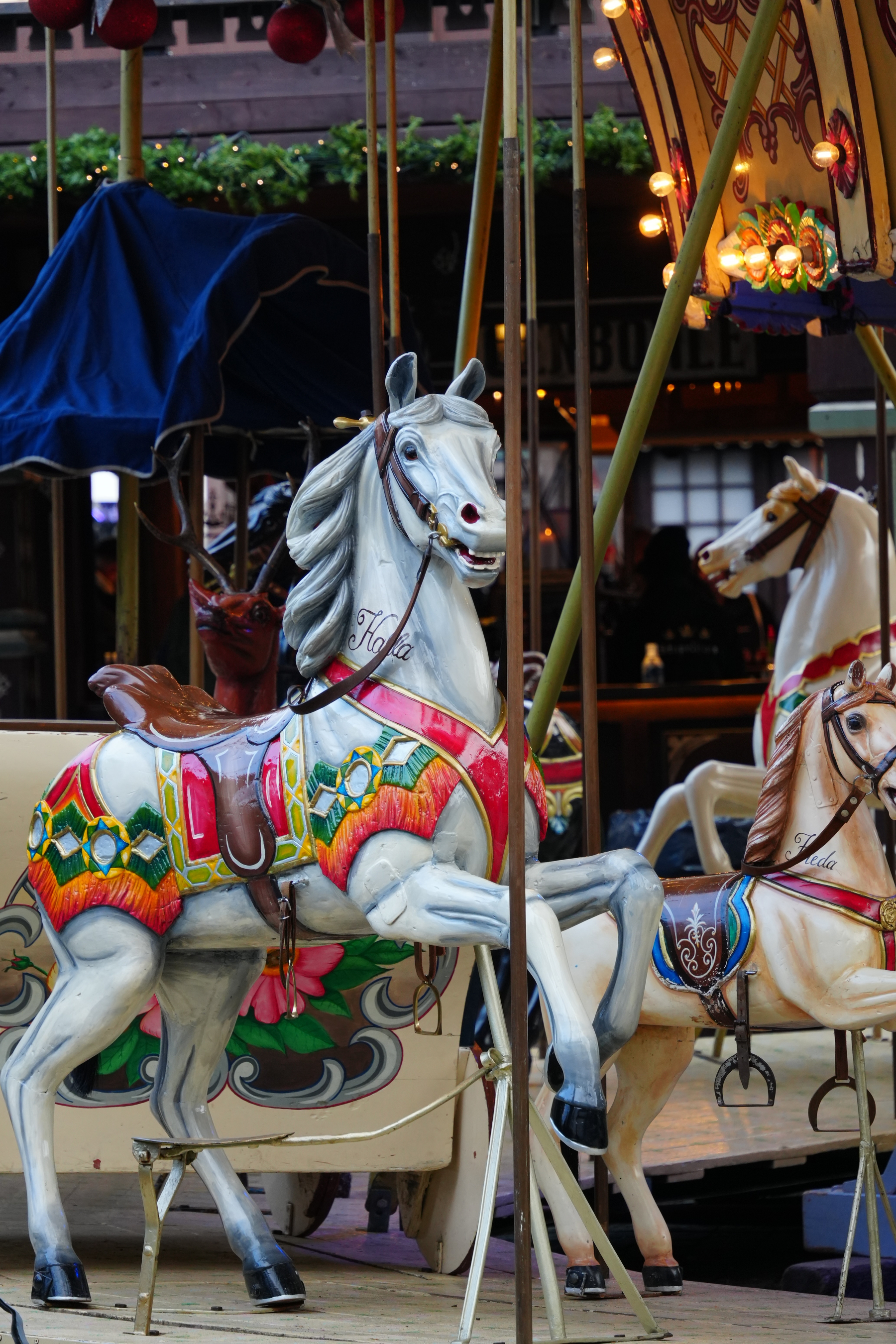
A decorative carousel featuring painted horses with colorful saddles and bridles.

During our vacation we also visited Arnemuiden, which today is a fairly small, fairly modern looking suburb of Middleburg. Go a few centuries back Arnemuiden was an important harbour on Walcheren, sitting at the mouth of the river Arne which linked Arnemuide with the Verse Meer and thus with international trade. History of Arnemuiden

What piqued my interest is that Arnemuiden was an important trading center for salt. Originally Zeeuwse Zout was made by burning turf, but in the 16th century Iberian and French sea salt was refined on Walcheren.

Part of this salt was used to salt fish, some of which was traded down the Rhine and was then offloaded in Cologne, see Trading Goods of Cologne and especially Ventgüter.

Another part of this salt was traded directly, partly down the Rhine to Cologne, where it was either traded on, or used in the salt fish trade which provisioned large parts of the southern Holy Roman empire with fish for lent and other religious fast days.

In a (not really) surprising twist, cruising the History of Arnemuiden I happened on this page, Rheinisches Steinzeug

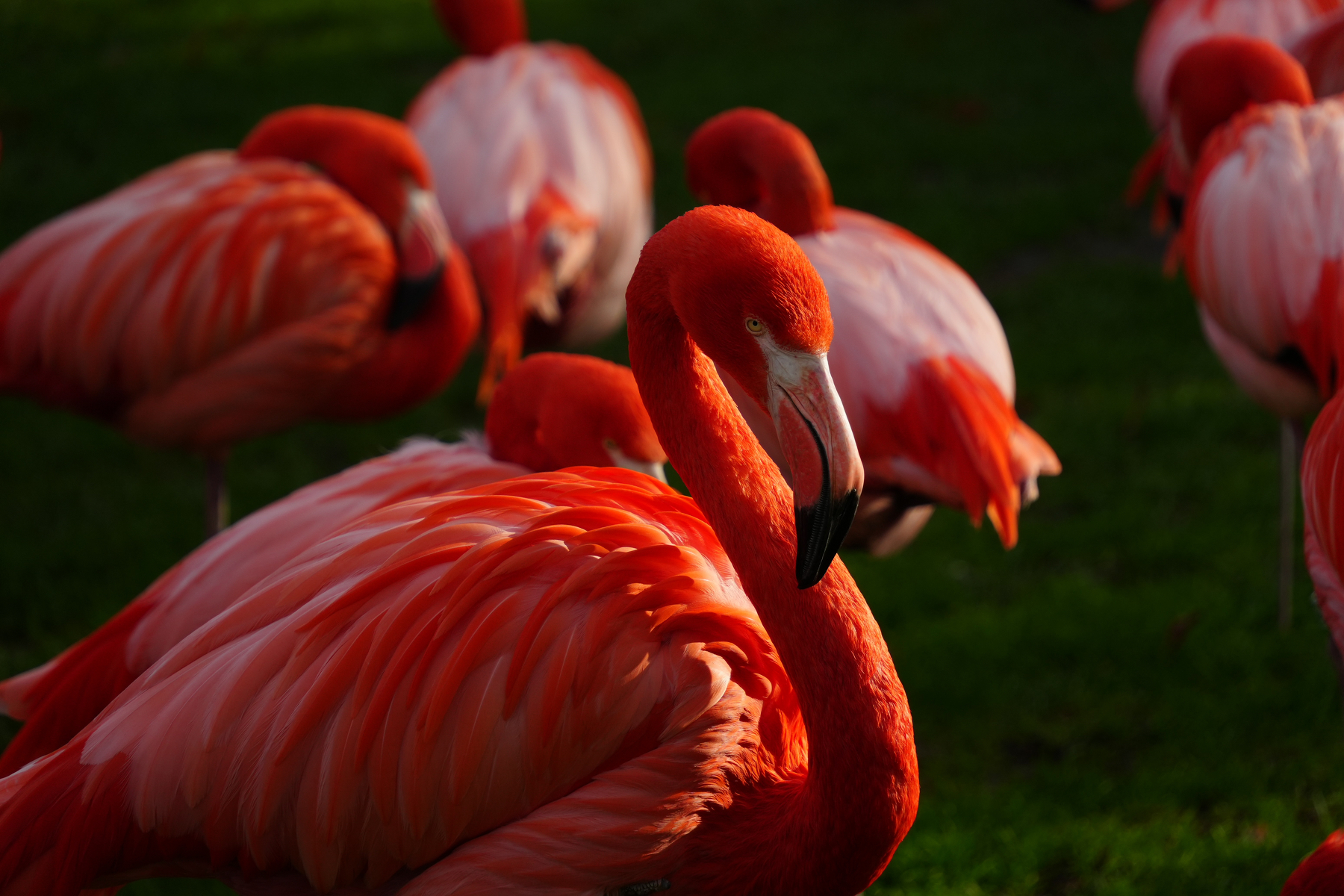
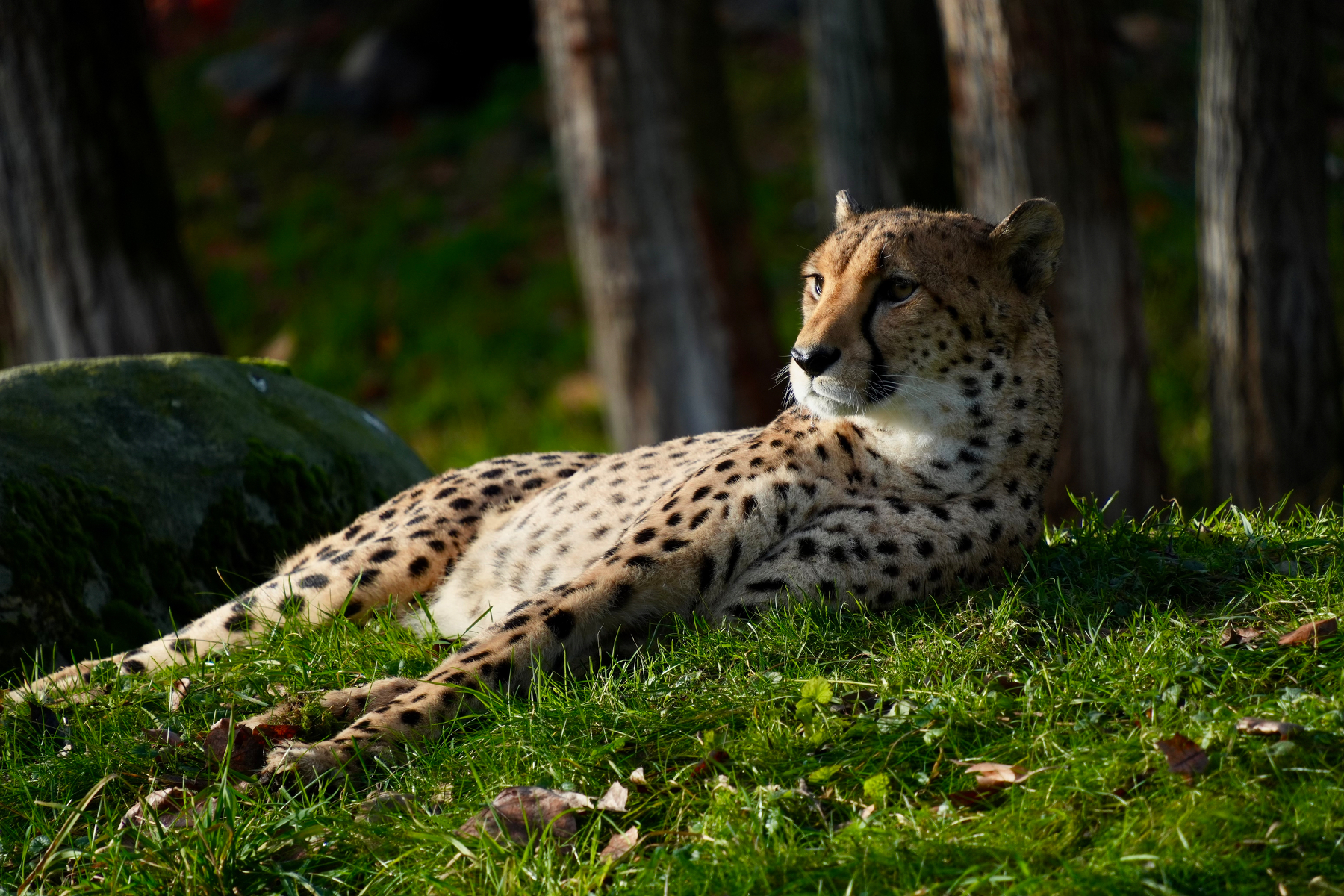
Coming back to photography, there was also time for a visit to Cologne Zoo.

A group of vibrant pink flamingos stands together on a grassy area

A cheetah is lounging on a grassy area, surrounded by trees and basking in the sunlight.

Slowly getting there

The first Cologne trading good I’m looking at is stoneware. It was produced in the wider area around Cologne from Raeren in Limburg down to Höhr-Grenzhausen in the Westerwald.

A hand-drawn map labeled Rheinisches Steinzeug features the Rhine various cities like Cologne and Siegburg, and dots marking locations such as Raeren, Frechen, and Höhr-Grenzhausen

The goods were traded from the Alter Markt in Cologne and went all over northern Europe and from The Netherlands and England to Africa, Indonesia, America (North and South) and to Australia.

Steinzeug

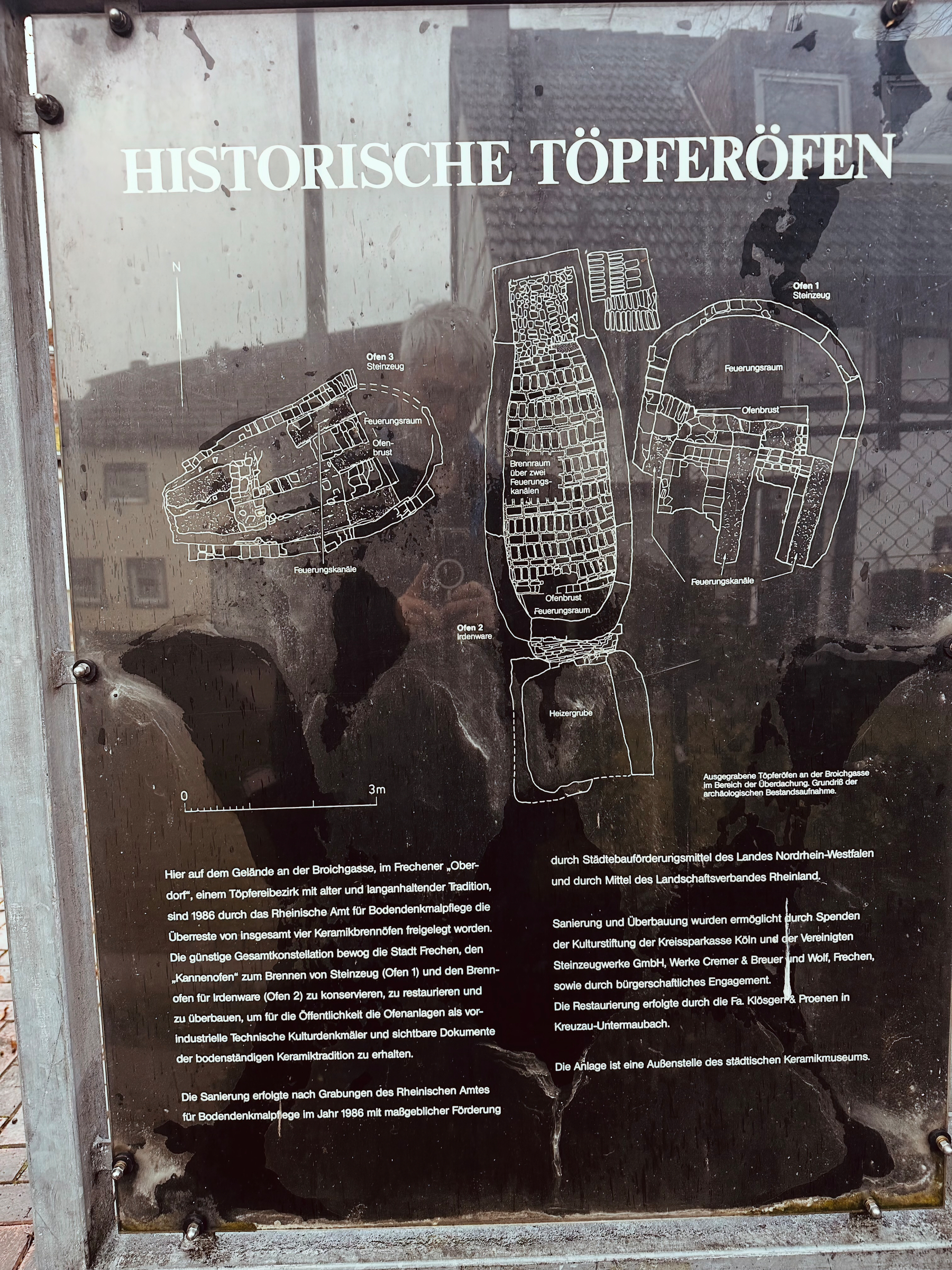
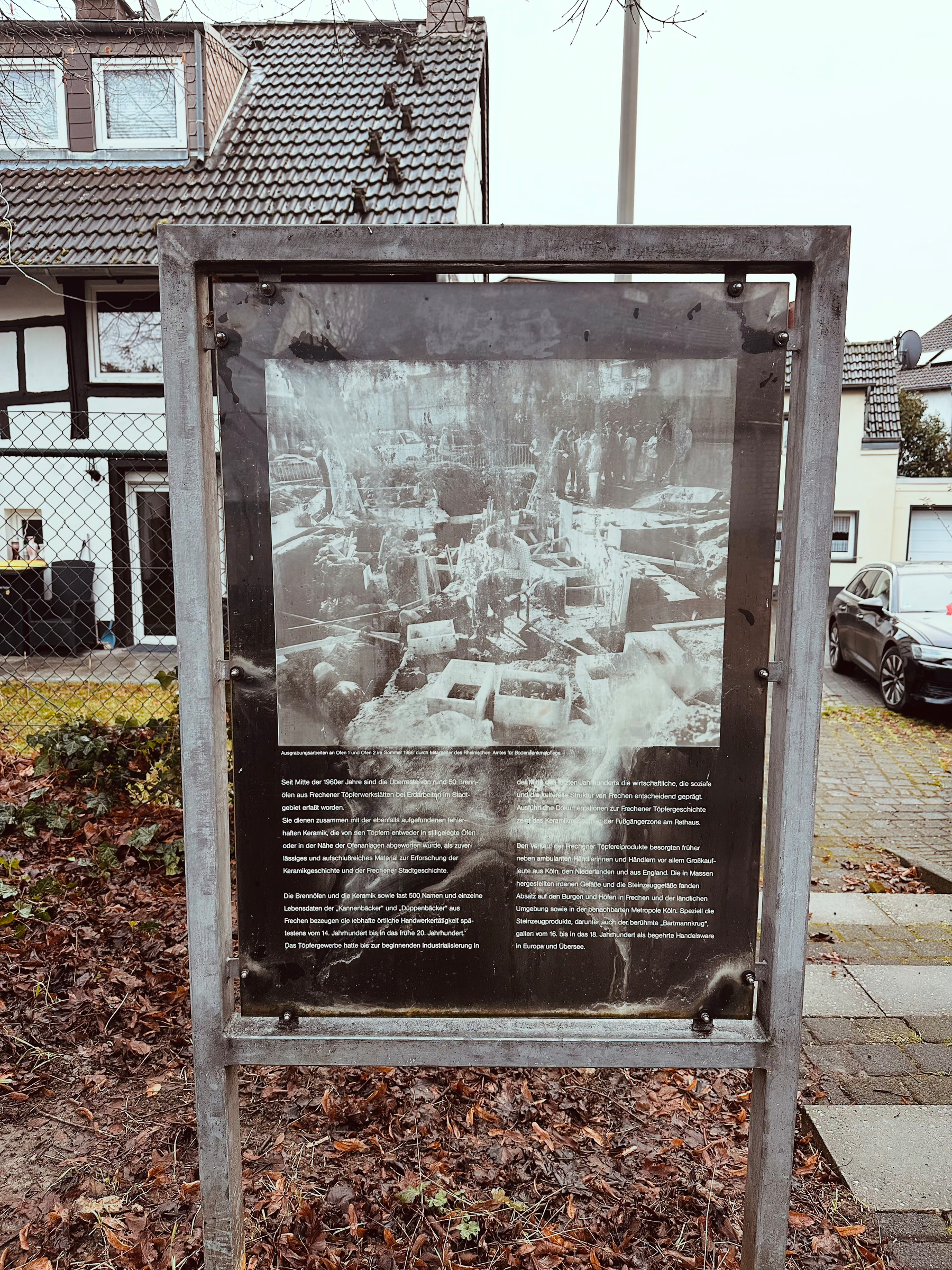
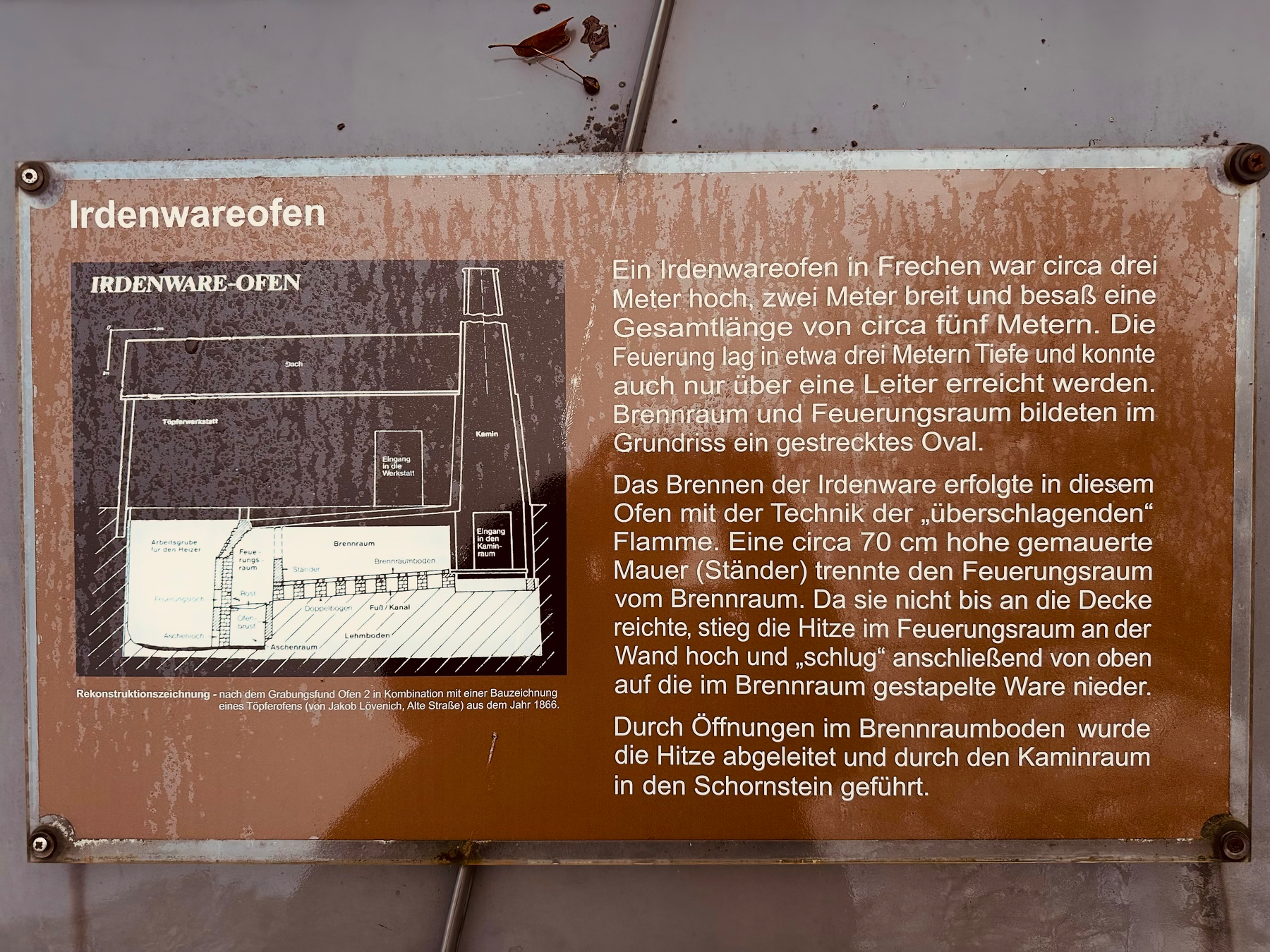
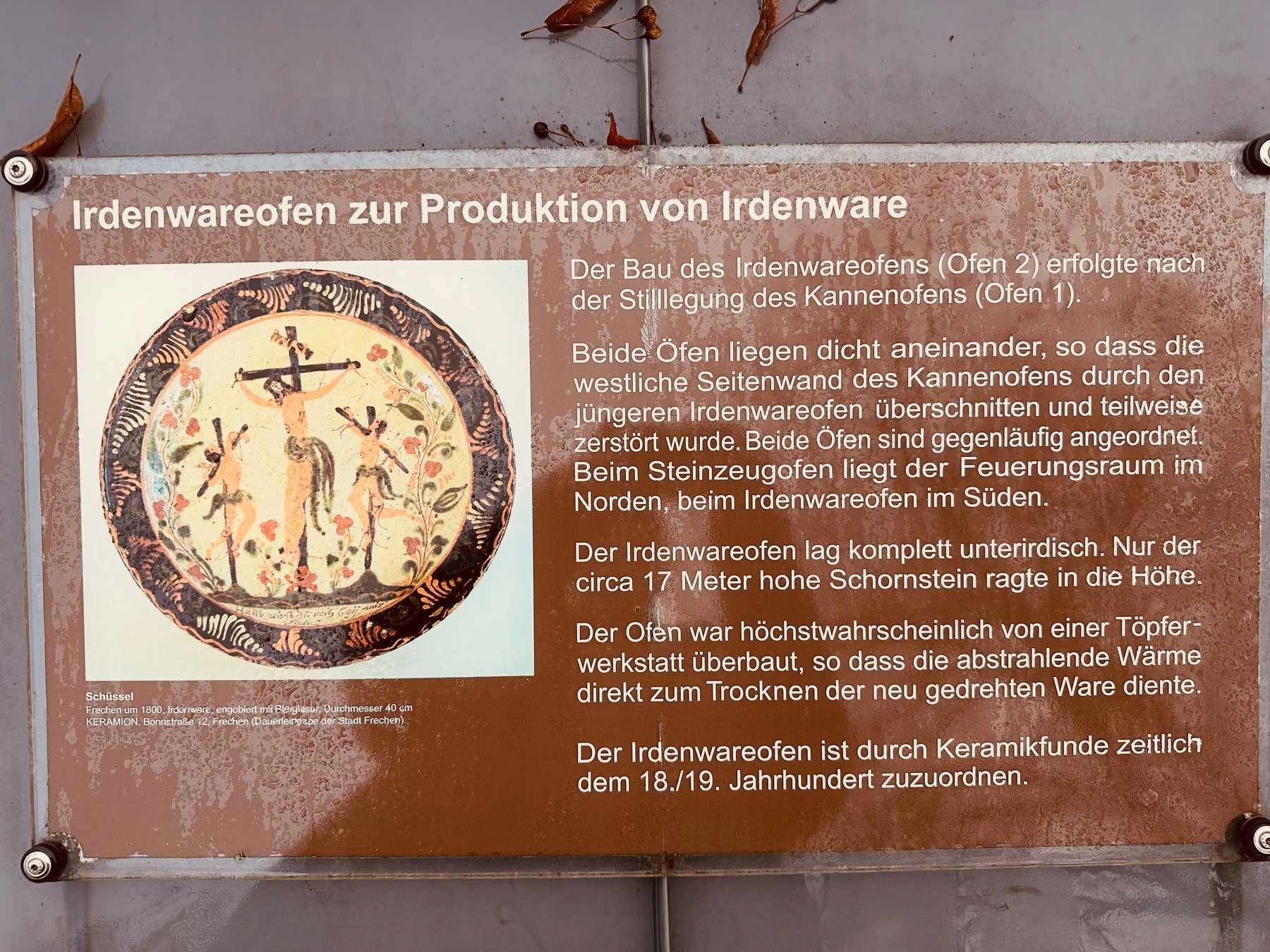
My first trip went to Frechen, though I have to go back as I managed to miss the kilns.

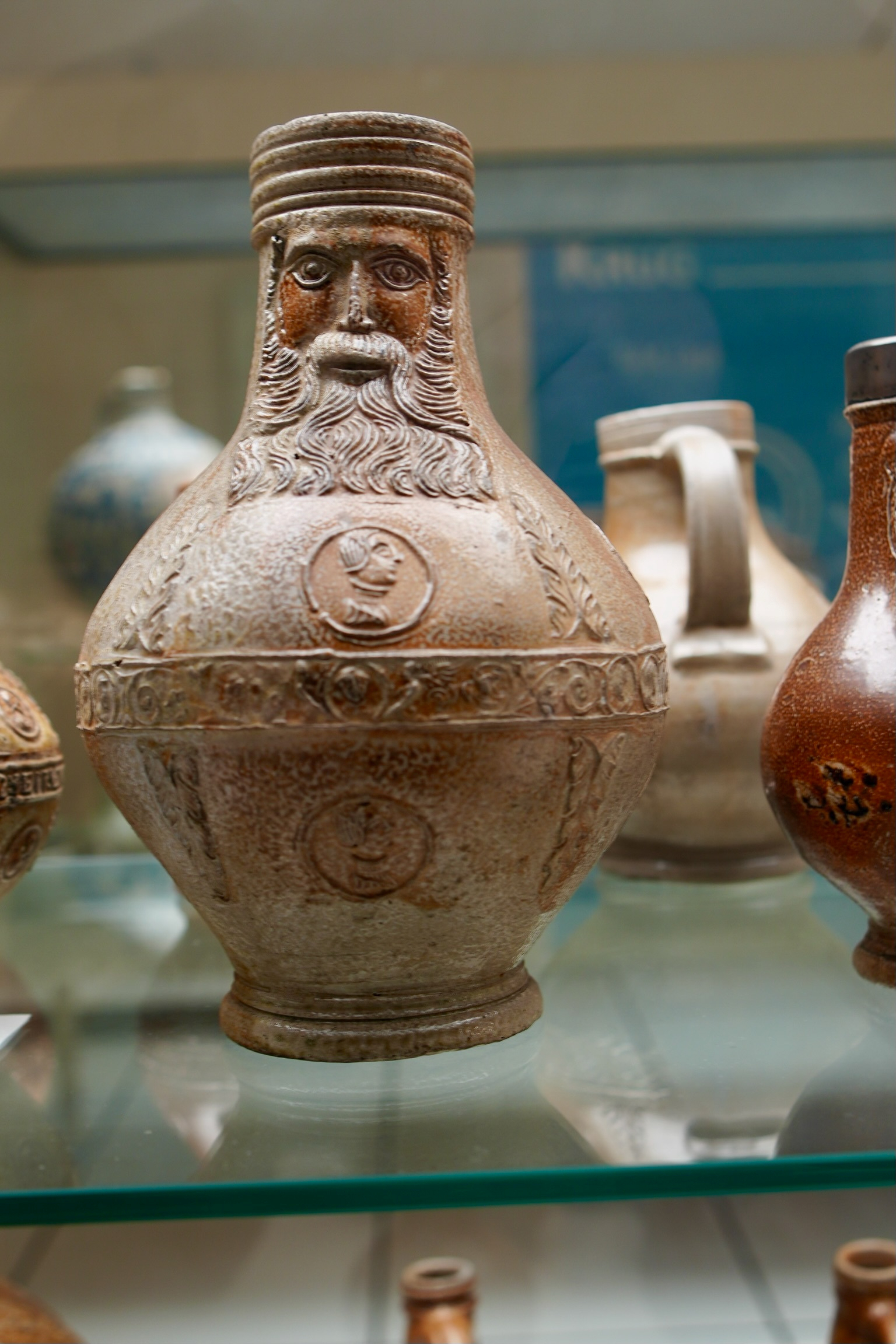
Stoneware from Frechen

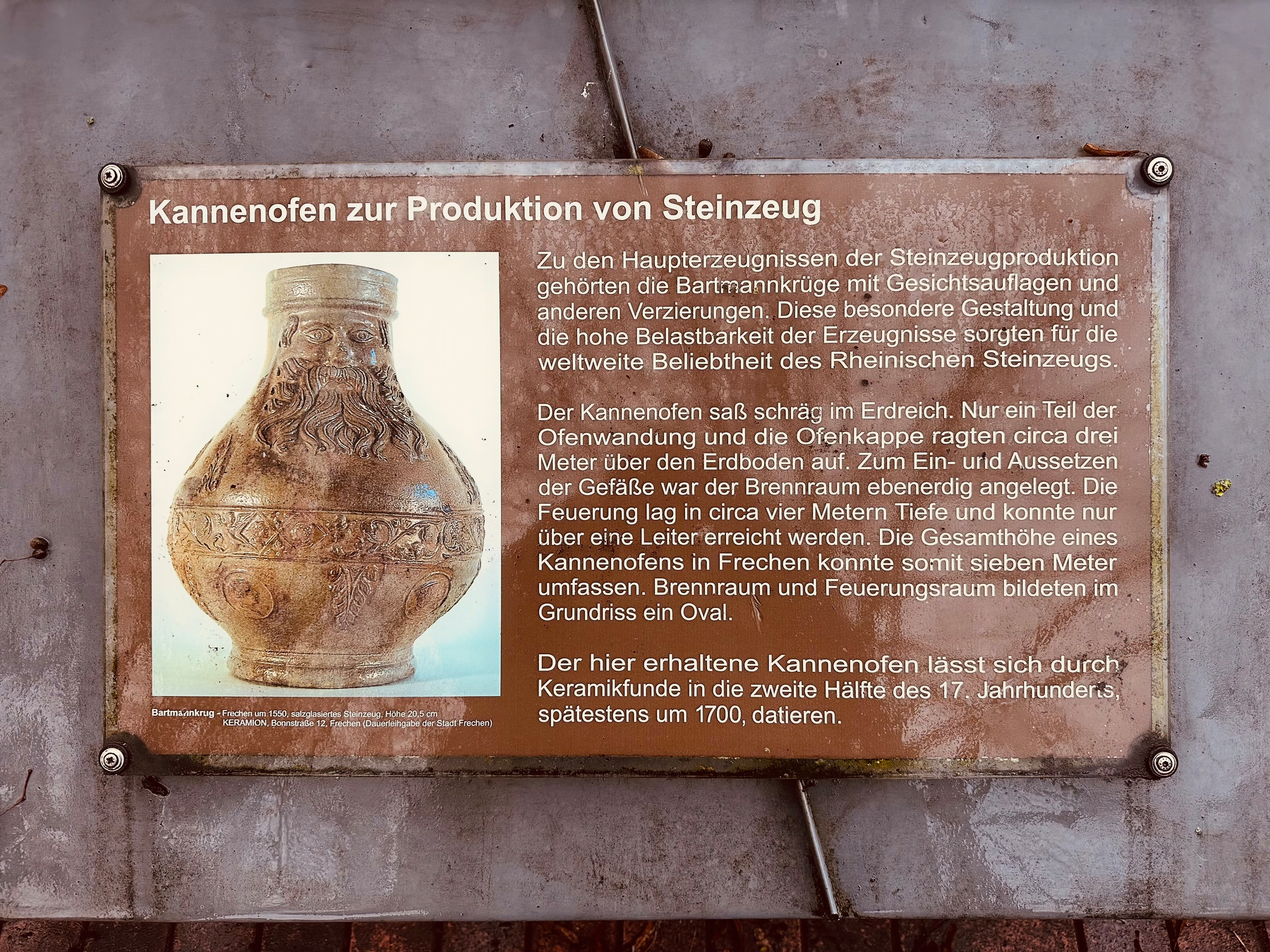
A Bartmannskrug, a bearded ceramic jug, with intricate designs is displayed alongside other pottery on a glass shelf.

The next trip will then probably go to Siegburg.

#retirement #history #cologne #cycling #photography

Rheinisches Steinzeug

I did my first cycling trip to a source of a medieval trading good, traded in Cologne. This is part of my retirement keep active plan. Combine local history, cycling and photography.

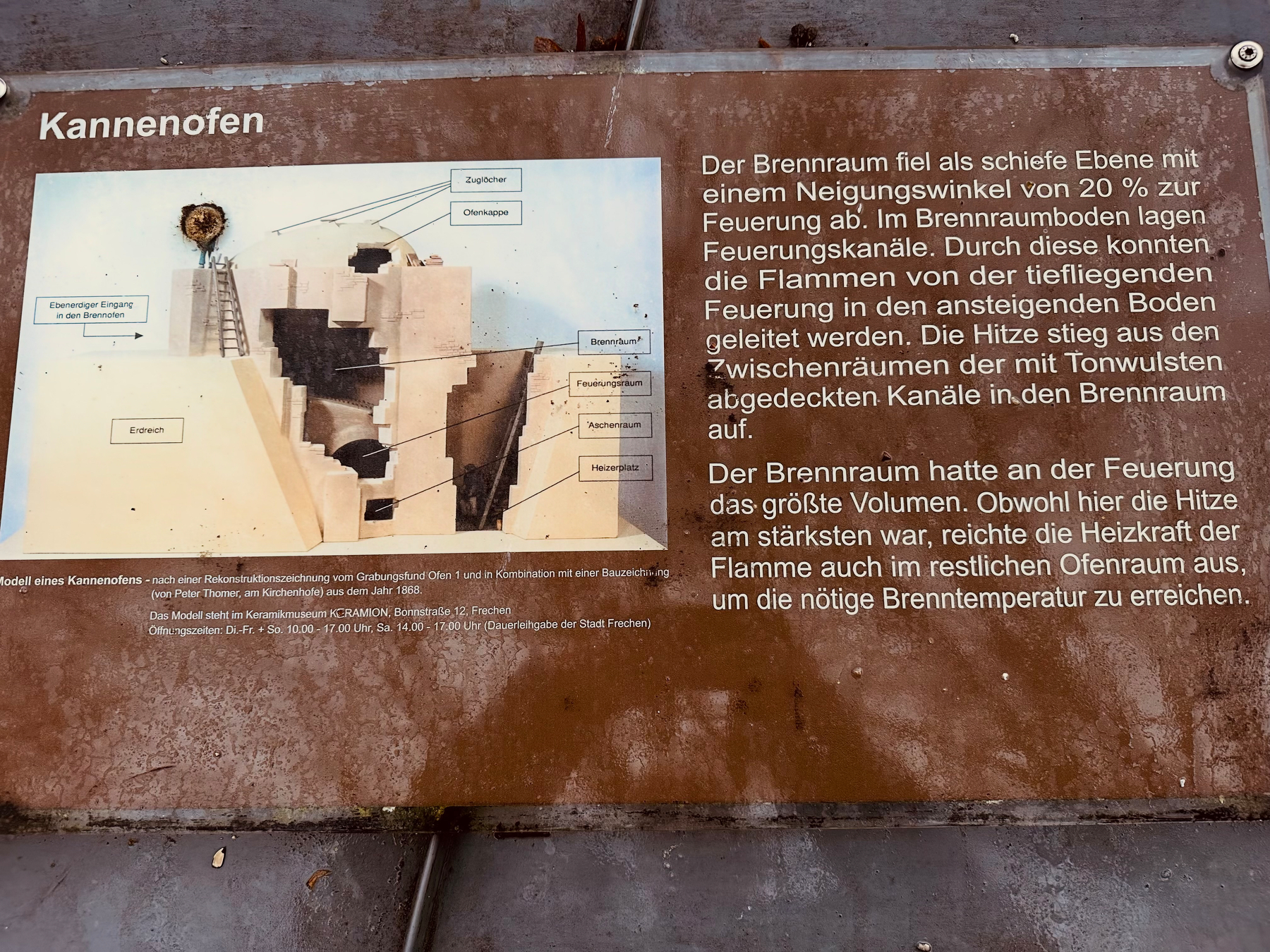
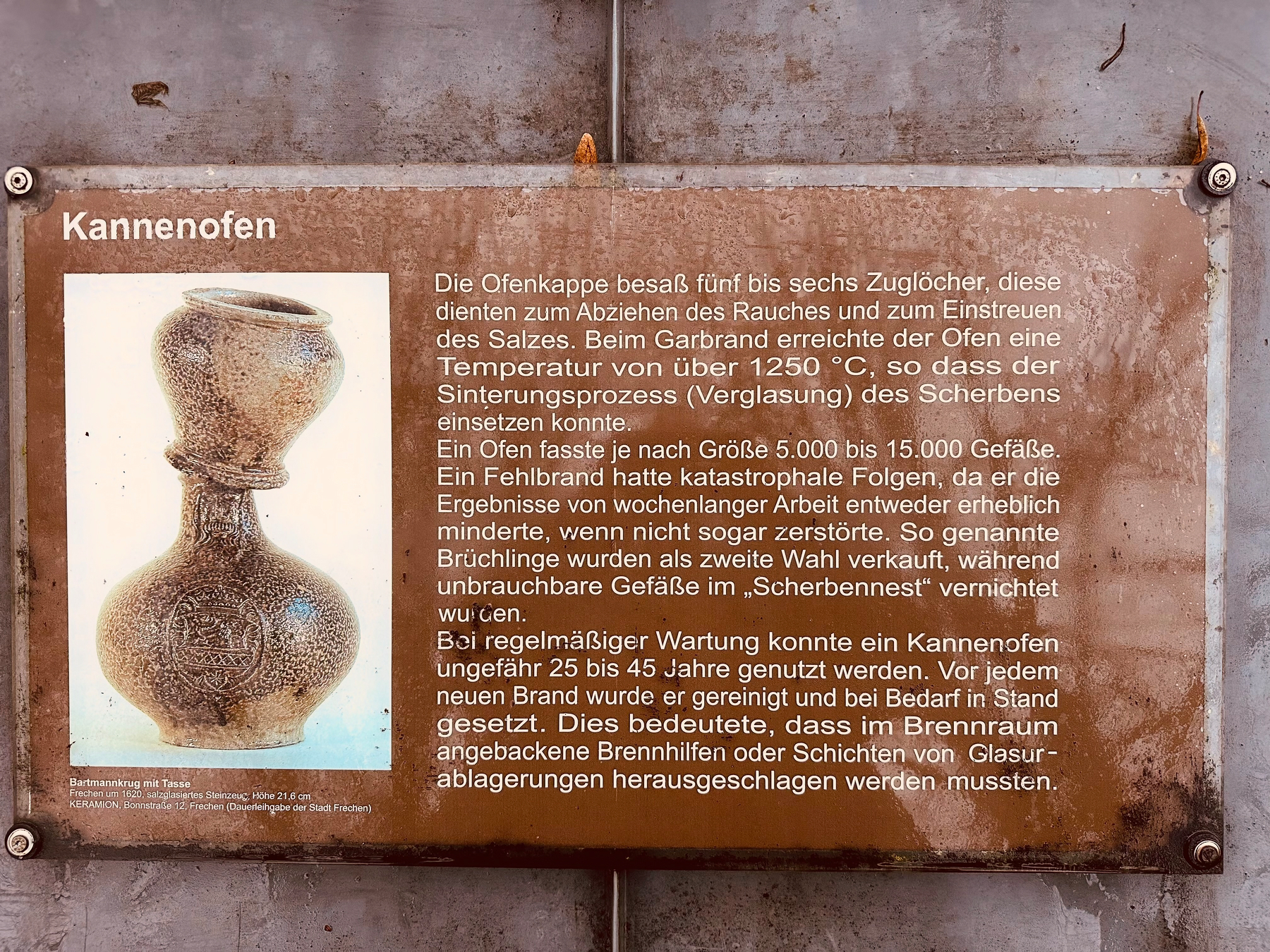
Steinzeug or stoneware is a type of pottery that has been taken up to 1.300 C or more and has vitrified. Stoneware is impermeable to water and much tougher than normal pottery. Stoneware was first produced and traded from Cologne from the 14th century onwards.

Location Visit Remarks
Cologne - never with the focus on stoneware, there is of course the “Alter Markt” as the main market, and various places where historically it was produced
Frechen yes went to the Keramion, need to come back to look for the places the stoneware was produced
Siegburg - never with the focus on stoneware, various places where historically stoneware was produced
Raeren - open
Langerwehe - open
Badorf, Pingsdorf - open, both near Brühl
Westerwald (Höhr-Grenzhausen) - open
Aldenhoven - open
Some impressions of the first trip, Frechen, I already shared on Mastodon, here is the top of the thread:
Post by [@Tho99@mendeddrum.org](https://micro.blog/Tho99@mendeddrum.org)
View on Mastodon

Basically I really liked the Keramion, especially some of the modern stuff, but they also have a good selection of historical pieces.

The second part of the trip was me following the Keramikweg. In theory this would have included some of the locations of historic kilns, amongst other things. Unfortunately I did not find the kilns, have to go back and do some better research before I go. The other things take the stoneware tradition of Frechen via construction and industrial stoneware to today. My wife used to work for a company that exported stoneware sewage pipes throughout Europe.

Total trip, 43 km

I am going to use the hashtag #HistoryCycle on Mastodon and Micro.blog for this whole endeavour going forward.

pictures

Link to a summary of pottery in Cologne

www.fabriziomusacchio.com/weekend_s…

#HistoryCycle #stoneware #cycling

Trading goods of medieval Cologne

As mentioned before, as part of my retirement I want to combine some local history with cycling trips and photography. See my latest update on all that.

Anyway, being somewhat methodical and also easily distracted, I choose to have a look at trading goods, where they came from and where they went. The idea being, if the from and to was close enough, I could go there by bicycle, and take photos. But, of course, there is no ready made list of trading goods (that I could find).

Therefore, back to being methodical. I started collating a list of goods and started with the so called Stapel Goods, basically any trader passing Cologne had to unload and offer their goods to Cologne traders for three days (thereby creating harbour, unloading, and inspection fees, tolls, not to forget, as the trader had to spent three days (and nights) food and lodging).

Here is the draft list of Stapel Goods

The columns:

Deutsch - the German term
English - yes, the translation
Road Name - Road/Place/Street name in medieval Cologne
Source - Where the goods came from
Destination - Where the goods went
Visit? - Future plans to visit a source/destination
Remarks - remarks

Anyway, while researching, I also found a category called Ventgüter These were goods that were not only unloaded, offered for sale and then loaded again, no, these goods were also, for a fee, unpacked, inspected, marked as inspected and repacked or destroyed if they did not pass.

  • This was good for Cologne because of opportunities, fees and reputation
  • Semi good for the trader, as they could get somewhat better prices for inspected goods
  • Goodish for customers, as they got quality goods but for a higher price

Here is a good German article from museen.koeln on all of this Erfolgreich gegen die Wirtschaftskrise: Mittelalterlicher Protektionismus

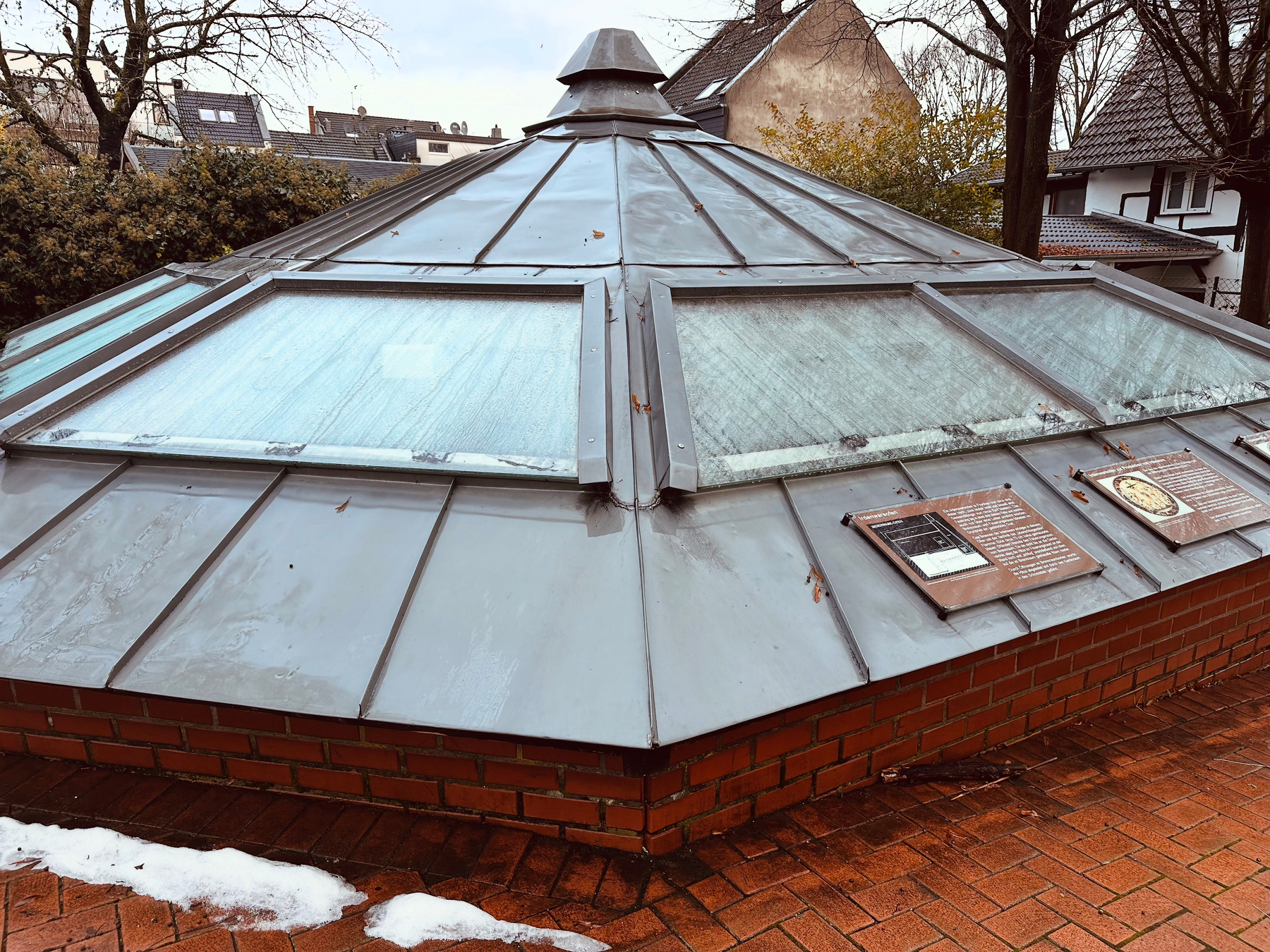
Ventgüter - Basic List

Deutsch English Road Name Source Destination Visit ? Remarks
He­rin­ge herring Fischmarkt, Stapelhaus Netherlands
Stockfisch stockfish Fischmarkt, Stapelhaus Netherlands
Bück­lin­ge herring Netherlands Fischmarkt, Stapelhaus
Schol­len plaice Netherlands Fischmarkt, Stapelhaus
Ka­bel­jau cod Netherlands Fischmarkt, Stapelhaus
sons­ti­ge ge­sal­ze­ne, ge­räu­cher­te oder ge­trock­ne­te See­fi­sche other salted, smoked or dried see fish Fischmarkt, Stapelhaus Netherlands
Rüb- und Lein­öl beet and linseed oil
But­ter butter in der Buttergasse, Buttermarkt
Talg tallow
Schmalz lard
Speck bacon
Tran tran
Teer tar
Ho­nig honey
Salz salt Die salts gaß Arnemuiden, NL yes

Stapelgüter - Basic List

Deutsch English Road Name Source Destination Visit ? Remarks
Lebensmittel food too many to list, this will eventually be a separate post also see the table of vent goods
Vieh cattle
Wein wine Middle Rhine, Alsace Lower Rhine, England
Pferde horses
Holz wood Holzgasse, Holzmarkt Oberrhein, Bergisches Land mostly construction wood
Stei­ne stone
Schie­fer slate
Kalk lime
Ei­sen iron Smedegasse, Smede Portz Bergisches Land
Blei lead Blijgasse, Dat Bly portgen
an­de­re Me­tal­le other metalls
Wol­le wool
Flachs flax
Tuch cloth
Lein­wand canvas
Häu­te skins
Le­der leather
Lo­he lohe
Pech pitch
Fass­rei­fen barrel hoops
Wein­berg­pfäh­le vinyard posts