Posts in "photo"

Yesterday I drove to #Raeren (pronounced Raaren) to look at some (more) stoneware pottery. Specifically I went here: Töpfereimuseum Raeren

If you’re ever in the area (think Aachen) than it’s WELL worth a visit.

The museum is in a castle.

A stone building with medieval-style architecture is surrounded by trees and a paved path.

Inside a nice collection of Rhenish stoneware and on stoneware production and trade. Raeren traded via Colognes Alter Markt but also served some markets themselves. The relatively close Langerwehe produced stoneware mostly for “local” consumption, Raeren produced mostly for long distance (Hanse) trade.

While picking up some of the popular forms of Rhenish stoneware, eg Bartmann Krüge, they also developed distinctive forms.

A brown, intricately designed jug features a bearded face and embossed medallions on its surface. A Bartmann Krug.

A display case features a collection of ornate pottery, with a large, intricately decorated jug in the foreground.

And here one of the forms used to emboss the jugs (which were produced by the tens of thousands.

A detailed, circular clay boss is displayed on a clear stand with intricate carvings and symbols.

If you were a good (large) customer you got your coat of arms on the jugs, which were also used for religious (pro catholic/protestant) or political messaging. Early propaganda/advertising

Several earthenware jugs and mugs are displayed on glass shelves in a cabinet.

#HistoryCycle #history #photography #fotografie #steingut #steinzeugkeramik #stoneware #steengoed

Tuesday, some history

We visited the LVR Landesmuseum Bonn as they have a smallish collection of Rhenish stoneware

They are also part of the Bartmann goes global project, which I’m following somewhat precariously.

Anyhow, this is what they have to say about stoneware

A display provides information in both German and English about Rhenish stoneware, covering its characteristics, production, and museum exhibition.

Paraphrasing slightly:

Rhenish stoneware, a variety of clay containers made over 400 years ago, is recognized by its shapes and images. Cups and jugs were especially popular. Rhenish stoneware was sold worldwide, making it a global phenomenon.

Potteries in Cologne, Frechen, Raeren, and Siegburg produced Rhenish stoneware. Soft clay was pressed into molds to create various images, from simple designs like flowers and coats-of-arms to scenes from the Bible or other stories. Finally, the containers were fired in kilns.

Rhenish stoneware is exhibited in museums because it was practical and beautiful. It reflects the people’s desire for both practicality and aesthetics over 400 years ago. Many objects were decorated with pictures, a common practice during that period, even among the less affluent.

A display case features six vintage stoneware jugs of varying shapes and designs, each resting on white pedestals.

A large, ornate belarmine jug with intricate designs and a glazed finish is displayed in a museum setting.

I quite liked the stoneware exhibited and also the rest of the museum, well worth a visit if you are in Bonn.

Next trip to Raeren, originally I wanted to go to Brühl first, but the museum is only open on Sundays, which does not work for the next few weeks. So, Töpfereimuseum Raeren

My simple project, identify sources of mediaeval Cologne trading goods, has now evolved into a fairly large scale research project.

Everything started so well.

The first trading good I looked at was stoneware. Specifically the Bartmann Krug.

A brown, ceramic bottle with a bearded human face design is displayed in a museum setting.

Right period, major production centres well with bicycle distance, most of the production centres even have a museum.

A hand-drawn map labeled Rheinisches Steinzeug features the Rhine various cities like Cologne and Siegburg, and dots marking locations such as Raeren, Frechen, and Höhr-Grenzhausen.

But, some of the information shown at the first two museums seemed to be a bit contradictory. So, as you do, I tried to find some information in books and online. Unfortunately, the publicly accessible books are broad generalist books. Online wasn’t much better. I started downloading papers, which then presented quite another challenge, namely, too much information [1].

I also stumbled across the website of a project between various research institutions called Bartmann goes global another wonderful timesink.

So, with one thing or another, I have now got a growing Obsidian vault with 250+ (and counting) documents. Which I’m now cross referencing [2]. As you do.

[1] as in, eg. Finding the downloadable archive of the Hansische Geschichtsverein, who have been publishing about the handsome, including Cologne, for the last 150 years plus.

[2] which led me to confront my lack of skill with bash and python scripts

#HistoryCycle #steingut #stoneware #steengoed #bycicle #retirement

Now we’re talking

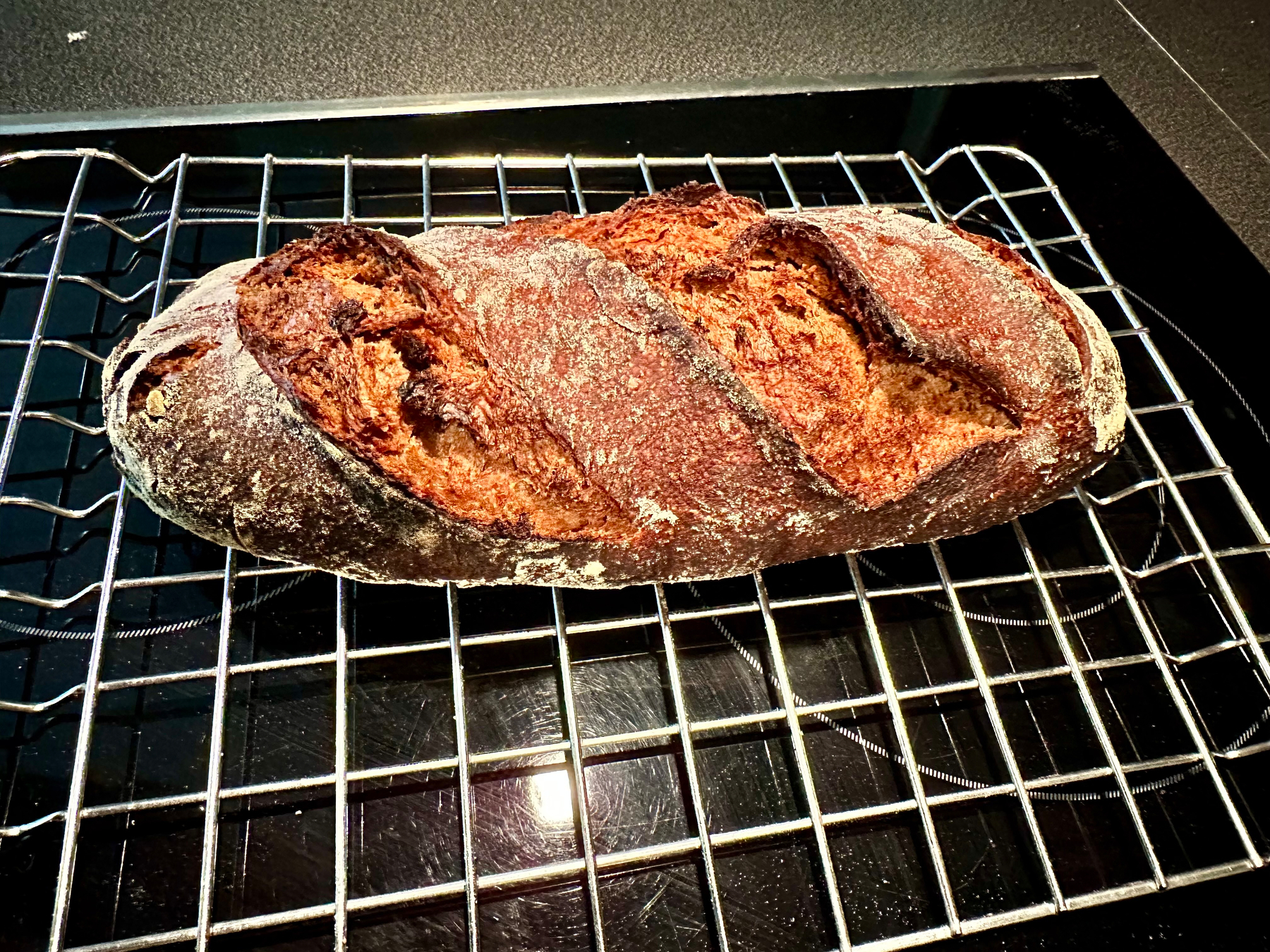
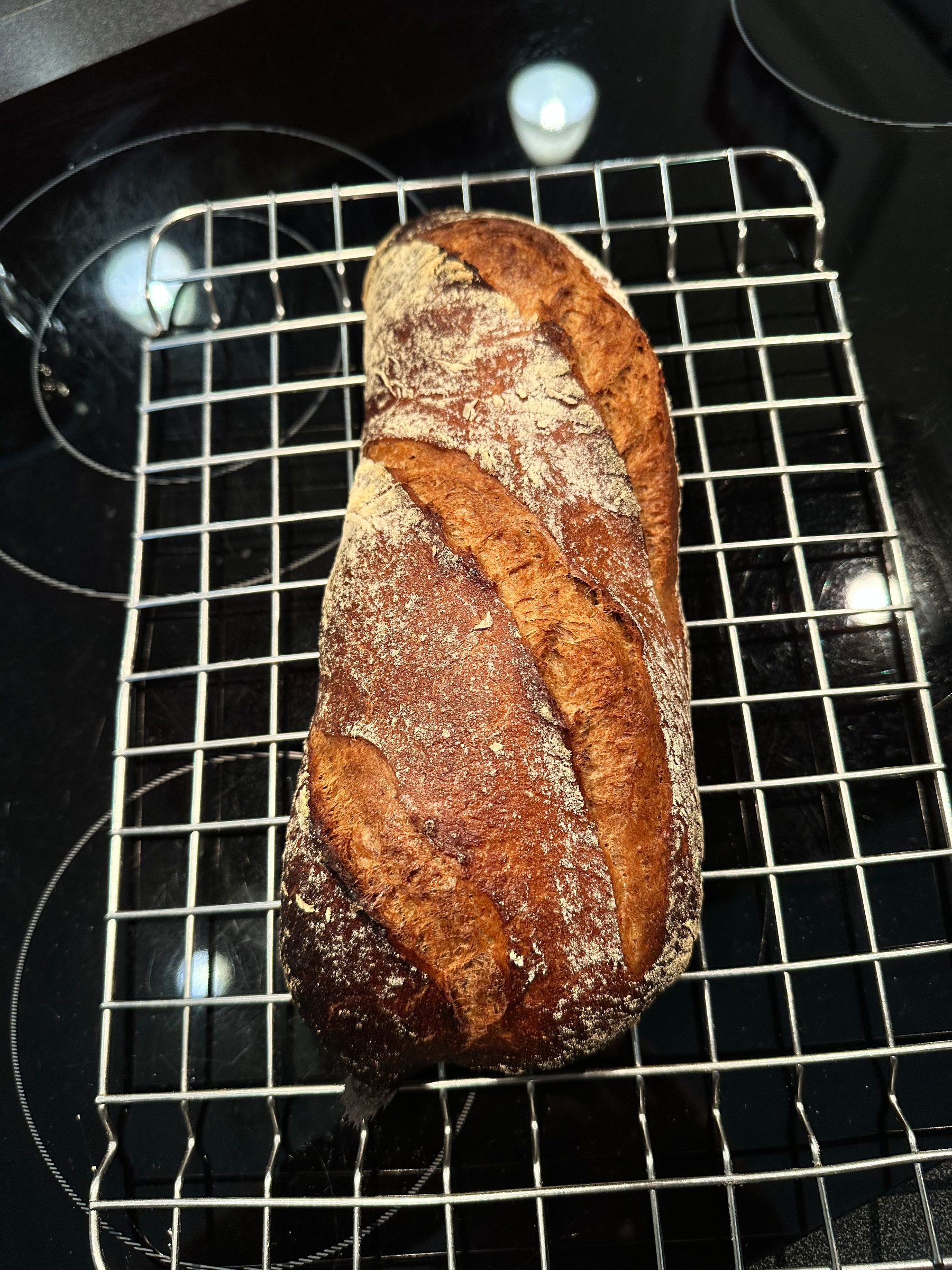
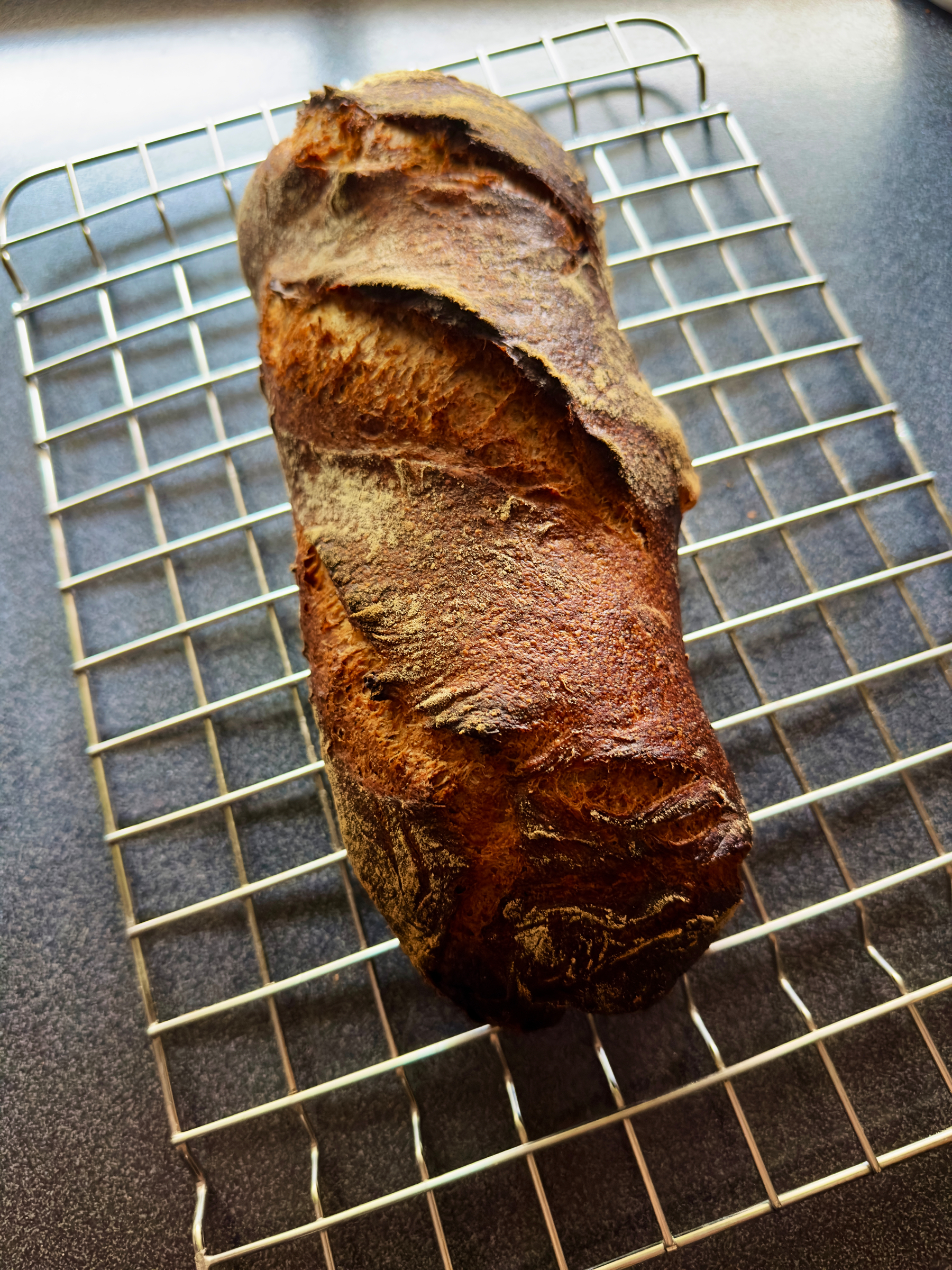
A bit more dough, a bit less LM, a bit longer in the fridge. This looks great. What will it taste like? Will the crumb be open? Will find out, in any case, the crust looks crusty.

A loaf of crusty artisanal bread with slashes on top rests on a cooling rack on a stovetop.

#bread #brot #sourdough #LievitoMadre #Sauerteig #whey #molke @brotbacken@fedigroups.social

Not a baguette!

Got the proofing sorted, but my loaf got a bit long.

A freshly baked, crusty loaf of bread rests on a cooling rack.

#bread #brot #sourdough #LievitoMadre #Sauerteig #whey #molke @brotbacken

This is a strange one. For one (too) long proofing led to a forming mishap. And, the loaf is more “blond” then the last ones. Water instead of whey? Time and temperature were the same. Smells good though.

A freshly baked, uniquely shaped loaf of bread rests on a cooling rack.

#bread #brot #sourdough #LievitoMadre #Sauerteig @brotbacken

Sinnersdorfer Recipe

A freshly baked loaf of bread is cooling on a wire rack.

I’ve been updating my go to bread. Three changes have contributed to better crumb and great crust.

First change is to my sourdough, which might be considered cheating, but for me is about fitting it better into my days. I’m using an Italian freeze dried lievito madre, and this is super convenient.

Before I held back 50g of dough, stored in the fridge, and then refreshed and kept at 36 C for 8 hours. This also worked very well, after all keeping dough back to leaven the next dough is a very old method.

The second change came about because I had some spelt wholemeal left in the cupboard. I’m now mixing a bit, about 10%, to my bread flour.

A freshly baked loaf of artisan bread is cooling on a wire rack.

Thirdly, nudged by a video by Marcel Paa, I updated temperature and time in the oven. I now go hotter and longer, or rather, the bread does.

Recipe:

270 g bread flour (550er) 30 g spelt wholemeal 15 g pasta madre (Ruggeri) - lievito madre 7 g salt 220 g water (or joghurt whey)

Mix everything, 2 - 3 sets of stretch & folds, keep in the fridge overnight, at least 10 hours.

Take out of fridge and leave to come up to room temperature. Form a batard. Leave for another hour until well risen under a linen cloth.

Cut, give into the oven (containing a baking steel) heated to 250 C. Steam. Bake for 15 minutes, open oven door to let out steam, bake for another 30 minutes at 220 C.

This bake results in a dark, tasty and crunchy crust.

Let cool, enjoy.

A freshly baked loaf of bread with a golden crust rests on a cooling rack.

#bread #brot #sourdough #LievitoMadre #Sauerteig @brotbacken@fedigroups.social

We ran out, so I did a quick one …

A freshly baked loaf of artisan bread is cooling on a wire rack.

#bread #brot #sourdough #LievitoMadre #Sauerteig @brotbacken@fedigroups.social

Forgot to cut it, still looks good though and smells even better

A freshly baked loaf of bread cools on a wire rack placed on a stovetop.)

#bread #brot #sourdough #LievitoMadre #Sauerteig @brotbacken@fedigroups.social